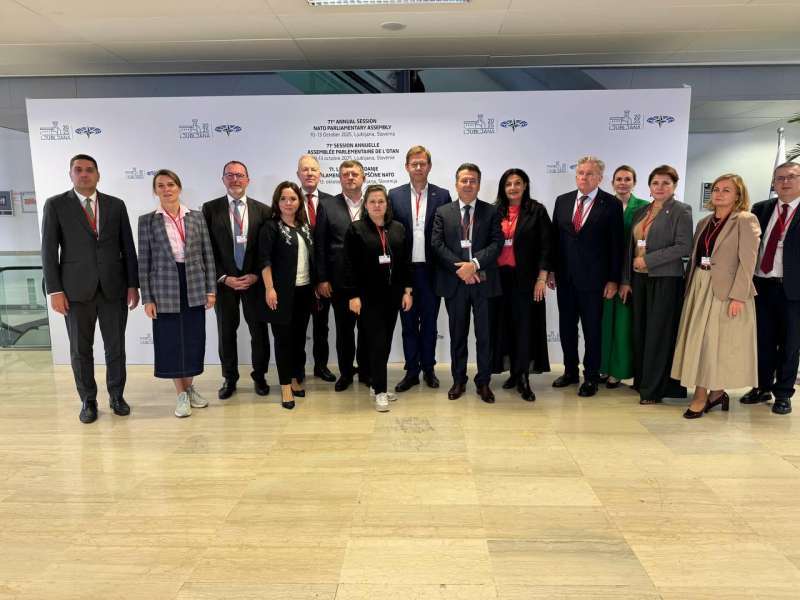
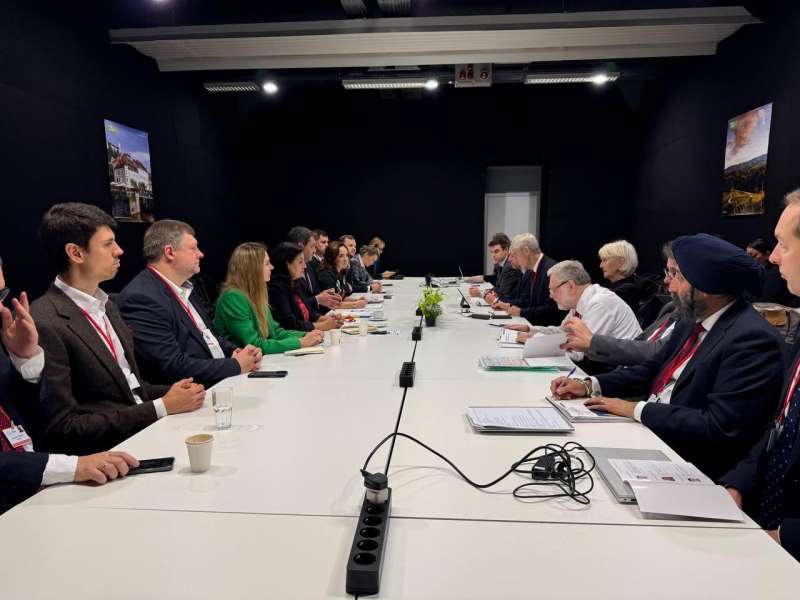
Ivanna Klympush-Tsintsadze, Chair of the Committee on Ukraine's Integration into the EU, who is also a member of the Ukraine-NATO Interparliamentary Council, took part in the work of the Ukraine-NATO Interparliamentary Council, which this year is taking place during the autumn session of the NATO Parliamentary Assembly in Ljubljana. According to the Chair of the Committee, this allowed for a larger audience of fellow NATO PA members to gather to discuss bilateral relations between Ukraine and the Alliance and, accordingly, Ukraine's needs. As part of the Ukrainian delegation, the Committee Chair also took part in bilateral meetings with representatives of Germany, the United Kingdom, Sweden, the European Parliament and Canada.
Ivanna Klympush-Tsintsadze noted that during the autumn session of the NATO PA, many important reports prepared by parliamentarians and approved by NATO PA committees were discussed. "The vast majority of them very clearly, harshly and directly describe various elements of russian threats to the European continent and the transatlantic community - from hybrid and information attacks to acts of sabotage on EU territory. They propose many different tools for countering these threats. In almost all committees, the issue of russia's war against Ukraine is the focus of this PA,‘ said the committee chair. According to her, in particular, a very important report by Italian parliamentarian Simona Malpetsi, "Ensuring a Just and Durable Peace for Ukraine," was adopted. It outlines the red lines for a possible end to the war. The document states that a just and lasting peace is only possible if Ukraine's sovereignty and territorial integrity are preserved; the aggressor is held fully accountable for war crimes; all deportees, including children, are returned; Ukraine is provided with reliable international security guarantees (up to and including NATO membership) and effective control mechanisms to prevent a repeat of the aggression; a plan and resources for the post-war recovery of Ukraine's economy and infrastructure, as well as the absence of any concessions or ‘rewards’ to the aggressor that could set dangerous precedents.
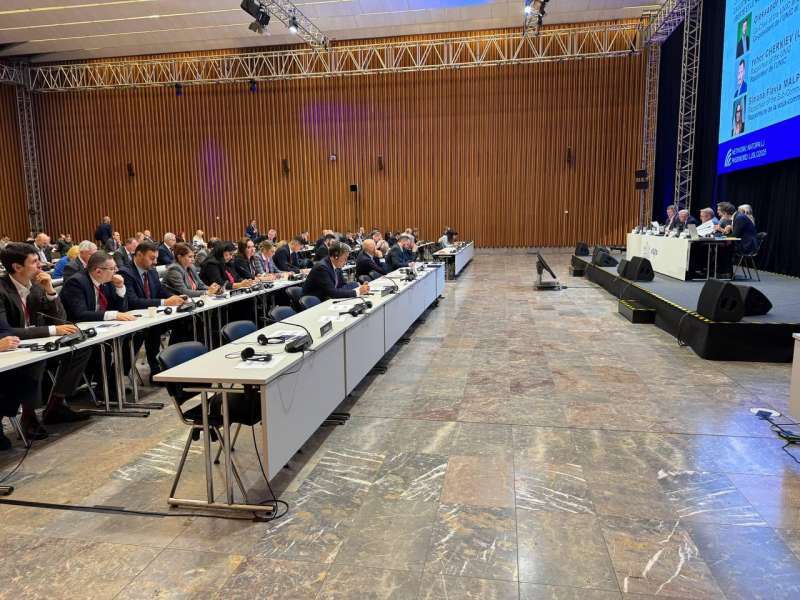
“This Parliamentary Assembly confirms the importance of understanding the issues that all Alliance partners urgently need to work on,“ said Ivanna Klympush-Tsintsadze. According to her, the Ukrainian delegation informed their colleagues about the security situation in Ukraine and how russia's tactics have changed in its attempts to destroy Ukraine's capacity and resilience ahead of the winter season. “We talked about attacks on the energy system, gas production, and economic enterprises that have nothing to do with the defence industry, but attacks on them destroy our ability to provide people with jobs and collect taxes, and, accordingly, to finance the necessary basic defence needs,“ said the Committee Chair. “This Parliamentary Assembly confirms the importance of understanding the issues that all Alliance partners urgently need to work on,“ said Ivanna Klympush-Tsintsadze. According to her, the Ukrainian delegation informed their colleagues about the security situation in Ukraine and how russia's tactics have changed in its attempts to destroy Ukraine's capacity and resilience ahead of the winter season. “We talked about attacks on the energy system, gas production, and economic enterprises that have nothing to do with the defence industry, but attacks on them destroy our ability to provide people with jobs and collect taxes, and, accordingly, to finance the necessary basic defence needs,“ said the Committee Chair.
During bilateral meetings, she said, there was much talk about additional financial instruments needed by Ukraine, in particular, direct investments in the defence industry, joint ventures, the removal of bureaucratic barriers in Europe for faster procurement, and increased arms production in Alliance member countries. "We also appealed to partner countries to become even more effectively and actively involved in the programme of arms procurement for Ukraine. These are weapons that are not produced by countries on the European continent, but are purchased from the United States of America. There was much talk about the use of frozen assets of the russian federation, both private and state-owned. We discussed the need to increase sanctions pressure and the further need to close loopholes in the sanctions regime. We insisted that without russia's strategic defeat in this war, it is unlikely that we can count on a lasting and stable peace," said Ivanna Klympush-Tsintsadze.
She also said that they discussed the need to preserve democratic governance in Ukraine despite the challenges of wartime, in order to ensure the stability of the state and its successful integration into the European Union and, in the long term, into NATO.