The Committee decided to recommend that the Verkhovna Rada of Ukraine return the draft law No. 1797 to the subject of legislative initiative for adaptation.
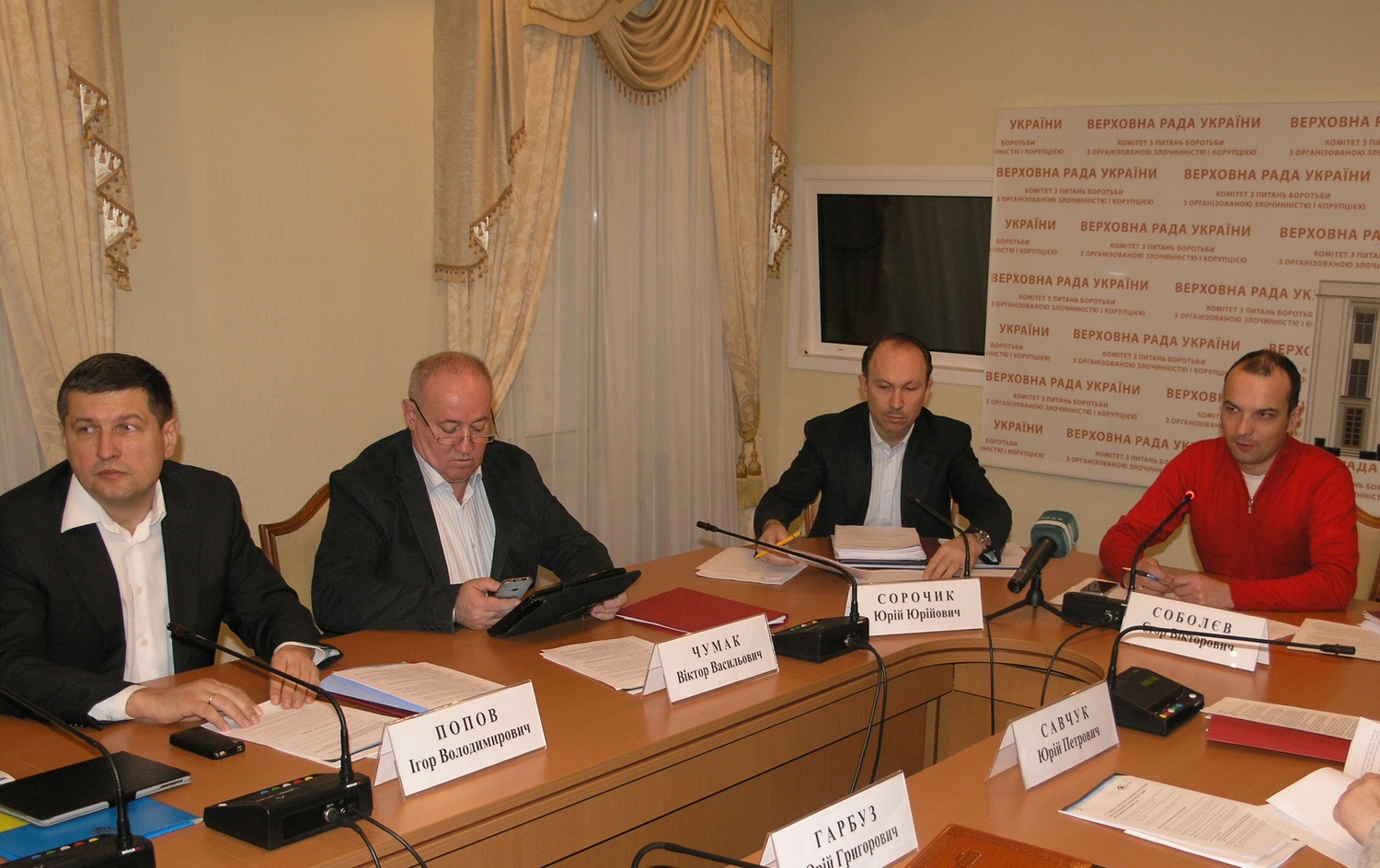
During the consideration of the draft law it received the following remarks:
There is non-correspondence in draft Law’s standalone provisions, which excessively expand discretionary powers of the authorized body — the National Commission for Regulation of Financial Services Markets.
Excessive interference of the authorized body in creation and activity of insurers is intrinsic to the terms of the draft Law. Such interference is unfounded restriction of freedom of entrepreneurship, which levels the goal of the legislative act.
Section 5, Article 9 of the draft law “Insurer’s name” does not contain preciseness of reception of an administrative service by insurers from the authorized body as to provision of preliminary permit for “…renaming, location and postal address during the period of limitation or suspension of license….”
Absence of legislative regulation of precise order for reception of preliminary permit enables the authorized body to independently set any demands to such order which leads to corruption.
Similar corruption risks are intrinsic to Item 1, Section 4, Article 41 and Item 1, 7, Section 1, Article 43, which also do not precisely set specified legislative regulation of the order of reception an administrative service from the authorized body by insurers as to the determination of criteria of unfair information, professional qualities or business reputation of insurers’ heads, which can be used to refuse to assign licenses and introduce information into the State Register of Financial Institutions.
Item 6, Section 1, Article 44 “Grounds for license annulment” contains a term that should be a ground for annulment of a license — “…nonfulfillment of two or more means of influence of the authorized on insurers over a calendar year.” The Article does not define the notion of “mean of influence” and the demand “two or more….” Nebulosity of this administrative procedure creates risks of corruption, as an official of the authorized body may selectively pick a term “two or more….”
Section 2, Article 49 of the draft law offers “…the provision on affiliates of nonresident insurers, as well as any amendments into this provision should be agreed with the authorized body.” At the same time, the draft law does not regulate administrative procedures of such order and conditions of “such agreement,” elimination of defects in case of refusal to agree. Therefore, an official of the authorized body in own discretion can determine the order of agreement and refusal.
Such corruption factors are contained within a number of administrative procedures conducted by the authorized body:
— Section 7, Article 64 of the draft law — “the authorized body sets additional requirements to the form (format) of audit conclusions…;”
— Section 7, Article 70 — “peculiarities of reception of a license by an insurer in the process of reorganization are set by the authorized body;”
— Section 11, Article 70 — “the authorized body has right to deny in provision of a permit for reorganization of insurers in case there are founded grounds to deem that an insurer-successor does not meet requirements of this Law.” At that the draft law does not determine “founded” circumstances, the order of appealing against such denial, and precise terms for elimination of defects.
— Section 15, Article 70 and Section 2, Article 73 level the decision of the collegiate body — general stockholders' (participants’) meeting on reorganization or liquidation of insurers, as this should be validated by the authorized body in compliance with the order yet to be set by the body. Following the denial in provision of consent, the authorized body in fact makes insurers exercise entrepreneur activity. Such terms do not meet principles of freedom of entrepreneurship as the basic principle of economic activity;
— Item 4, Section 4, Article 99 — “the authorized body can apply… means of influence: temporarily stop or annul insurance or reinsurance licenses,” and Item 7, Section 4 — “other means of influence, envisioned by the Law.” At that the draft law does not regulate administrative procedure for determination of grounds for suspension of the license, appealing and possible period for elimination of defects.
This is inexpedient expansion of discretionary authorities for officials that will facilitate corruption and abuse of office within the authorized.
Provisions of Article 101 of the draft law provide the authorized body with excessive discretional authorities in terms of levying and determination of sizes of fines for violations by insurers. Thus, an official of the said body can in own discretion set floor and ceiling sizes of fines (from 100 to 1,000, from 100 to 2,000, and from 1,000 to 10,000 tax-exempt minimum personal incomes).
The said non-correspondence will lead to emergence of conflict of interests and to risks of manipulations in fine sizes, as well as to unfounded provision of advantages.
The draft law by its content proceeds from the draft law No. 1797-1, thus, members of the Committee find it expedient to join them in the future.