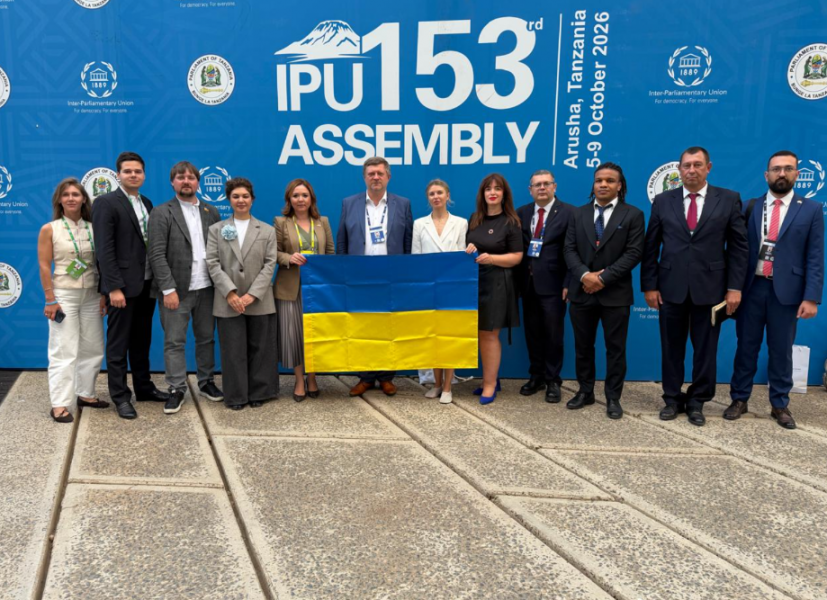
On 5–9 October 2026, the 153rd Assembly of the Inter-Parliamentary Union (IPU) took place in Arusha (United Republic of Tanzania). The Ukrainian parliamentary delegation, led by First Deputy Speaker of the Verkhovna Rada of Ukraine Oleksandr Korniyenko, participated in the general debate, the work of standing committees, and elections to the governing bodies of the Union, as well as held 23 bilateral meetings and consultations.
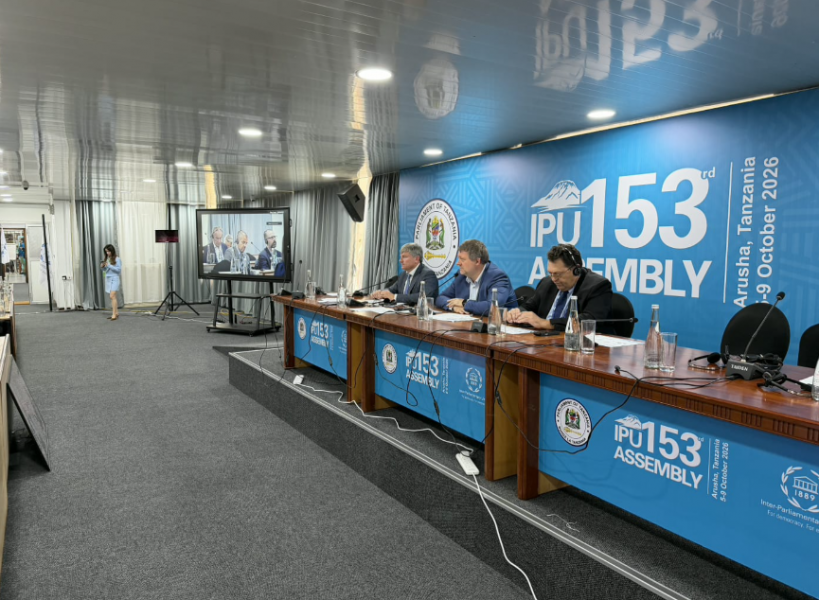
At the centre of the Ukrainian parliamentarians' work were strengthening international support for Ukraine, countering russian aggression, protecting the civilian population, ensuring russia's accountability for international crimes, safeguarding global food security, and developing inter-parliamentary cooperation.
Following the Assembly, the Ukrainian delegation succeeded in securing the approval of a topic initiated by Ukraine for a resolution on the protection of civilians and civilian infrastructure, incorporating Ukrainian amendments into international documents, expanding Ukraine’s representation in IPU bodies, and adopting a statement on the non-recognition of illegal russian elections in the temporarily occupied territories of Ukraine, Moldova, and Georgia.
During the 153rd Assembly of the Inter-Parliamentary Union, First Deputy Chairman of the Verkhovna Rada of Ukraine Oleksandr Korniyenko held a series of meetings with representatives from the parliaments of European, African, Asian, and Latin American nations.
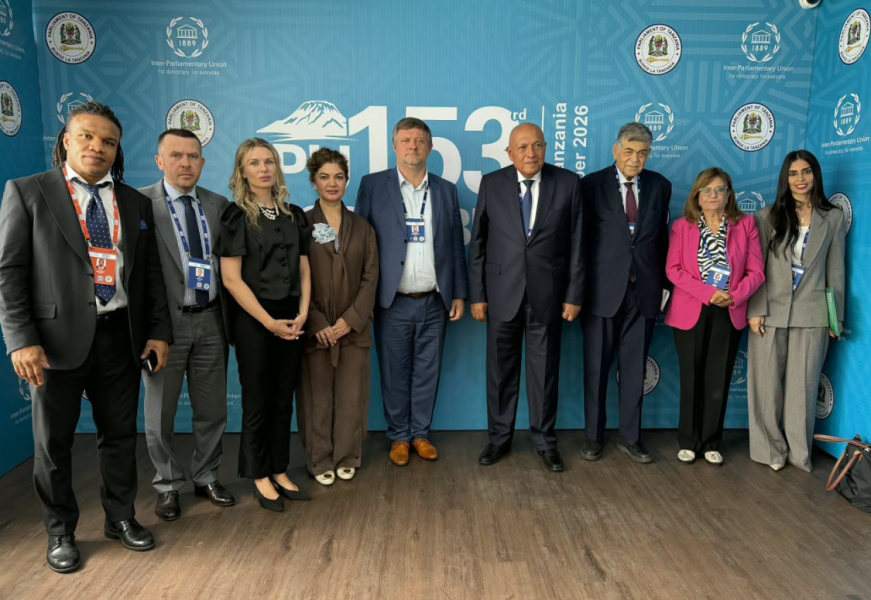
A central focus of the talks was the security situation in Ukraine, particularly the intensification of russian attacks on the civilian population, energy, agricultural, and transport infrastructure. At the same time, significant attention was devoted to developing economic, educational, and technological cooperation, stepping up inter-parliamentary contacts, and supporting Ukrainian initiatives on international platforms.
During the meeting with representatives of the United Arab Emirates, Oleksandr Korniyenko discussed the security situation in Ukraine, maritime security issues, the development of economic ties, and cooperation in the field of military technology.
UAE representatives emphasized their interest in making economic cooperation one of the priorities in bilateral relations.
First Deputy Speaker informed partners of the consequences of russian strikes on metallurgical and agricultural infrastructure, grain storage facilities, and energy grids, which directly impact the operations of Ukrainian enterprises and the country’s export capacity.
He also thanked the UAE for its humanitarian assistance, particularly support for the initiatives of the First Lady of Ukraine, and highlighted the importance of further energy and medical assistance ahead of winter.
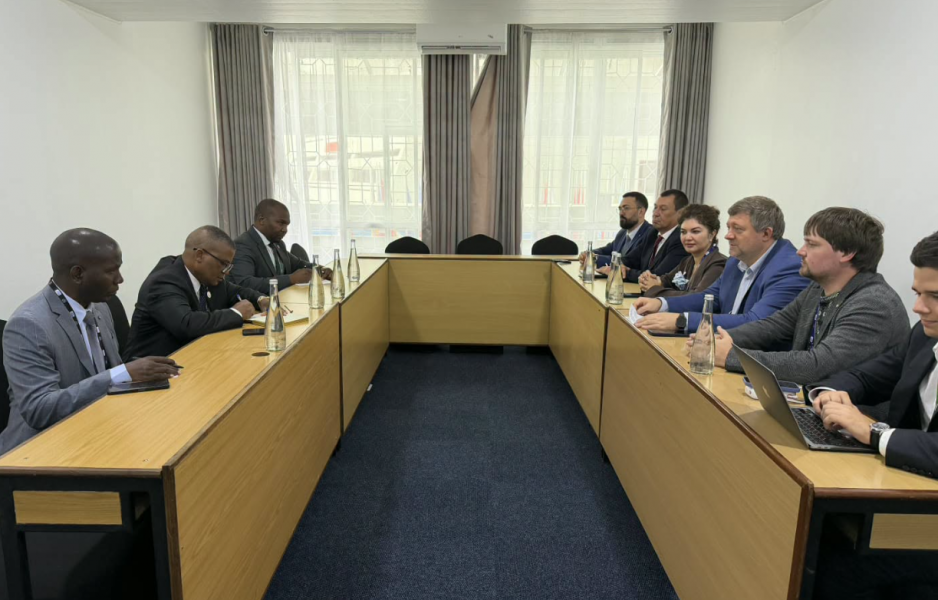
Separately, the parties discussed cooperation in security and military technology, opportunities to leverage Ukrainian experience, the strengthening of secondary sanctions, and the development of contacts between relevant parliamentary committees. The Ukrainian side expressed readiness to facilitate online meetings and reciprocal visits.
During the meeting with Speaker of the Parliament of Tanzania Mussa Azzan Zungu, main attention was devoted to the development of inter-parliamentary relations and practical avenues of cooperation between the two states.
The parties agreed to step up the work of parliamentary friendship groups, enhance communication between parliamentarians, and hold online meetings.
Educational cooperation emerged as an important focus of the talks. Ukraine expressed readiness to share expertise in vocational and agricultural education, engage Ukrainian lecturers, and develop distance learning formats.
The participants also discussed opportunities to expand trade, attract investment, and export Ukrainian agricultural and food products.
During the meeting with Lithuanian parliamentarians, Oleksandr Korniyenko paid special attention to Lithuania’s upcoming Presidency of the Council of the European Union in the first half of 2027.
The Ukrainian side expects this period to facilitate Ukraine's further progress toward EU membership, particularly the opening of all negotiating clusters. EU enlargement and support for Ukraine have already been identified among the priorities of the upcoming Lithuanian presidency.
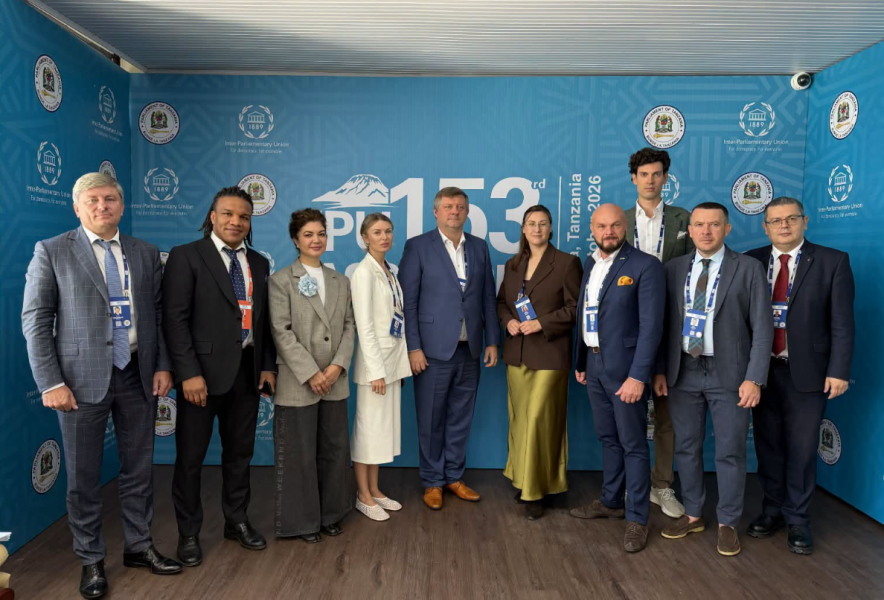
The parties also discussed the protection of national minority rights, the security situation, and the consequences of the russian blockade of sea routes and Ukrainian agricultural exports.
First Deputy Speaker of the Verkhovna Rada of Ukraine requested that his Lithuanian colleagues support Ukraine's emergency resolution on the escalation of russian attacks against the civilian population and invited them to join the upcoming Crimea Platform summit.
A separate area of work was deepening cooperation with Latin American nations.
During the meeting with representatives of Chile, the discussion focused on the security situation in Ukraine, the escalation of russian aggression, the protection of the civilian population, and the illegitimacy of russian "elections" involving the temporarily occupied territories. The Chilean side reaffirmed its continued support for Ukraine.
Oleksandr Korniyenko discussed with representatives of Uruguay the development of bilateral ties, the stepping up of parliamentary friendship groups' activities, cooperation in digital identity, and the protection of indigenous peoples' rights.
The Uruguayan side confirmed its support for Ukraine's emergency item on the Assembly’s agenda.
During the meeting with Brazilian parliamentarians, the First Deputy Speaker informed them of the consequences of russian attacks on civilian and critical infrastructure, Ukraine’s economic losses, restrictions on agricultural exports, and the situation on the frontline.
The parties discussed the application of Ukrainian unmanned technologies, diplomatic efforts to end the war, and the return of prisoners of war and deported children.
Oleksandr Korniyenko emphasized the importance of more active engagement of BRICS countries in the international dialogue on achieving a just peace. The Brazilian parliamentarians expressed solidarity with Ukraine. The participants also discussed the possibility of a Ukrainian parliamentary delegation visiting the Senate of Brazil.
Significant attention during the Assembly was paid to expanding cooperation with African nations.
At the meeting with the delegation of Angola, the parties discussed stepping up inter-parliamentary contacts, the opening of the Embassy of Angola in Kyiv, the development of the parliamentary friendship group, and practical avenues of bilateral interaction.
Specific topics included energy cooperation, aviation, defence technologies, academic exchanges, and the potential resumption of studies for Angolan students in Ukraine.
The Ukrainian side invited the Angolan delegation to join the Crimea Platform in London.
With representatives of Mozambique, Oleksandr Korniyenko continued the dialogue initiated during their previous meeting in Türkiye. The parties discussed security cooperation, particularly the potential application of Ukrainian technologies to counter terrorist groups.
The discussion also touched upon educational and professional ties, drawing on Ukraine's experience in training specialists for Mozambique and the work of Ukrainian lecturers and doctors in the country.
During talks with representatives of the Parliament of Egypt, the primary focus was on food security, the protection of maritime navigation, and the restoration of stable supplies of Ukrainian wheat.
The parties also discussed the accreditation of international students, quality assurance in education, university cooperation, cultural exchanges, the development of Ukrainian studies, and Ukraine's Crimean Tatar Islamic heritage.
First Deputy Chairman of the Verkhovna Rada of Ukraine held a separate meeting with representatives of the Pan-African Parliament.
The main topics were global food security, the protection of maritime navigation, and prospects for developing inter-parliamentary cooperation. Oleksandr Korniyenko emphasized that russian attacks on Ukrainian port infrastructure and civilian vessels pose threats to food security far beyond Ukraine’s borders, particularly on the African continent.
He called on African parliamentarians to support Ukrainian initiatives to protect port infrastructure and ensure navigation security within the IPU, UN, and other international organizations.
Representatives of the Pan-African Parliament expressed solidarity with the Ukrainian people and reaffirmed their support for the principles of peace and respect for state sovereignty. The parties also discussed the possibility of developing a roadmap for inter-parliamentary cooperation.
With German parliamentarians, Oleksandr Korniyenko discussed the intensification of russian attacks on Ukraine's energy and utility infrastructure.
In parallel, consultations continued with representatives of the United Kingdom, Portugal, Ecuador, Bahrain, Belgium, and France.
As part of the interaction with the Task Force, the Ukrainian side raised the issues of the return of Ukrainian children illegally deported by russia, the release of unlawfully detained civilians, and establishing the fate of individuals connected to the Zaporizhzhia Nuclear Power Plant.
Specifically, the participants discussed work on the list of cases provided by the Ukrainian side regarding unlawfully imprisoned, abducted, and missing individuals connected to the Zaporizhzhia Nuclear Power Plant.
Separately, the discussion touched upon unlawfully imprisoned civilian Crimean Tatars persecuted by russia on political grounds. The Ukrainian side requested that the Task Force facilitate work on these cases and expressed readiness to provide the relevant lists.
During the negotiations, the Ukrainian delegation emphasized the necessity of increasing international pressure on russia, protecting the civilian population, and transitioning from political statements to practical humanitarian results.
On the sidelines of the 153rd Assembly of the Inter-Parliamentary Union, Oleksandr Korniyenko held a meeting with the delegation of the Democratic Republic of the Congo.
The parties discussed stepping up the work of the inter-parliamentary friendship group and expanding bilateral cooperation, particularly in the fields of security, defence technology, and education.
Special attention was paid to global food security issues. russian attacks on Ukrainian ports and export infrastructure threaten the stable supply of food, particularly to African nations. The necessity of joint efforts to counter these threats was emphasized.
The parties agreed to maintain further inter-parliamentary dialogue and develop practical cooperation between the two countries.
Overall, on the sidelines of the Assembly, the Ukrainian parliamentary delegation held 23 bilateral meetings and consultations. In addition to the aforementioned states, contacts were established with parliamentarians from Ghana, The Gambia, Hungary, Australia, Canada, the Republic of South Africa, Estonia, Türkiye, and the Democratic Republic of the Congo.
The work of the Ukrainian delegation: international decisions and safeguarding Ukraine’s interests.
Alongside bilateral negotiations, the Ukrainian parliamentary delegation worked across the main platforms of the Assembly — during the general debate, meetings of standing committees, thematic discussions, and elections to the governing bodies of the IPU.
Members of Parliament of Ukraine Oleksandr Merezhko, Lesia Vasylenko, Lesia Zaburanne, Artur Herasymov, Ivan Krulko, Zhan Beleniuk, Tamila Tasheva, Oleksandr Sanchenko, Halyna Mykhailiuk, and Oleksiy Zhmerenetskyi took part in the work of the Assembly.
One of the key outcomes was the approval by the IPU Committee on Democracy and Human Rights of a topic initiated by Ukraine for a resolution on the protection of civilians and civilian infrastructure during war.
Member of Parliament of Ukraine Tamila Tasheva was elected co-rapporteur for the preparation of the resolution alongside Hala Fayez, representative of the Parliament of Bahrain.
"At the Assembly in Arusha, we succeeded in assembling a truly intercontinental coalition: Uruguay, Norway, the United Kingdom, Bahrain, and Ukraine jointly proposed a topic for next year's resolution — the protection of civilians and civilian infrastructure during war. The Bureau and the committee supported our proposal, and I was elected co-rapporteur alongside my colleague Hala Fayez from the Parliament of Bahrain," noted Tamila Tasheva.
According to her, russian strikes on Ukrainian energy facilities, water supply networks, data centres, schools, and hospitals will form part of the evidentiary base for the future resolution.
"Today, Ukraine is not merely asking for support in the IPU, but setting the agenda for the entire organisation," the Member of Parliament emphasized.
Another area of Ukraine's work in the IPU remains the preparation of a resolution on maritime security and the protection of critical infrastructure.
Member of Parliament of Ukraine Lesia Zaburanne took part in expert hearings together with co-rapporteur Marwan Al-Mheiri, Member of the UAE Parliament. She presented proposals to counter russia's shadow fleet and drew attention to the global consequences of the russian blockade of Ukrainian ports.
Thus, Ukraine has its rapporteurs simultaneously represented in two of the four standing committees of the Inter-Parliamentary Union.
At the same time, Lesia Zaburanne raised the issue of implementing previous IPU resolutions, particularly regarding compensation for victims of aggression, the return of prisoners of war, the condemnation of the deportation of Ukrainian children, and the use of starvation as a method of warfare.
"Ukraine continues to fulfill its obligations even under fire, while russia is doing everything to undermine the very foundations upon which the organisation is built," noted Lesia Zaburanne.
She also emphasized the necessity of strengthening sanction pressure and the international isolation of russia.
An important outcome was the adoption of Ukrainian amendments to the resolution "Inclusive social development for all: Parliamentary strategies for promoting the rights and empowerment of persons with disabilities".
Thanks to the work of Member of Parliament of Ukraine Lesia Vasylenko, the document now incorporates provisions on creating inclusive spaces during reconstruction, protecting the rights of veterans and civilians with disabilities, including deported or internally displaced persons — particularly children — and their integration into the labour market.
A provision regarding compensation for individuals who acquired disabilities as a result of the war was separately secured.
"Amendments submitted by our delegation strengthened a number of Assembly resolutions. We secured the principle that the aggressor must pay for the damage and losses caused, including to individuals who acquired disabilities as a result of the war," noted Lesia Vasylenko.
During the defense of the Ukrainian amendments, she also drew the attention of international partners to the deportation of more than 20,000 Ukrainian children, the rising number of veterans, and the necessity of establishing a compensation mechanism for victims of aggression.
The Ukrainian delegation also joined the preparation of an emergency resolution on responding to climate disasters, proposed by the Polish delegation.
Ukraine was elected as one of two representatives of the Twelve Plus Group in the drafting committee. Member of Parliament of Ukraine Artur Herasymov secured the inclusion in the document of a Ukrainian amendment regarding the damage caused by russian aggression to nature and the environment, as well as the threats associated with attacks on energy infrastructure.
"We also emphasized the importance of global food security and recalled the consequences of the destruction of the Kakhovka Hydroelectric Power Plant," reported Artur Herasymov.
A distinct political outcome was the statement by the Twelve Plus Geopolitical Group on the non-recognition of illegal elections conducted by russia in the temporarily occupied territories of Ukraine, Moldova, and Georgia.
The document was prepared on the initiative of the Ukrainian and British delegations. It was approved by all member countries of the group, which includes European states, Canada, and Australia.
The statement contains calls for the international isolation of russia and its parliament, the imposition of sanctions, and restrictions on the participation of russian parliamentarians in the work of the IPU.
Furthermore, Ukraine’s representation in the bodies of the Inter-Parliamentary Union was expanded. Member of Parliament of Ukraine Lesia Vasylenko was elected to the IPU Committee to Promote Respect for International Humanitarian Law.
The Ukrainian delegation also took part in a series of electoral processes. At this Assembly, Speaker of the House of Representatives of Australia Milton Dick was elected President of the Inter-Parliamentary Union, and Polish Senator Gabriela Morawska-Stanecka was elected President of the Twelve Plus Group. russia’s accountability and reform of the international security system. The issue of russia’s accountability for the crime of aggression, war crimes, and the damage inflicted on Ukraine was central to the statements made by Ukrainian parliamentarians.
Chairman of the Verkhovna Rada Committee on Foreign Affairs and Interparliamentary Cooperation Oleksandr Merezhko emphasized the necessity of holding accountable those who make decisions to initiate aggressive wars.
"Politicians and heads of state who commit the most heinous international crime, the crime of aggression, must be held accountable. Without such accountability, there can be no deterrence against potential aggressors, and true peace will forever remain an illusion," noted Oleksandr Merezhko.
During a panel discussion on the role of parliaments in ensuring compliance with international humanitarian law and international human rights law, Member of Parliament of Ukraine Halyna Mykhailiuk reported that since the start of the full-scale invasion, Ukrainian law enforcement authorities have documented more than 225,000 alleged russian war crimes.
"Ukraine cooperates with the International Criminal Court, aligns its legislation with the Rome Statute, and strengthens mechanisms of individual criminal responsibility. However, with regard to russia, the ICC cannot prosecute for the crime of aggression itself. This gap will be bridged by the Special Tribunal for the Crime of Aggression against Ukraine, which will hold accountable those who made the decision to initiate the war," emphasized Halyna Mykhailiuk.
She called on parliaments to support their states joining the agreement on the Special Tribunal.
The necessity of reforming the international security system was also the subject of separate discussions. Ukrainian parliamentarians raised the issue of the abuse of the veto power in the UN Security Council and the insufficient effectiveness of existing mechanisms for responding to aggression.
Member of Parliament of Ukraine Ivan Krulko drew attention to the contradiction between the principles of the UN Charter and the ability of an aggressor state to block decisions of the Security Council.
"No one can be a judge in their own cause — this is a fundamental principle of law that must also apply in the Security Council. That is precisely why UN reform should concern not only its representation, but also real mechanisms to limit the abuse of the veto power and ensure state accountability for violations of the Charter," noted Ivan Krulko.
This theme was elaborated upon by Member of Parliament of Ukraine Oleksiy Zhmerenetskyi. During the debate on UN reform, he emphasized the necessity of preventing aggression before it begins, preventing the blockage of the Security Council's work by a state that is a party to the conflict, and strengthening the role of the General Assembly and other UN organs.
"Ultimately, these mechanisms must yield results for people: protect civilians, halt aggression, and bring deported Ukrainian children back home. The world has changed since 1945, warfare has changed, and so our system of peace must change as well," emphasized Oleksiy Zhmerenetskyi.
Food and Maritime Security.
Food and maritime security issues, connected to the consequences of russian attacks on Ukrainian port, transport, and agricultural infrastructure, occupied an important place in the work of the Ukrainian delegation.
On the sidelines of the Assembly, the Ukrainian delegation organized a side event dedicated to global food security, with the participation of representatives from over 15 parliamentary delegations.
Minister of Agrarian Policy and Food Taras Vysotskyi joined the discussion online.
Participants examined the consequences of the russian blockade of Ukrainian ports and attacks on civilian vessels for international trade, food supplies, and the economic stability of states reliant on Ukrainian agricultural exports.
The thematic event was followed by a round table dedicated to ways of overcoming the global food crisis. Based on its outcomes, partner parliaments requested joint initiatives and workshops to provide a more detailed overview of food security issues within their respective parliaments
Member of Parliament of Ukraine Artur Herasymov drew attention to the necessity of more active engagement by national parliaments in this direction.
"My key appeal to fellow parliamentarians is to convey to their parliaments and governments just how serious the threat to food security is due to the blockade of Ukrainian ports. Today, the world underestimates the danger this blockade creates for years to come," noted Artur Herasymov.
The issue of maritime security was also the subject of discussion at the IPU Forum of Young Parliamentarians.
Member of Parliament of Ukraine Oleksandr Sanchenko drew attention to the situation of young maritime professionals in the context of russian aggression.
"russia is attacking Ukrainian ports and vessels in the Black Sea, and among those most at risk are young people who have chosen a maritime career: cadets, seafarers, and port workers. For them, maritime security means the safety of their lives and the opportunity to build a career," emphasized Oleksandr Sanchenko.
He also noted that the consequences of the blockade of Ukrainian exports are felt by young people far beyond Ukraine's borders, particularly in countries dependent on food supplies.
Expanding Cooperation with African States
Strengthening relations with the countries of the African continent became a distinct area of work for the Ukrainian parliamentary delegation. Ukrainian parliamentarians discussed opportunities for practical partnership in economy, education, science, and technology.
Member of Parliament of Ukraine Zhan Beleniuk, during the general debate, emphasized the importance of developing not only inter-parliamentary but also direct ties between the societies of the two continents.
"Ukraine strives to strengthen relations with African countries — between our parliaments, communities, businesses, and, most importantly, between our people. We have experience to share, lessons to learn from one another, and opportunities we can jointly realize," noted Zhan Beleniuk.
During meetings with international partners, he also spoke about Ukrainian athletes who lost their lives as a result of russian aggression.
Among the specific areas of cooperation with African states, the participants discussed trade, investment, agricultural and vocational education, academic exchanges, technological cooperation, and the strengthening of inter-parliamentary ties.
Following the outcomes of the 153rd Assembly of the Inter-Parliamentary Union, the Ukrainian parliamentary delegation secured the approval of a topic initiated by Ukraine for a resolution on the protection of civilians, the inclusion of Ukrainian amendments in IPU documents, the adoption of a statement on the non-recognition of illegal russian elections, and the expansion of Ukraine’s representation in the governing bodies of the Union.
These results, together with the bilateral negotiations conducted, establish a foundation for further work on protecting Ukrainian citizens, increasing international pressure on russia, and ensuring the accountability of the aggressor.