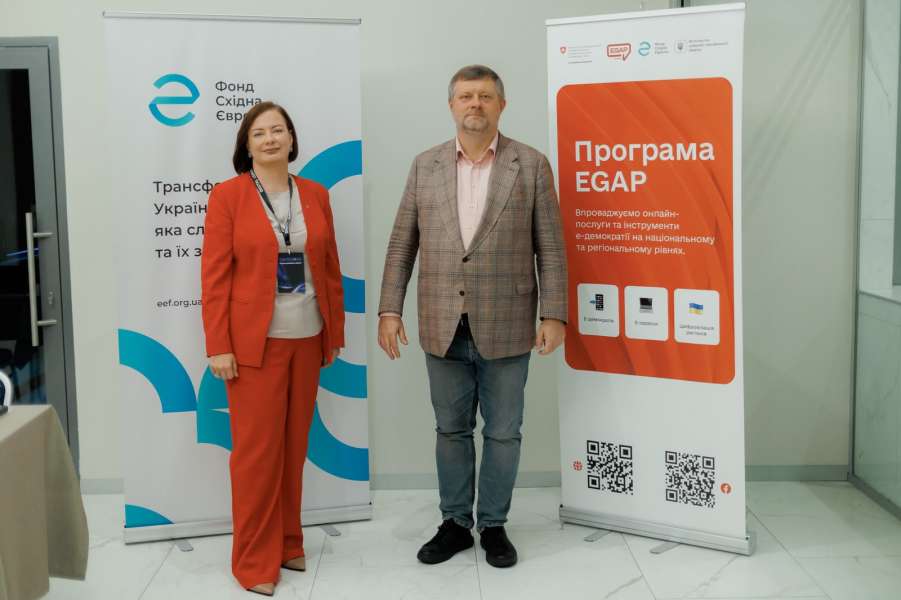
First Deputy Speaker of the Verkhovna Rada of Ukraine Oleksandr Korniyenko took part in the Forum of Community Digital Leaders 2026. The event gathered the representatives of territorial communities and regional military administration responsible for digital transformation.
During the forum, participants discussed the accessibility of public services, local self-governance development, cybersecurity, and the use of technologies in conditions of war.
Oleksandr Korniyenko noted that the interaction between citizens and the state has changed significantly in recent years. This is not only about transitioning services online, but also about their accessibility regardless of place of residence, saving time, data protection, and trust in state institutions.

"Ukraine has made remarkable progress in this direction: in the UN Online Services Index, we rose from 102nd place in 2018 to 5th place in 2024. Diia has become the most visible part of these changes; however, behind it lies a much larger system — state registers, IT infrastructure, data exchange, cybersecurity, and the work of teams at all levels," noted the First Deputy Speaker.
Participants also discussed the digital capabilities of local communities. According to Oleksandr Korniyenko, these capabilities must be an integral component of the overall capacity of local self-government — alongside financial, human, and infrastructure resources.

"The quality of public services should not depend on whether a person lives in a big city or a small community. They should receive the necessary service just as quickly — whether via smartphone or at an Administrative Service Center (ASC) — while local authorities must possess high-quality data and digital tools for planning and decision-making," he noted.

In conditions of war, technology also helps address security challenges — ranging from alerts and evacuation to inter-agency coordination and the protection of critical infrastructure.
"In frontline communities, digital solutions are essential for alerts, evacuation, coordination, and the protection of critical infrastructure. At the same time, the staffing challenge remains, particularly in cybersecurity; therefore, team training and experience sharing between communities must evolve alongside technology," emphasized Oleksandr Korniyenko.

The participants also discussed interaction among communities, regions, and the state. In particular, they addressed how the exchange of data and proven solutions can help different levels of authority respond more rapidly to the needs of territories.