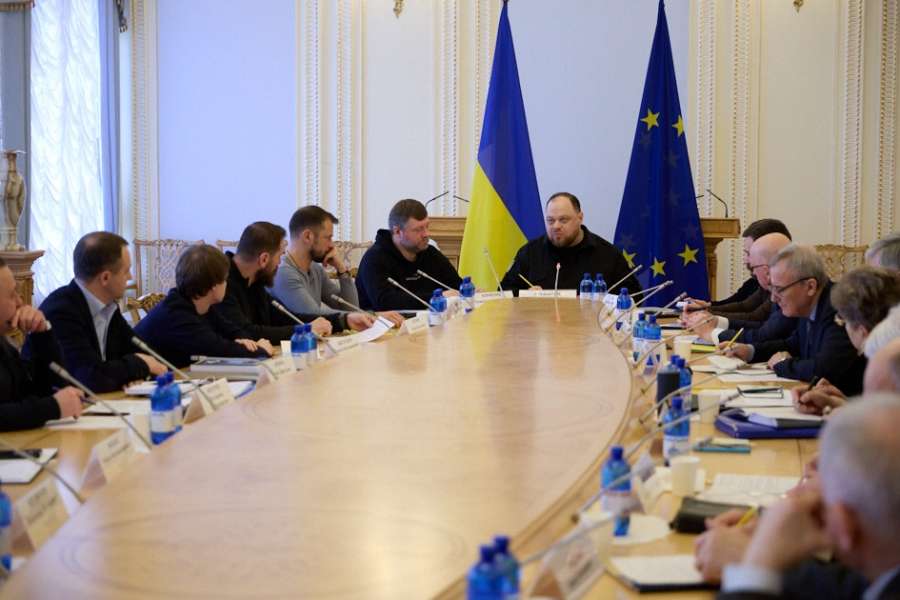
The Chairman of the Verkhovna Rada of Ukraine Ruslan Stefanchuk held a meeting on the development of the Ukrainian language in the current conditions.The event was also attended by the First Vice Speaker Oleksandr Korniienko, the Chairman of the Committee on Education, Science and Innovation Serhii Babak, the Minister of Education and Science Oksen Lisovyi, the Language Ombudsman Taras Kremin, representatives of the scientific and educational community, and experts.
At the beginning of the meeting, the Chairman of the Ukrainian Parliament outlined the range of issues that form the agenda for the functioning of the Ukrainian language in modern realities and on which work has already begun.
According to Ruslan Stefanchuk, the issues related to the digitalisation of the Ukrainian language are of utmost importance in today’s context, including the electronic library and its accessibility to citizens.
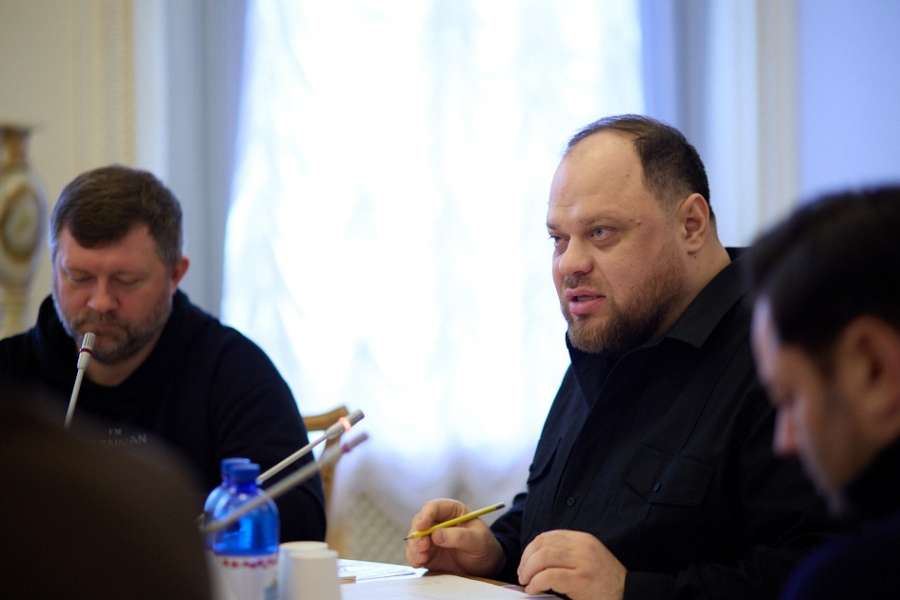
The meeting also touched upon the preparation of a manual for learning Ukrainian for foreigners. The Chairman of the Ukrainian Parliament noted that today the demand for the Ukrainian language in the world has grown many times over, and new manuals for foreigners are “extremely necessary for us to be able to promote our language and, consequently, our country.”
The participants of the meeting also discussed the need to create a unified Ukrainian legal glossary.
“A glossary is the first step in learning a professional language. Creating a unified Ukrainian legal glossary and ensuring the appropriate level of linguistic and linguistic expertise of legal acts is a necessity. After all, the essence of a legal decision will depend on the language expertise,” said the Chairman of the Ukrainian Parliament.
He also stressed the importance of providing professional official translation into the state language of international documents to be published on the official website of the Parliament. According to Ruslan Stefanchuk, the assistance of linguists in the high-quality translation of international acts will make it possible to produce Ukrainian language at the level of international legal documents.
The Chairman of the Ukrainian Parliament emphasised legislative initiatives to support the Ukrainian language as the state language.
“We need to realise that many of the issues in joining the EU will relate to language, culture and education. That is why we must find the necessary balance in order to realise our European integration prospects and not to lose the Ukrainian language as the state language,” Ruslan Stefanchuk said at the end of his opening remarks and called on his colleagues to actively cooperate in the development and preservation of the Ukrainian language in the context of the implementation of the state’s educational policy.
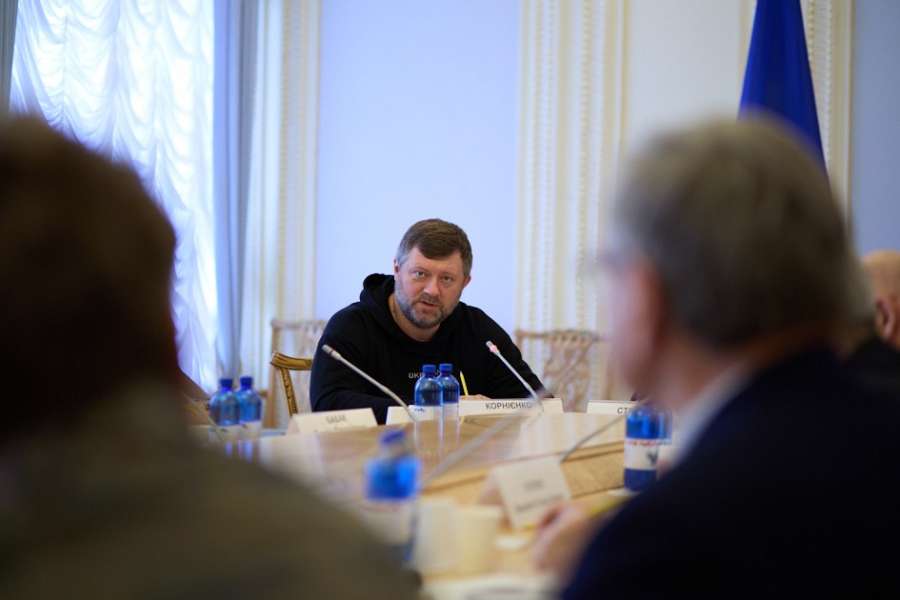
For his part, the First Deputy Chairman of the Verkhovna Rada of Ukraine Oleksandr Korniienko noted that the Ukrainian language is currently in global and national trends.
“Many citizens are looking for opportunities to quickly catch up on lost language skills or restore them. This is a window of opportunity to promote the Ukrainian language, so it is important that this process is implemented correctly. Therefore, we have to think in a certain way as marketers. It is important to do work that translates into concrete results and to use modern tools. We also have to remember that the country is moving towards European integration, so, of course, we should also consider supporting other languages, including English,” the First Vice Speaker emphasised.
He also noted that another dimension is emerging today that is developing at a different speed than conservative academic science – artificial intelligence.
“So, we need to understand what impact its development will have and how it will be combined with Ukrainian-language content. After all, AI answers will be based on this content. It is important not to lose sight of this context and even take the lead – to bring it into a separate area of discussion. “This is a matter of national security,” stressed Oleksandr Korniienko, “We understand that in 2-3 years, students will not go to the library, they will ask AI questions. And its answers will form educational, scientific, and political narratives. This is the challenge we need to address today.”
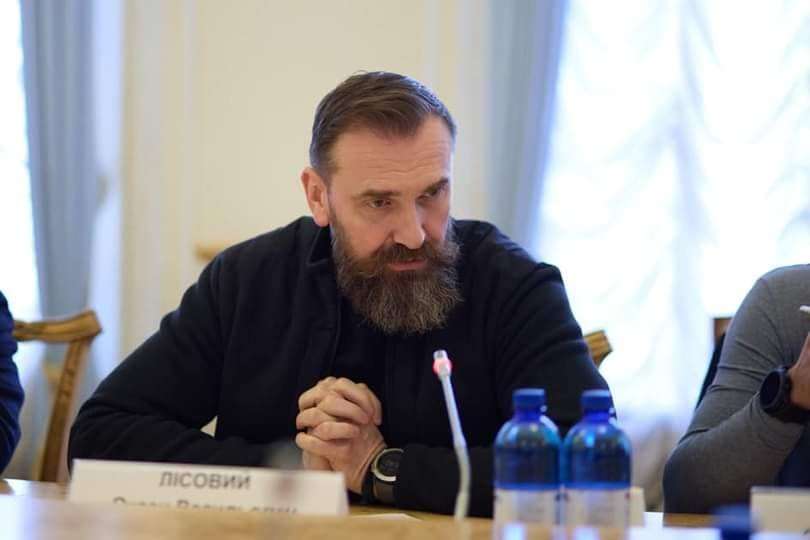
The Minister of Education and Science Oksen Lisovyi emphasised that many of the issues discussed are within the Ministry’s responsibility.
“As the Minister, I set myself the task of prioritising all issues related to the development of the Ukrainian language, the development of standards, and the creation of appropriate tools for service for both government institutions and citizens,” said Oksen Lisovyi.
The expert community was represented by Nataliia Kuznetsova, the Vice President of the National Academy of Legal Sciences of Ukraine, who authored some of the proposals for the creation of the legal glossary.
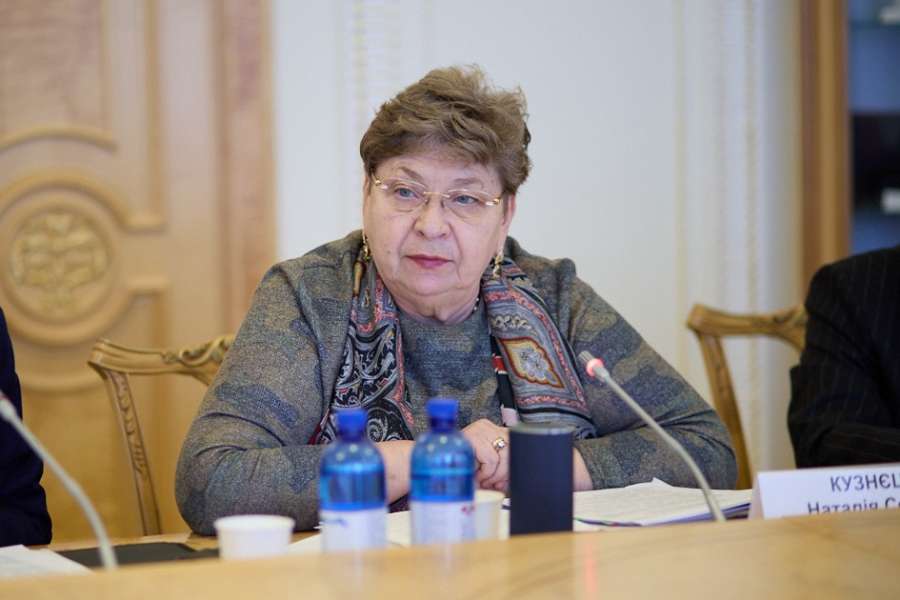
“We support the idea of such a tool. It is important for both legislative work and law enforcement practice. We, as experts, are ready to join this process and already have certain developments,” said the scholar and added that it is important to bring both draft laws and other legal acts to a high level of linguistic quality.
That is why, according to her, the issue of training language specialists in interdisciplinary areas, such as legal linguistics, is urgent.
“This is a completely new area, but it is extremely necessary. We need specialists who have knowledge and competence in language training and, at the same time, in the legal field. Legal linguistics can be such a field,” Nataliia Kuznetsova emphasised and assured the audience of the scientists' readiness to work with all language institutions to prepare high-quality and understandable legislation.