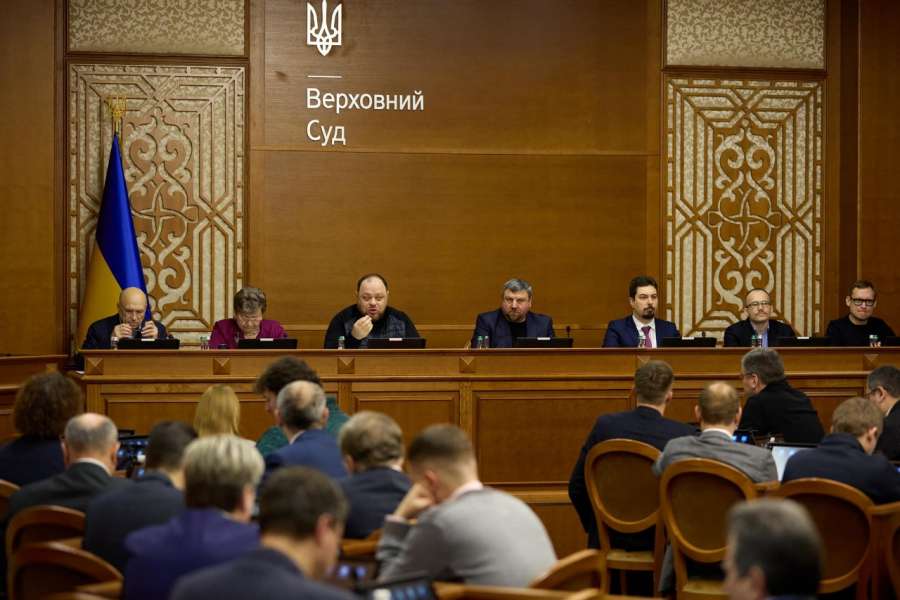
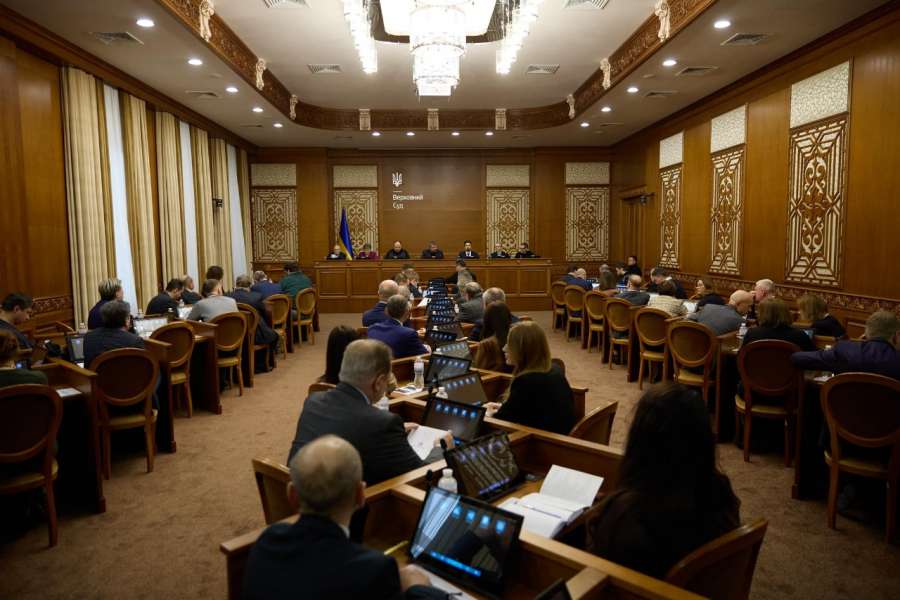
The discussion, which took place in the Civil Court of Cassation of the Supreme Court, was attended by members of the Ukrainian Parliament, representatives of the judiciary, leading experts in the field of civil law, government officials and public figures.
In his opening remarks, Ruslan Stefanchuk noted that today’s meeting is an opportunity to discuss issues related to one of the most important branches of law – civil law, its creation, application, as well as further updating and improvement.
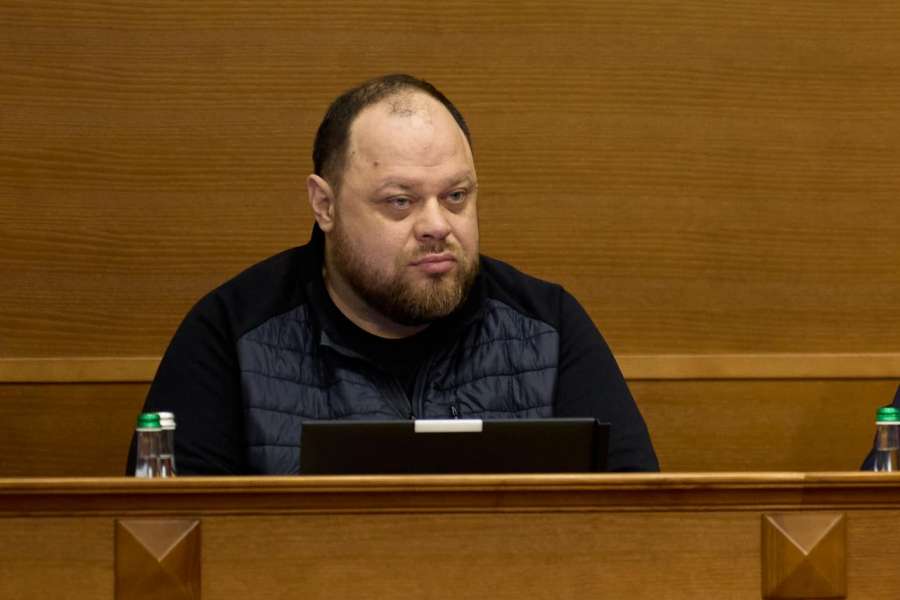
“Today it is important to focus on the Civil Code and civil legislation that will be in force tomorrow. The Parliament has already passed Bill No. 6013 in the first reading, which outlines the first steps in the development of civil legislation. In addition, there is a working group consisting of MPs and scholars that deals with the recodification of this legislation,” Ruslan Stefanchuk said about the Parliament’s achievements in this area.
He emphasized that the main function of the Parliament is legislative, and the quality of legislation is the main issue of concern to the Ukrainian Parliament.
“That is why, using the example of updating civil legislation, which is closest to each citizen, we demonstrate our willingness to change the current legislation and conceptual approaches to it. They are based on the best European traditions, and this is a prerequisite for success,” the Chairman of the Verkhovna Rada of Ukraine emphasized.
He also commented on the latest changes in the legislation on the Commercial Code, which are set out in the draft law on peculiarities of regulating business activities of certain types of legal entities and their associations in the transition period (Reg. No. 6013), adopted in the first reading by the Parliament.
“About 20 regulatory provisions of the Commercial Code will be in effect during the transition period and will gradually bring Ukrainian private law and legislation in line with the canons that exist in the world. If we are integrating into the EU, if we want powerful investments in Ukraine, we have to explain to our colleagues not what the right of economic management or operational management is, which simply has no translation into English, but what institutions and protection of their investment rights will be in Ukraine. In other words, this is a continuation of the de-Sovietization of Ukrainian legislation,” said Ruslan Stefanchuk.
In his speech, the Supreme Court Chief Justice Vsevolod Kniaziev emphasized that despite the aggressive and difficult war, our society finds an opportunity to discuss urgent issues of further post-war life and adaptation of modern legislation to it.
“The defining feature of today’s event is the combination of legislative, executive and judicial authorities and representatives of science among its participants. In fact, this is a perfect combination of synergy that should continue to result in sound decisions that will ensure the quality development of our country’s legal system. The Supreme Court’s practice can become an empirical basis in the process of recodification of civil legislation: it can point to the direction of improvement of established norms, as well as identify gaps that should be filled in the course of the systemic lawmaking process,” Vsevolod Kniaziev said in his speech to the audience.
For her part, Natalia Kuznetsova, the Professor, the Vice President of the National Academy of Legal Sciences of Ukraine, Scientific Coordinator of the working group on drafting a bill on recodification (updating) of the civil legislation of Ukraine reminded that on January 16, 20 years have passed since the Verkhovna Rada of Ukraine adopted both the Civil and Commercial Codes. During this time, she said, it was possible to draw appropriate conclusions about the urgency and relevance of the Civil Code of Ukraine.
“The strong internal potential, despite all the risks, enabled the Civil Code to take an important place as the main property regulator in Ukrainian society. However, the remnants of the Soviet past have found their refuge in the Commercial Code and for 20 years now, the peculiarities of regulating their activities have been a problem for Ukrainian legislation. This is directly related to the process of updating civil legislation and the fact that we are starting this process with proposals to abolish the Commercial Code,” Nataliia Kuznetsova explained the essence of legislative changes to the Civil Code.

At the end of the discussion, the Chairman of the Verkhovna Rada of Ukraine once again emphasized that the Parliament is open to discussions and proposals on updating civil legislation.
“This discussion at the level of the Supreme Court is a great progress that will allow us to listen to those who apply this legislation. This example shows how each bill should be prepared, how it should be discussed and debated. After all, all laws are for people. And they should be easy to use and protect the interests of each of us,” the Chairman of the Verkhovna Rada of Ukraine emphasized.