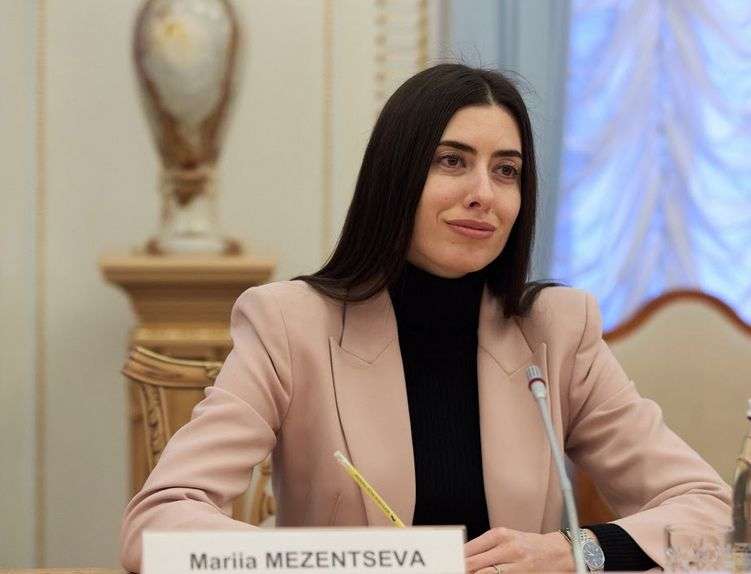
Over the past several years, the Parliamentary Assembly of the Council of Europe (PACE) has evolved from a consultative body into a key international hub for shaping the legal response to russia’s aggression. Following the expulsion of the russian federation from the organisation in March 2022, the Assembly has consistently worked to build a comprehensive system of accountability for the kremlin — ranging from the establishment of a Special Tribunal to compensation mechanisms covering damage inflicted since 2014.
— What role does play PACE in shaping the European policy on russian-Ukrainian war?
— Numerous effective resolutions can be recalled, many of which outlined support for Ukraine in considerable detail. Few anticipated that, amid the full-scale invasion, the Council of Europe would emerge as one of the most effective international platforms countering russian aggression.
Following russia’s expulsion from the organisation — despite its many years of membership — the aggressor state was removed from all support programmes and funding mechanisms. This, in turn, also influenced the shaping of a common response by the European Union.
A coordinated sanctions policy was developed. And although the Council of Europe has traditionally focused on the protection of human rights, today it can and must also speak about the real need to provide weapons and ensure air defence — as this is a matter of security not only for infrastructure, but first and foremost for the civilian population, adults and children alike.
— How influential are PACE resolutions on the practical decisions of member states? Do you see any changes in this influence after 2022?
— The changes have been profound — they have already translated into signed agreements, including those on the establishment of a Special Tribunal and compensation mechanisms. In addition, individual countries are exerting tangible influence on processes related to the return of civilians and military personnel, as well as illegally deported children.
At the same time, it is crucial that this platform is also used for a broader reflection on the historical retrospective of russian aggression. This includes, in particular, the issue of subjugated peoples living within the rf, as well as an examination of how the aggressor state shaped itself as a so-called empire and expanded its borders.
It is precisely in this direction that, in my view, we must work very actively in 2026.
— Do you see a real prospect for establishing a Special Tribunal for the crime of aggression? What role do PACE and the Ukrainian delegation play in this process?
— PACE became the first platform where the idea of establishing a Special Tribunal was articulated. At present, the relevant agreement has already been signed, although we are awaiting its expanded version.
We extend particular gratitude to the Netherlands for their readiness to assume the so-called hosting role — namely, to establish a permanent physical institution of the tribunal. It will operate in The Hague, the capital of international justice. An evidence-collection office has already been opened, meaning that virtually all the necessary prerequisites for launching the tribunal are now in place.
The European Union has also allocated additional funding to ensure the tribunal’s functioning. At this stage, our primary task as parliamentarians is to broaden the circle of signatory states. All countries — from Fiji to Australia — can and should join this process.
— Which of the PACE decisions do you consider to be the most significant in 2025?
— This undoubtedly includes finalising the creation of a special tribunal, utilising frozen russian assets, and expanding the list of reparations from 12 to 43 categories. This covers both material and immaterial damages: captivity, deportations, loss of property, destroyed businesses, and other consequences of aggression.
The third area — and perhaps the most painful — is the return of each and every person from russian captivity and torture. We will continue to seek ambassadors for each such case so that these voices are heard around the world.
Europe's legal shield: new reporting and compensation tools
The key initiative of 2025 was the finalisation of the Convention on the establishment of the International Claims Commission for Ukraine. This body will constitute the second stage of the compensation mechanism, following the Register of Damage, which has already received more than 60,000 claims. The Commission will be empowered to examine claims for compensation for damage caused not only to the state of Ukraine, but also to private individuals and legal entities. PACE insists that this process must be financed through the repurposing (reallocation) of frozen russian state assets, which constitutes a lawful countermeasure under international law.
PACE also pays particular attention to the issue of the Special Tribunal for the crime of aggression. In June 2025, a historic agreement on its establishment was signed, providing for accountability not only of the russian and belarusian leadership, but also of representatives of North Korea, whose troops were deployed to participate in the war against Ukraine.
How PACE Addressed Support for Ukraine Through Its Decisions in 2025
The Humanitarian Crisis: Prisoners of War, Children, and «Victory for Victoria»
The situation with Ukrainians in captivity remains critical. According to the Ministry of Internal Affairs, the number of missing persons, including military and civilians, is estimated at 74,000. The Assembly calls for an exchange based on the «all for all» formula, insisting that political negotiations should not delay the return of people.
The fate of journalists is a particularly tragic story. Since February 2022, the occupiers have killed 108 media workers. At least 26 journalists are being illegally held captive. PACE has introduced an annual commemoration of war correspondents, «Victory for Victoria», in honour of Victoria Roshchina, who died in russian captivity.
Strategy for the Future: «Peace Through Strength» and Countering Hybrid Threats
The 2025 resolutions clearly state that any peace process must be based on the principle of “peace through strength.” This means that negotiations can only take place from a position of resilience and a strong defensive capability of Ukraine.
PACE also warns of emerging hybrid threats facing Europe as a whole:
• Airspace
violations: In September 2025, deliberate incursions by russian drones into
the airspace of Estonia, Poland, and Romania were recorded.
• Hybrid warfare: Cyberattacks
and disinformation campaigns aimed at destabilising elections in Moldova and EU
Member States.
• Militarisation of children: The
occupation authorities are introducing military education for Ukrainian
children in the temporarily occupied territories, which is regarded as
preparation for future waves of war.
• PACE further confirms that, until lawful democratic elections are held, Volodymyr Zelenskyy remains the legitimate President of Ukraine.