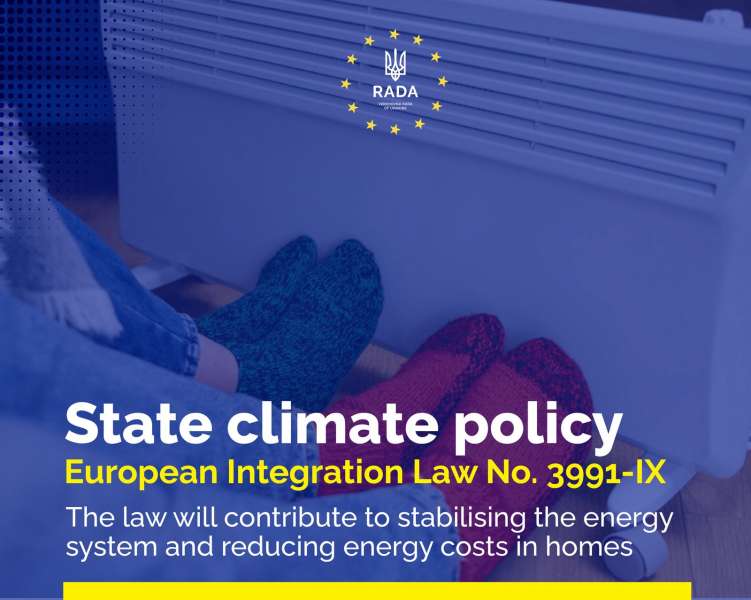
The European Integration Law number 3991-IX has been in force in Ukraine for over a year. It regulates governmental actions towards climate change, reduces human impact on it, and prepares for new climate realities.
Verkhovna Rada adopted this law in order to align Ukrainian legislation with EU norms, lessen the dependence on fossil fuels, get the economy ready for new world trade rules, and protect people and environment from the effects of climate change. Basically, it is a «roadmap» showing how the country is transitioning to the modern energy and economy.
Ukraine set a course for climate neutrality until 2050, meaning the volumes of greenhouse gas emissions must equal the volumes of its consumption or compensation.
According to the Committee on Environmental Policy and Nature Management, key principles of a new climate policy include tracking and monitoring of emissions, integration of climate decisions into all areas of public policy, development of renewable energy.
In particular, the law provides for a reduction of greenhouse gas emissions for at least 65% by 2030 and an increase of volumes of its consumption (e.g., through reforestation). Also the government is going to help vulnerable communities, who are the most sensitive to the consequences of climate change.
This law, in a long-term perspective, will contribute to the improvement of air quality, energy stabilisation, job creation, cutback of energy costs in residential buildings, and reduction of natural disaster risks. The climate law relates not only to the ecology, but to the economy, safety and the future of Ukraine as well.
This document is about the protection of people, economy and nature from the negative effects of climate change such as droughts, floods and heatwaves. It is also about strengthening the environmental, energy and food security of Ukraine.