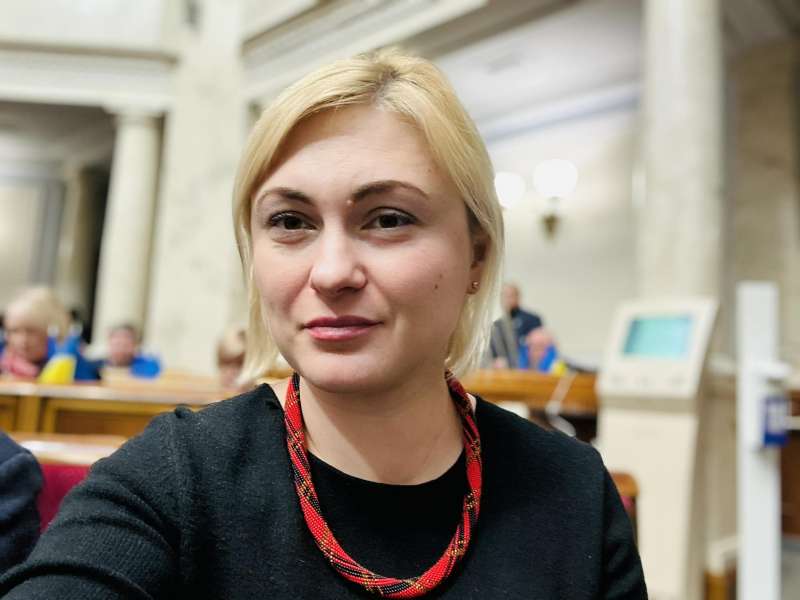
‘The PACE Committee on Culture in Copenhagen has just unanimously supported my resolution “Combating the destruction of cultural identity in time of war and peace”. Many thanks to the Prosecutor General of Ukraine Andrii Kostin for his speech at the committee, important legal explanations calling for support for the resolution,’ the MP wrote.
The key provisions of the document, which will be voted on in the hall at the June PACE session, include:
-ennsuring full reparations on the basis of international law, in particular through restitution, compensation, rehabilitation, satisfaction and guarantees of non-recurrence of destruction;
- raising awareness of how propaganda, colonial and neo-colonial practices, including the ideology of the ‘russian world’, can create the basis for violations of international law, including in relation to cultural heritage;
- the resolution provides for sanctions against anyone who carries out or facilitates the illegal transfer or illegal trade in artefacts, conducts illegal excavations or uses artefacts for their own purposes (exhibitions, auctions, scientific publications), and also provides for the prosecution of authorities and state institutions involved.
The resolution states that the russian federation uses cultural ‘cleansing’ as an instrument of war to deny the existence of another cultural identity and to erase historical roots, values, heritage, literature, traditions and language. Such actions constitute war crimes and crimes against humanity and demonstrate a specific genocidal intent to destroy the Ukrainian nation, or at least a part of it, in particular by destroying Ukrainian identity and culture. This is part of the genocidal campaign that russia is waging against our people.
“I illustrated my speech today with a book by the writer Volodymyr Vakulenko, published by Vivat Publishing House. During the occupation, Vakulenko wrote a diary and hid it under a cherry tree in his native village in the Kharkiv region; the writer Viktoriia Amelina found this diary and wrote a brilliant foreword to the book. They were both killed by russia. Vivat printed the book in Kharkiv at the Factor Druk printing house, while russia destroyed the printing house with a missile strike, killing 7 employees and burning 50,000 books.
This tragic story, the New Executed Renaissance, is what my resolution is about. It is about how to preserve what russia is trying to destroy, kill and erase. It is about Ukrainian culture, our heritage and identity. I hope for the support of my colleagues at the June session,” said Yevheniia Kravchuk.