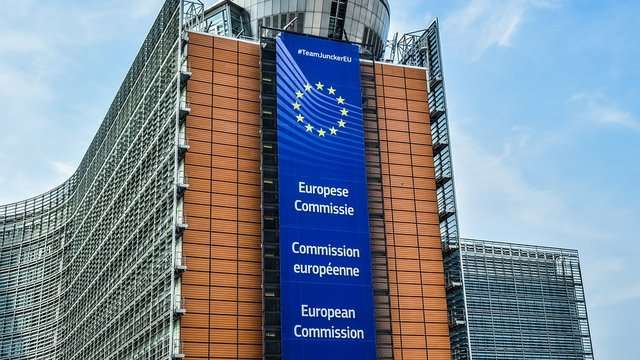
The European Commission has published a report on Ukraine's progress in the reforms necessary for EU accession. The document notes that, despite the war, Ukraine remains strongly committed to European integration and is demonstrating significant results in the implementation of reforms.
The European Commission notes that Ukraine has successfully completed the legislative screening process and fulfilled the conditions for opening negotiations on three of the six negotiating clusters: ‘Fundamentals,’ ‘Internal Market,’ and ‘External Relations.’ The report emphasises that Ukraine has adopted roadmaps in the areas of the rule of law, public administration and the functioning of democratic institutions, as well as an action plan for the protection of the rights of national minorities, which has been positively assessed by the European Commission.
The European Commission also expects Ukraine to fulfil the conditions for opening the remaining three clusters in the near future.
Key achievements
The report notes the stability of democratic institutions even under martial law. It states that the Verkhovna Rada continues to pass laws necessary for European integration, parliamentary control over the government has been strengthened, and live broadcasts of parliamentary sessions have once again become open.
The document notes that Ukraine has made progress in implementing judicial and anti-corruption reforms. A roadmap for the development of the electronic justice system has been adopted. NABU, SAPO, and High Anti-Corruption Court continue to exercise their powers, and the independence of anti-corruption bodies has been quickly restored after public protests and serious concerns from international partners.
The European Commission has positively assessed Ukraine's efforts in public administration, budget planning and the digitisation of public services. In the economic sphere, macroeconomic stability, the resilience of the banking system and gradual economic growth have been noted, despite the state of war.
Progress has been made in education, science and culture reforms: laws on pre-school and vocational education have been adopted, the New Ukrainian School reform is ongoing, and participation in the Horizon Europe programme is developing.
Achievements in the environmental sphere include the adoption of a law on climate policy, which brings Ukraine closer to the EU's goal of climate neutrality by 2050, and the development of the renewable energy market and legislation on the prevention of industrial pollution.
It is also noted that Ukraine continues to closely coordinate its foreign and security policy with the EU, achieving a high level of alignment with the positions of the EU's Common Foreign and Security Policy.
It also states that Ukraine continues to closely coordinate its foreign and security policy with the EU, achieving a high level of alignment with the positions of the EU's Common Foreign and Security Policy.
Areas requiring further efforts
The European Commission emphasises that a significant part of the recommendations made to Ukraine in the previous report remain valid this year. They primarily concern fundamental areas such as the rule of law, judicial reform, the fight against corruption, the protection of human rights, as well as the improvement of public administration, public procurement, the energy market, social policy and the development of the internal market. Many sections indicate that the recommendations from last year's report have only been partially implemented and therefore require further implementation. For example, Ukraine should speed up the filling of judicial vacancies and the assessment (verification) of the qualifications of current judges; fill the remaining vacancies in the Constitutional Court without further delay; adopt legislative changes to make the procedures for selecting and dismissing the Prosecutor General more objective, transparent and merit-based.
Last year's recommendations of the European Commission regarding the anti-corruption architecture have only been partially implemented. It is emphasised that anti-corruption bodies need to be strengthened, the jurisdiction of the NABU needs to be expanded, the independence of the SAPO needs to be ensured, and the effectiveness of the High Anti-Corruption Court needs to be guaranteed.
The same applies to restrictions on the opposition. The report notes that opposition MPs continue to face restrictions, particularly with regard to travel abroad or the freezing of their assets. ‘It is important for democratic stability to ensure that the rights of the opposition are consistently upheld. No legislative initiatives regulating the rights of the parliamentary opposition have been developed or registered,’ the document states.
The report also mentions that the Ukrainian government has set a goal to complete negotiations on accession in all clusters by the end of 2028. The European Commission supports this ambition but stresses the need to accelerate the pace of reforms, particularly in the areas of the rule of law and the fight against corruption.