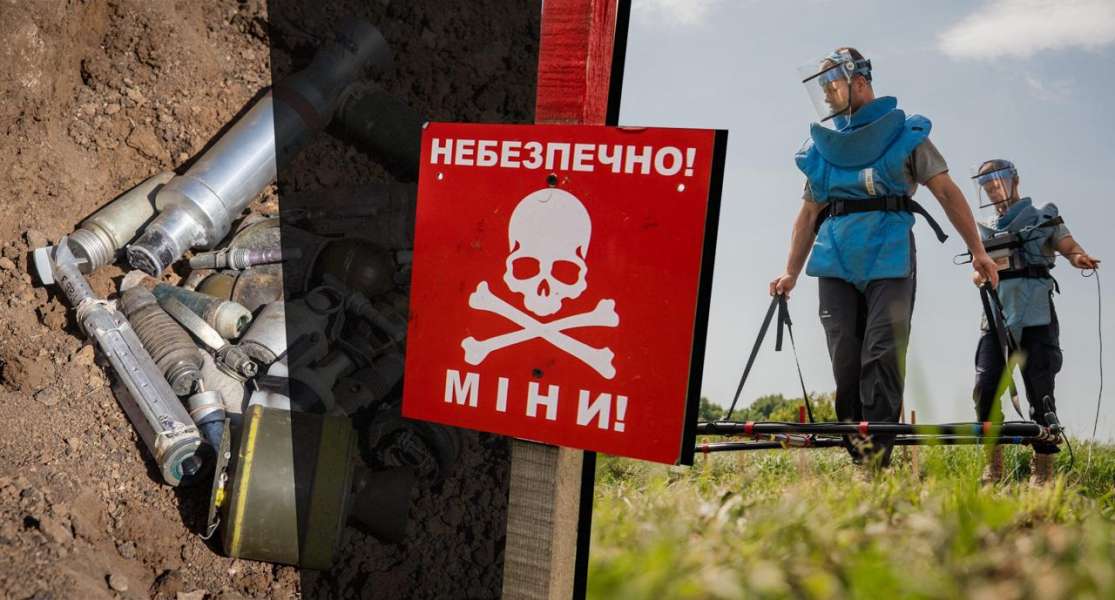
Support from international partners in land demining is a crucial component of citizen security, food security, and economic recovery, the Committee on Agrarian and Land Policy reports.
According to the Ministry of Economy of Ukraine, Italy has announced a new financial contribution to support humanitarian demining initiatives in Ukraine.
Currently, Ukraine has signed an agreement with Italy and the United Nations Development Programme (UNDP) for 1.5 million EUR to support humanitarian demining initiatives. This funding is vital for restoring living conditions and ensuring a stable future for the country.
It is noted that the signed agreement is crucial for the implementation of the National Mine Action Strategy and will enable projects focused on clearing agricultural land, developing infrastructure, and restoring economic activity in de-occupied territories. The agreement demonstrates the strength of international partnership, which is critically important for Ukraine’s resilience.
It is estimated that approximately 138,500 square kilometers of Ukrainian territory may potentially be contaminated with explosive devices, posing a serious threat to civilians and significantly undermining economic stability.
At the same time, the area of potentially mined land has decreased by over 20% compared to the end of 2022 and currently stands at about 137,000 square kilometers. The majority of this land is agricultural. Demining operations are carried out by the State Emergency Service, the National Police, the Ministry of Defense, and non-governmental mine action operators. Currently, there are 112 certified operators active in the market, including eight foreign ones. The total resources include over 9,000 personnel, 278 demining and earth-moving machines, and more than 13,000 metal detectors.
It was also noted that UNDP, in partnership with the Ministry of Economy of Ukraine and the National Mine Action Authority, has been supporting the development and testing of advanced technologies for humanitarian demining since the beginning of the full-scale invasion. This includes the use of drones, remote sensors, and artificial intelligence systems to train models for detecting explosive devices.
The mobilization of additional funding will enable the expansion of land clearance operations, improve information management systems, and support specialized training programs for people with disabilities, veterans, and victims of explosive hazards.