Salary increase to teachers, wartime challenges, and AI in learning: Serhii Babak, the Chairman of the Committee on Education, Science and Innovation, spoke about what is awaiting the educational system
15 December 2025, 13:01
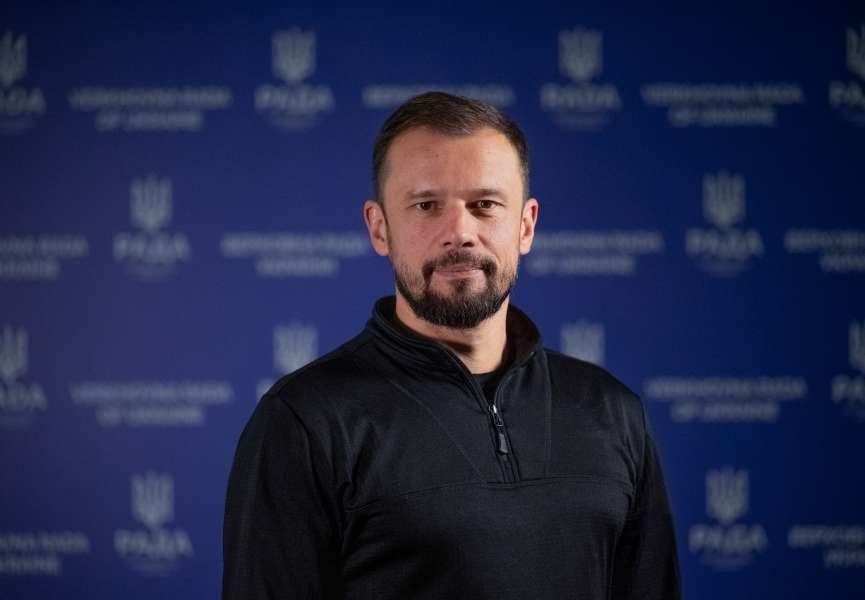
Serhii Babak, the Chairman of the Verkhovna Rada Committee on Education, Science and Innovation, talked about key budget decisions in education, plans regarding educators’ payment rates, unique features of enrollment campaign in times of war, upgrade of discipline «Defense of Ukraine,» learning opportunities for veterans, and role of AI in studying.
– The next year’s budget includes a pay raise for teachers. How much will they receive in the following year?
– By and large, this year ₴59 billion were added to the educators’ salaries. It has never happened before in the history of Ukraine. It is a well-known fact that the labour cost of teachers is one of the lowest compared to other sectors, and this is a huge issue.
Firstly, only ₴53 billion were addressed to cover teachers’ wages. Later, during the meeting of Budget Committee and Servant of the People Faction, I raised a question to put extra ₴4,8 billion to our field for the next year. Thanks to my colleagues and their understanding and support, we have got this money. The main idea is to increase salaries for educators in secondary education as well as in professional and vocational education, and, separately, for scientific-pedagogical workers in universities. Everything else is financed from local budgets, e.g., preschools receive funds from communities, vocational and partially professional educational institutions – from regions or big cities.
As MPs, after the first reading, we saw a unique opportunity to guarantee teachers’ pay in the size of three minimum salaries. Meaning, to eventually carry out the norm of the Law On Education, according to which the teacher’s salary must be no less than three minimum national living wages. However, if we implement the pay raise in the existing construction of our system right now and increase it up to three minimum salaries, the cost of the issue will reach ₴336 billion, whereas there is currently only ₴103 billion in the 2025 budget. For a country at war this sum is objectively unattainable.
– Is that why it was decided to change the system of charges itself?
– Exactly. We proposed a correction to the project of the State budget, which would allow us to both account for extra money and change the logistics of the pay system. Nowadays the salary itself is very little, but there is a great amount of bonuses. We wanted to reverse it: to increase the salary and decrease the bonuses. Today young teacher gets paid about ₴6200 per month, ₴8200 with additional bonuses. This is critically demotivating. With the new system, the same young teacher would receive approximately ₴20000. Sounds much better, isn’t it? Yet, after lasting consultations and discussions we left those corrections behind, that is why starting from January 1st there will be an increment by 30%, and then another increase in September by 20% to the now existing amount. In addition, the Cabinet of Ministers received an order to prepare and submit to the Verkhovna Rada its suggestions for the new pay system until September 1st.
– You mentioned the lack of teachers’ motivation. What is the real scale of personnel shortage?
– Every year we prepare over 10 thousand future teachers, but most of them do not go to schools, and low salary is the main reason for that. There are 316 thousand positions in the school system, but the reality is that only 272 thousands are occupied. Meaning 44 thousands are hidden vacancies, which are covered by substituting. It is a 15% deficit.
A young adult needs adequate starting conditions, which include the ability to pay rent and plan for the future. With a salary of ₴8-10 thousands, they are looking for a different job. And in 30 years no government has increased all teachers’ salaries radically, because there are just so many of them and that requires great financial resources.
– And what about the situations with staff at universities?
– We don’t have as much of an issue there. The salaries are higher, for example an associate professor receives approximately ₴15 thousand. Also, universities usually have additional earning tools such as grants, students’ tuitions, scientific research, practical work etc. The schools don’t have these opportunities.
– What will this year’s enrollment campaign look like? Are there any changes to the exams planned, especially for those, who are studying or living abroad?
– This year we will have the same enrollment system, which has already shown its efficiency during the times of full-scale invasion. This is a National Multi-Subject Test (NMT) format with four disciplines, three obligatory and one elective. The testing happens during one day, and it is critical due to safety measurements. The most important aspects are safety of all participants and equity of access to higher education. In fact, 20 years ago External Independent Evaluation (ZNO) was created with this very idea in mind.
Separately, I want to mention the work of the Ukrainian Center for Educational Quality Assessment, especially one abroad. It is an enormous amount of work that isn’t financed neither by state budget, nor by any other sources. It is conducted thanks to the support of our partners. Over 30 countries provide their university bases, computer classes, often even on weekends and holidays. Their employees come there as volunteers to ensure that our children have the ability to pass the test. It is a tremendous amount of work.
Last year about 300 thousand students went through this system. And, most importantly, children who took NMT abroad demonstrated very satisfactory results. On average they showed the level similar to the results in Kyiv and Lviv regions – traditionally, the two leaders in this matter. They even had higher marks in foreign languages, which is obvious because children have already lived quite some time in a foreign language speaking environment. But all other disciplines, including Ukrainian language, history of Ukraine, mathematics, are also at a good level. That is, their results completely meet the high general standard.
– Will the school subject be reviewed, due to the full-scale invasion?
– There are many fundamental disciplines that are not affected by martial law at all. The backbone like mathematics, physics, chemistry, Ukrainian language, doesn’t require drastic changes due to the war itself.
But there is a subject, which has already considerably changed. It is “Defense of Ukraine”. Once it was called premilitary training, but most people didn’t take it seriously. They were training reluctantly, and infrastructure severely worsened, the equipment in schools had gotten out of date by decades. In some rural schools 50-year old fake weapons can be found.
We understood that with the start of full-scale invasion this subject must become completely different. That is why in 2022 we started working on its upgrade, and in 2023 we took this issue very seriously. Then there were some unused funds in the budget, and we decided to direct them into the full renewal of the subject “Defence of Ukraine”.
We had put finances into creating a huge network – more than 900 inter-school resource centers. Because there is no sense to renew infrastructure in every of 12000 schools. Instead of this we designed a different model: inter-school centers based on existing institutions – technicians’ houses, after-school facilities etc. – where modern equipment is.
Now there is a completely different level and opportunities for learning, like drones, tactical training, firearms, first aid lessons. Students come here for one school day and complete the full cycle of modules. It creates real practical skills.
Simultaneously, we are also upgrading other elements of the school program. For example, textbooks on the history of Ukraine. In the 11th grade textbook there is a chapter called “Modern history”, and we have already added materials about full-scale invasion there. It was a difficult task because the content is very sensitive, but we considered it necessary to update this chapter even before it will be time for official textbooks reprint, according to the standards.
– Educational application “Mriia” (Dream) had to be secured in the legislation, but the respective draft law wasn’t supported by the deputies. Will it be revised and brought to the session hall again?
– “Mriia” (Dream), as well as other numerous projects, that we are launching right now would need adoption of a law first in a peacetime, and only then development and implementation. But in a state of martial law the paradigm changes, that is why we initially launched an experimental project. And, honestly, it is an amazing opportunity. I would personally keep this option even after the end of war.
The experiment can last a maximum of two years. It gives the government a chance to launch the product, see how it works, and then decide if there is a need for it at all. In the case of “Mriia” the experiment has gone well, so of course there will be a second try to adopt the law.
– But there also were a lot of discussions about this app, moreover the opinions were quite polar.
– One of the versions of it (app)is that nowadays there exists a market of commercial educational applications. The government hasn’t invested in them; those are private businesses. Imagine, 12000 schools, almost 4 million children. It is a big market. If you cover even 10%, you already have a great profit. Maybe, it is a question of market competition.
But why did the idea of a state application emerge? Because the government must provide basic, minimally essential things for all children for free. For those, who cannot afford paid services. The government is required to provide them with a basic product free of charge. And the application “Mriia” is exactly like that.
– Let’s talk about artificial intelligence. Do you intend to regulate its use in a learning process?
– It is actually a much more interesting question than it might seem. Will we regulate it? Frankly speaking, we are not sure.
Nowadays universities have already started implementing their own policies within the limits of their autonomy, and it is absolutely legal. Every university has a right to decide how to regulate the use of AI. The world is moving on the same track: some universities allow students to use AI, others forbid it. But so far there are no real regulations for it.
Recently, about a month ago, we talked with the MP of the British parliament, who also holds two government positions: Parliamentary Under-Secretary of State for Early Years and Equality at the Department for Education in the United Kingdom. The main topic of our talk actually concerned the regulation of AI. In Britain they have serious research groups, both from universities and independent. And even they still don’t have a single clear answer to the question of implementing a separate policy.
In a modern progressive society the idea that AI will eventually become a constant part of our lives as a helper prevails. It already has become it. But the real issue begins where AI is used as a substitute for human intelligence. And here the need for some sort of regulation might emerge, because AI should be a fellow companion, a tool, not a substitute.
In fact, it is the same situation as it is with phones and the Internet: I am convinced that AI should not be forbidden. We should teach how to use it, and use it correctly and ethically.
– So, you suggest that soon AI will be implemented in education?
– Some elements of AI are already integrated into “Diia” and are being tested in “Mriia”. So far they are working as assistants, and of a very basic level. But we will definitely continue experimenting and trying different models. And only after these tests will we make a decision.
– Are there any separate educational programs being planned for veterans, outside the existing ones, that would be directed into integration of veterans into a civil life and their re-qualification?
– After 2022 it became obvious that Ukraine will have an unprecedentedly huge veteran community. According to the soldiers, after only six months of the military service they already realise that it will be hard to come back to their previous profession. The experience of war drastically changes the person, and gained military specialisations usually don’t have a direct civil equivalent.
For that reason in 2022-2023 we began preparing systematic decisions. The law On Professional Education, which also can open a big scope of opportunities for future reintegration of veterans, became our key tool. The law provides for two parallel tracks: standard professional education for youth (after 9th grade) and education for adults through short-term courses lasting from one to six months, depending on the complexity of the profession.
This second track was created with aim on the future reintegration of veterans and it provides opportunities to quickly get a new degree in a variety of different fields of professional education. Veterans can also get intensive training, adapted for adults, who already have secondary or higher education, and after the end of courses they may take an exam in a qualification center and officially receive the right to work in a new profession.
The reform of professional education must work for both veterans and any other grown up Ukrainian, who wants to change profession or improve their qualification. The war had only made this need more prominent and urgent.
– What plans do you have for the eurointegration track for the following year? What draft laws in the educational field should be initiated and adopted next year?
– Our progress is already quite good. For example, the European Commission put our law «About preschool education» in the top-3 of our achievements on the way to eurointegration, because it even exceeds European legislation.
Next year key laws will regard science, e.g. «On the Priorities of Scientific Work», «On Innovative Work» and «On Research Infrastructure». One of my goals is to turn our universities into centers of development of innovations. We want to lift off the legislative limitations that don’t allow the institutions of higher education to become startups. We are also waiting for the project of Science city law from the Government.
– So, the main goal is to bridge scientific innovations and the economy?
– Exactly. We are working on it, so that science could closely collaborate with the economy through innovative tools.
Martial law proved to us that it is possible. Our scientists have quickly learned how to make drones and EWs, and successfully are producing them now. Even though science and economy used to be two very separated fields that lived on their own and didn’t intersect.
When these two fields unite, they start working together. The law «On Innovative Work» is going to do just that: it will lay the foundation for the whole ecosystem.