Oleksandr Haidu: "To make Ukrainian producers compete even more confidently in the EU, our legislation has to be harmonized with EU legislation as much as possible."
03 August 2026, 12:43
Recently, the Verkhovna Rada of Ukraine adopted the Law on State Regulation of the Organic Production, Circulation and Labeling of Organic Products (№4921-ІХ). It aligns the rules for growing and selling organic products with EU standards, enables small farmers to obtain group certification, and introduces strict controls to ensure that only verified goods receive the 'organic' label.
Oleksandr Haidu, Chair of the Committee on Agrarian and Land Policy, spoke to the Press Service of the Verkhovna Rada Secretariat about how soon Ukrainian products will appear on store shelves in European countries and what benefits this will bring to ordinary Ukrainians.
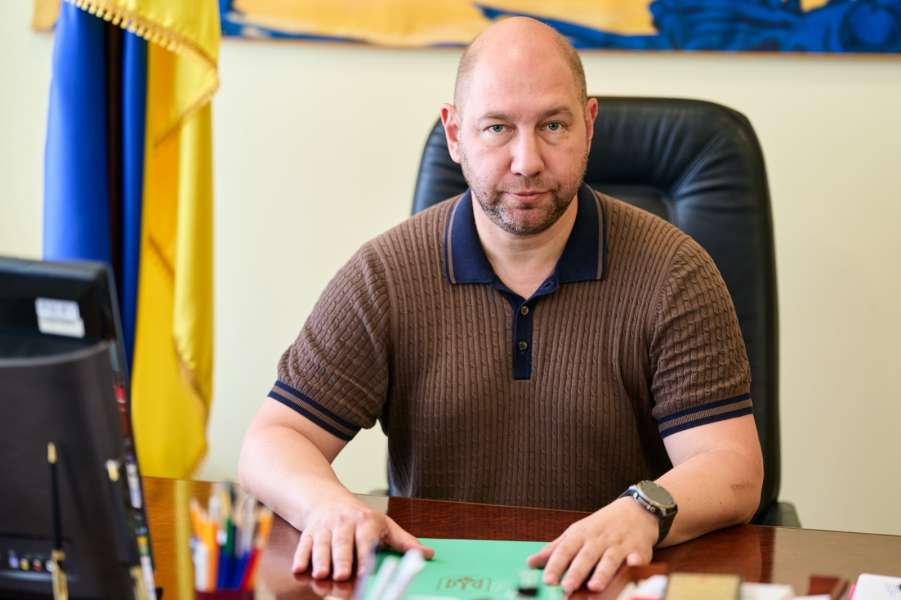
The European Union updated its organic legislation back in 2022. Why was the adoption of a similar law so critical for Ukraine right now?
We have been working on this draft law for quite a long time. It was quite complex, which is why it wasn't adopted immediately. We have been coordinating with all participants of the market for a long time. After all, organic production is a specific sector that is actively developing in Ukraine. We are even among the top three exporting countries of organic production which is in demand in the EU.
It is important for us today to demonstrate that Ukraine is prepared to be part of the European family and work according to common European norms and rules. We are ready to register our producers and show that this entire system functions in Ukraine in the exact same way as in the European Union.
The main objective of this law—for both domestic and international consumers—is to guarantee genuine quality. In other words, to ensure that everything stated on the packaging is true. The goal is to build consumer trust in these products, in the companies that manufacture or process them, and overall, in the state bodies that oversee this process.
Are we ready for European standards? And when will this law be put into practice?
We have already taken the primary step—establishing a modern legislative framework harmonized with European approaches in organic production. The next phase is the practical implementation of the Law's provisions.
To achieve this, it is necessary to adopt a number of secondary regulations. These will detail the procedure for certification, the maintenance of state registers, the execution of state control, and other mechanisms provided for by the Law. Work on these measures is already underway in coordination with the Ministry of Agrarian Policy and the State Service of Ukraine for Food Safety and Consumer Protection (DPSP).
Once this work is complete, the new system will be able to function fully in practice. This will ensure transparent rules for market operators, more effective state oversight, and the further alignment of the Ukrainian organic sector with European Union legislation.
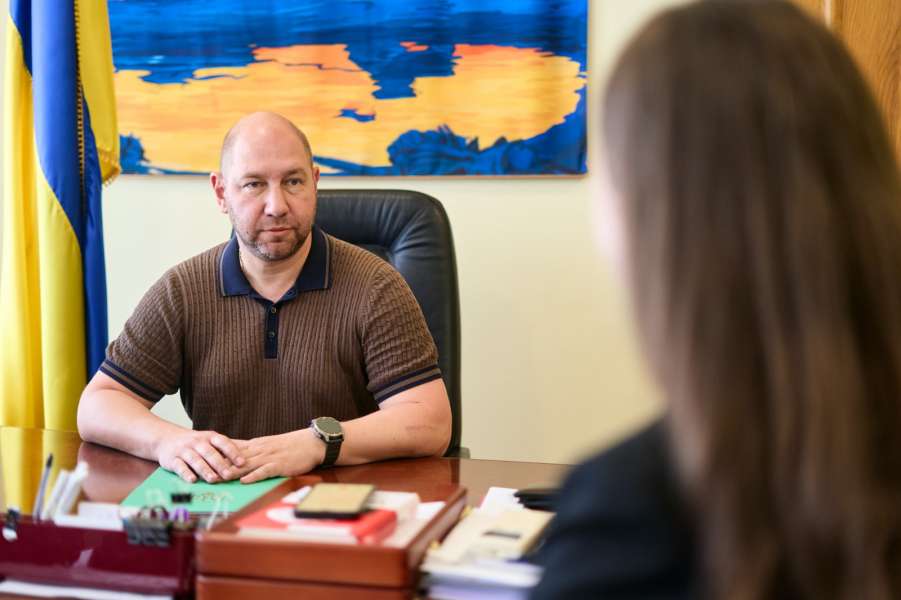
Which EU standards in this field have already been implemented in Ukraine? And which product categories will now be labeled as ‘organic’?
Our legislation in the field of organic production has long been based on European rules. Prior to this, we were gradually aligning it with EU requirements that were in force until 2022. The new Law represents the next step: its goal is to bring Ukrainian regulations into maximum compliance with modern European legislation.
That is precisely why the approach to classifying organic products is changing. While we previously referred to individual sectors—such as crop production, livestock, and beekeeping—the Law now defines specific product categories, just as in the European Union.
These include live animals and unprocessed agricultural products (including seeds and plant reproductive material); processed food products; feed; as well as certain other products closely linked to agriculture, such as yeast, essential oils, salt, or beeswax.
Regardless of the product category, terms like ‘organic,’ ‘bio,’ or ‘eco’ may only be used for products that comply with legislative requirements and have passed certification. This serves as a guarantee to consumers that they are indeed buying a genuinely organic product.
Is there an exhaustive list of organic products manufactured in Ukraine? Could you list them?
The list is extensive. Virtually any food item can be organic. Any product we consume on a daily basis has the potential to be organic, as the key factor lies in the actual growing or production principle itself.
Organic products are grown or manufactured without the use of, for example, plant protection products, mineral fertilizers, pesticides, agrochemicals, or non-organic additives.
Even an egg can be certified as organic—provided the chickens are fed organic grain and are not given synthetic vaccines or antibiotics. These strict requirements serve as proof that the egg is organic, free of harmful substances, and eligible for the corresponding label.
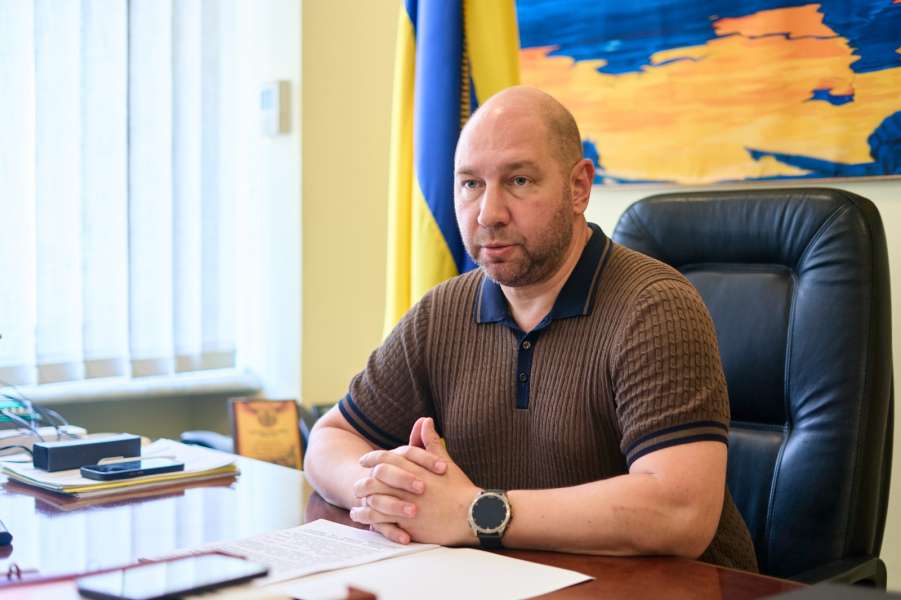
Ukraine has authorized organic certification bodies. How will they operate, and what will their duties entail under this Law?
In fact, this is nothing fundamentally new for Ukrainian certification bodies. They have been operating according to European standards for many years, as these very standards are required to certify organic products exported to the European Union.
Certification bodies are already active in Ukraine, boasting significant practical experience in applying European requirements. Therefore, the new Law does not imply a complete overhaul of their operations.
In practice, they will continue working under rules they know well. The main difference is that these rules will now be fully enshrined in Ukrainian law, serving as the sole foundation for organic certification in Ukraine.
For producers, this means greater legal certainty; for consumers and international partners, it builds even stronger confidence in Ukraine's organic certification system.
The Law mentions the term ‘group certification.’ What does it mean?”
Essentially, group certification is an opportunity for small-scale farmers to work together. If obtaining an organic certificate is too expensive and complex for an individual farm, it can join forces with other similar producers. In this case, they undergo certification as a single group and share the costs among themselves.
This significantly reduces certification expenses, making organic farming more accessible for small producers. Crucially, product quality standards are not compromised—all group members must operate under identical rules and undergo regular inspections.
This mechanism is already in place across the European Union, and now we are introducing it in Ukraine. It will help small producers unite, cut certification costs, and access the organic market more easily.
Currently, organic products can also be sold via online stores. How will labeling work in that space? Can buyers be confident that they are purchasing genuinely organic rather than counterfeit products? Does the Law regulate this?
Yes, the Law explicitly regulates online sales of organic products. If a product is offered as organic, consumers must receive all relevant information prior to placing their order. This means that online retailers must clearly indicate that the product is organic and provide supporting verification data.
At the same time, it is vital to understand that simply using the word ‘organic’ on a website is not enough. Only producers who have undergone certification and hold a valid certificate are permitted to label their products this way. Buyers can verify details about the producer, the certification body, and the certificate itself in the State Register of Certification Bodies and the State Register of Market Operators. This guarantees that the product was indeed made by a certified operator.
Therefore, buyers can rest assured: if a product is labeled as organic, its producer has been certified, and their operations are subject to regular audits by a certification body. The law imposes liability for the unauthorized use of organic labeling.
Overall, how will the Law on Organic Production affect everyday Ukrainians?
For those who purchase and consume organic products, there will simply be more choices available on store shelves. We hope this will give a strong boost to the sector's development.
At the same time, the Law will give consumers confidence that products meet their claimed quality standards, are subject to state oversight, and that instances of counterfeiting or misleading labeling will decline. If the packaging says ‘organic product,’ it will truly mean that the product is organic, and that consumers are paying for genuine quality.
How will this Law affect Ukrainian farmers? Are there any changes in store for them?
For most farmers, it will not change their day-to-day work. Rather, it opens up a new avenue for growth.
However, in my view, this Law goes beyond just organic products. It is about the quality of Ukrainian production and the competitiveness of our agricultural sector. It is about our future as part of the European economic community.
We are doing everything possible to meet European requirements. This Law demonstrates that Ukraine is prepared to operate in accordance with European standards for quality, product labeling, and consumer protection. It also expands opportunities for small-scale farms.
This is precisely what the group certification mechanism addresses. It opens up additional export opportunities and will foster investment in the agricultural sector. It will serve as a powerful catalyst for small producers and family farmers, as well as medium and large enterprises alike.
Are European partners ready to open their market once Ukraine implements all the necessary organic standards in a few months?
Ukrainian organic products are already well-represented in the European market. However, for Ukrainian producers to compete with even greater confidence, our legislation must be aligned as closely as possible with that of the European Union. That is precisely what the new Law is aimed at achieving.
I am convinced that it will foster export growth, reinforce trust in Ukrainian organic products, and drive the further development of our agricultural sector. It is also a clear signal to our European partners that Ukraine is consistently harmonizing its legislation with European rules and creating transparent, predictable conditions for organic production.