Tetiana Skrypka: “Mentorship should become part of Ukrainian culture”
22 July 2026, 13:31
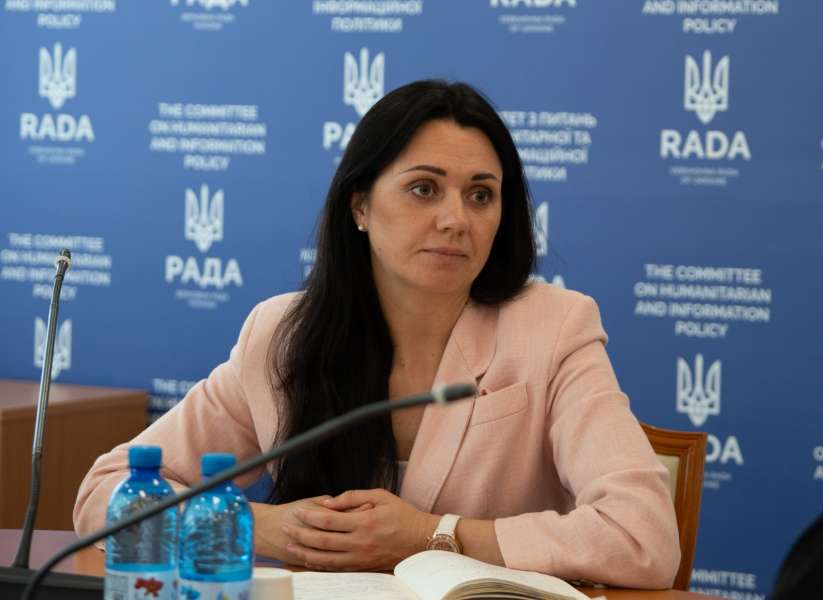
The Law on Mentorship has recently entered into force. It specifies who can become a mentor and who is eligible for mentorship, while also introducing two of its forms — individual and corporate. In an interview with the Press Service of the Verkhovna Rada Secretariat, Tetiana Skrypka, Chair of the Subcommittee on Family and Children Matters of the Committee on Humanitarian and Information Policy, explained how the law will expand support for children and make mentorship a new Ukrainian cultural practice.
-– The Law “On Mentorship” has been adopted. Why did the country feel the need to address this issue through a separate law?
Prior to the adoption of the Law on Mentorship, national legislation contained only a fragmented provision. Previously, the law provided for mentorship solely for orphans and children deprived of parental care. Today, however, we are extending this right to children who are — or whose families are — facing difficult life circumstances, children affected by military actions and armed conflicts, deported or forcibly displaced children, children of war veterans, as well as minor pregnant women and young mothers in need of assistance.
To ensure that mentorship is conducted safely and effectively, the Law designates the organization of mentorship as a type of social service. To ease the workload of state social service providers, this service will also be rendered by the civil society sector, which is actively engaged in mentorship.
— How do we strike a balance between protecting a child from potential risks on the one hand, and not smothering people’s sincere desire to help in bureaucracy on the other?
Striking this balance was made possible precisely because we involved those who know the topic from the inside: government officials, the civil society sector, active mentors, and young people with lived experience of alternative care.
Child safety is our absolute priority; therefore, upcoming secondary legislation will set clear requirements for prospective mentors and their training. At the same time, we keep in mind that mentorship is a sincere, voluntary, and unpaid mission. Thus, as soon as the Ministry of Social Policy finalizes all the documents, we, together with our partners, will analyze how they work in real-world conditions to eliminate unnecessary barriers and make the process as fast and seamless as possible for people who seek to help a child.
–– A key innovation of the Law is “corporate mentorship.” What exactly is it, and how is it supposed to work?
Corporate mentorship transforms traditional career guidance into long-term, systemic support for children in difficult life circumstances.
Its core objective is to help a child find their future career path. A social service provider forms a group of children, assesses their needs, and engages partner businesses. Beyond learning about various professions and gaining initial hands-on experience, the children receive psychological support: they learn how to communicate, build healthy relationships, and demonstrate leadership skills. Furthermore, company employees often undergo training to become individual mentors for teenagers.
— Did you draw on foreign experience when drafting the Law?
Our primary source of inspiration was the experience of the United States, which I studied during my visit to Los Angeles. There, mentorship is one of the main forms of support for children left without proper parental care, as well as an important part of the social culture, where being a mentor is both prestigious and fashionable. In this system, every child has a reliable adult mentor who stays by their side until they successfully transition into adulthood — after which alumni often become mentors themselves.
It was precisely this experience that shaped our goal: to make mentorship an integral part of Ukrainian culture. Amid the war, when thousands of our children find themselves in hardship, the ability to support a child in a proper, empathetic, and safe manner must become a core skill for every conscious adult in Ukraine.
— How is the training of prospective mentors conducted in the regions?
The work in the regions begins, first and foremost, with explaining the philosophy of mentorship and how the institution of mentorship operates in Ukraine. Local non-governmental organizations are our main resource. They already possess the necessary framework and trained specialists to organize mentorship. Therefore, we encourage communities to take stock of the entire civil society sector working in child rights protection so that these organizations can subsequently become mentorship organizers.
Simultaneously, we are working with local self-government bodies, children's services, and social service centers to clarify their roles in mentorship in accordance with the newly passed Law.
We have already visited more than 10 regions of Ukraine to communicate to regional state administrations, local self-government bodies, and territorial communities that mentorship is an effective, proven form of support for children in difficult life circumstances — one that truly enables them to build their own future.
Our ultimate goal is to foster a social culture where being a reliable friend to a child in hardship is natural for every adult.