Ukrainian parliamentary delegation took part in 152nd Assembly of the Inter-Parliamentary Union
21 April 2026, 18:12
During April 15-19 2026, the Delegation of the Verkhovna Rada of Ukraine led by the First Deputy Speaker Oleksandr Korniienko paid a working visit to Istanbul, Türkey.
As part of the visit, the Ukrainian parliamentary delegation took part in the 152nd Assembly of the Inter-Parliamentary Union (IPU). The event included meetings of the IPU’s statutory bodies, in particular the Governing Council, Standing Committees, as well as the Forum of Women Parliamentarians and the Forum of Young Parliamentarians. The General Debate focused on the theme: “Harnessing hope, advancing peace and justice for future generations.”
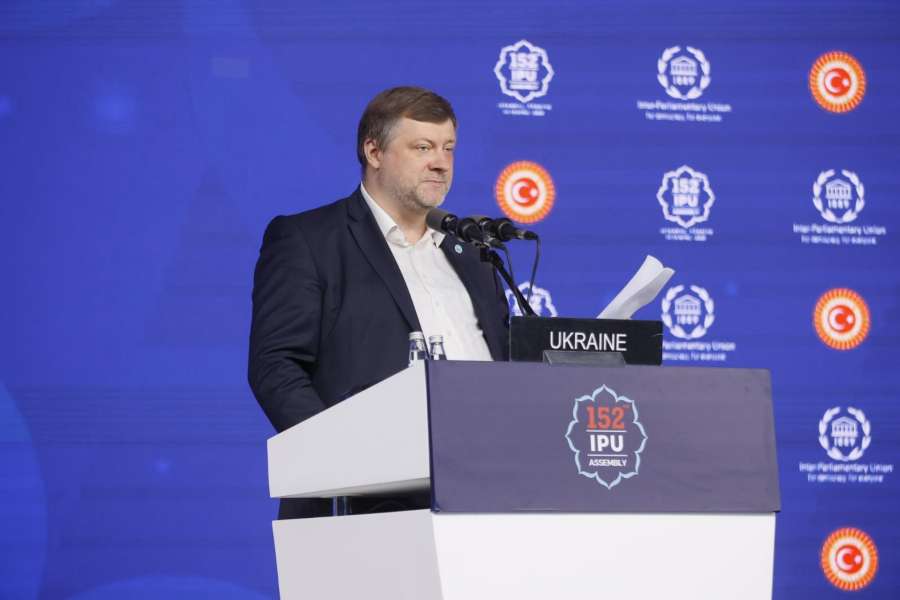
At the General Debate, First Deputy Speaker Oleksandr Korniienko addressed the Assembly on behalf of Ukraine. In his remarks, he emphasized that for Ukraine, peace, justice, and hope are part of daily reality amid the full-scale aggression of the russian federation, which poses a threat not only to Ukraine but also to the fundamental principles of international law and global security.
“Since 2022, Ukraine has been resisting a full-scale, unprovoked invasion by the russian federation. This war has brought immense suffering and destruction. But it is not only a war against Ukraine. It is a war against the principles we have all committed to uphold: sovereignty, territorial integrity, and international law,” Oleksandr Korniienko emphasized in his address.
The First Deputy Speaker emphasized the interconnected nature of modern conflicts. According to him, impunity for aggressors fuels the spread of instability. “We can already see how this works in practice. russia’s war against Ukraine has been reinforced by Iranian weapons, including drones that are used daily to attack our cities, our energy system, and civilians. We have also seen how these same technologies are used beyond Ukraine. Attacks on countries in the Gulf region have demonstrated a critical point: even those who have done nothing to provoke conflict can become targets,” he said. He also highlighted Ukraine’s resilience and innovation, as well as its commitment to achieving a just peace—one that is possible only with full respect for sovereignty and territorial integrity, and with accountability for those responsible.
Oleksandr Korniienko called on parliaments to take consolidated action to strengthen unity, uphold international law, and ensure the inevitability of punishment for aggression as a key precondition for sustainable peace. “Ukraine continues to fight for its people, for its freedom, and for a world in which international law truly matters. We call on you to stand with us. This is our shared responsibility,” the First Deputy Speaker concluded.
Member of the delegation Lesia Vasylenko, Chair of the Subcommittee on Climate Change and Atmospheric Air Protection of the Committee on Environmental Policy and Nature Management, in turn emphasized that justice is a key prerequisite for lasting peace, whereas its absence turns peace into a temporary pause that benefits the aggressor.
She emphasised that the impunity surrounding russia’s aggression, which has been ongoing since 2014, has led to a full-scale war in Ukraine and is fuelling the spread of conflict around the world.
Highlighting the humanitarian dimension of the war, in particular the suffering of children and families, Lesya Vasylenko called on the international community to take decisive action, including supporting the establishment of a Special Tribunal for the crime of aggression against Ukraine and compensation mechanisms for victims. The key message of the parliamentarian was the choice between a genuine peace based on accountability and an illusory pause that leads to new wars.
Member of the delegation and First Deputy Chair of the Budget Committee, Ivan Krulko, emphasized the critical importance of protecting Ukraine’s civilian and energy infrastructure. He stressed that targeted russian attacks on the energy sector, water supply, and other essential systems constitute a gross violation of international humanitarian law and must be properly addressed and legally assessed.
Ivan Krulko called for strengthening the role of parliaments in ensuring russia’s compliance with international law, supporting accountability mechanisms, and shaping a consolidated international response. According to him, one of the priorities should be the protection of critical infrastructure as a foundation of resilience, security, and sustainable peace.
At the additional session dedicated to the report on parliamentary activities, delegation member Olha Rudenko, Chair of the Subcommittee on Foreign Economic Relations and Effective Use of International Assistance of the Committee on Foreign Policy and Interparliamentary Cooperation, presented the Verkhovna Rada’s efforts to protect human rights amid the full-scale invasion.
“I informed about the Verkhovna Rada of Ukraine’s work on the protection of human rights, in particular the rights of indigenous peoples, internally displaced persons, and citizens unlawfully deprived of their liberty in the russian federation. It is important that we have not only traditional partners, but also concrete agreements and a gradual expansion of cooperation with countries in Africa, Asia, and Latin America, which are increasingly joining efforts to support the principles of international law and Ukraine,” the Subcommittee Chair said.
In her speech, she emphasized that in the context of systemic human rights violations by the russian federation, the Verkhovna Rada of Ukraine plays a key role in ensuring protection, accountability, and human dignity. Olha Rudenko highlighted effective parliamentary oversight through the Verkhovna Rada Commissioner for Human Rights and the harmonisation of relevant legislation with international standards. Ukraine places particular emphasis on supporting the return of deported Ukrainian children, as well as reforming the child care system.
The delegation member also highlighted Ukraine’s steps in the field of international justice, including the ratification of the Rome Statute of the International Criminal Court, the establishment of a Special Tribunal for the crime of aggression, and the implementation of compensation mechanisms for victims. At the Forum of Women Parliamentarians, Olha Rudenko also emphasized the growing risks faced by women MPs in the context of russia’s aggression, in particular online violence and threats, which have become systemic since 2022.
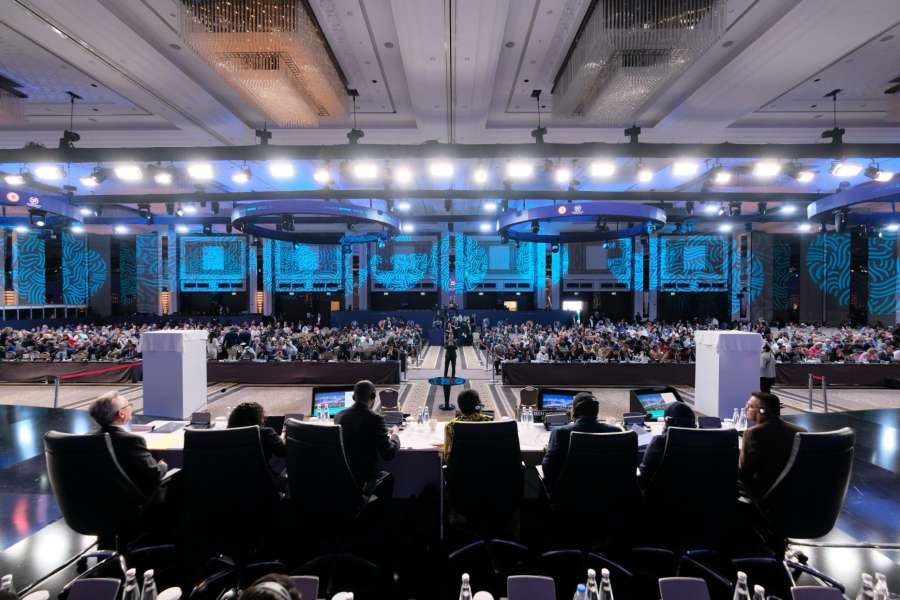
The outcome of the 152nd Assembly of the Inter-Parliamentary Union was the adoption by the Standing Committee on Peace and International Security of the resolution “The Role of Parliaments in Establishing Sustainable Post-War Governance Mechanisms and Advancing a Lasting and Just Peace.” This topic was initiated by the Ukrainian delegation a year ago at the Assembly in Uzbekistan.
During consideration of amendments, representatives of the Ukrainian delegation, Oleksandr Merezhko and Ivan Krulko, together with allies from the geopolitical Group of 12+, opposed attempts by russia to weaken the text of the resolution. Of the 13 amendments proposed by Ukraine, 12 were supported and incorporated into the final text, while one amendment was withdrawn by the delegation as part of a reached compromise.
The amendments adopted are of fundamental importance, as they:
· Refer to previous IPU resolutions condemning the russian federation’s illegal invasion of Ukraine, and calling for a peaceful resolution of the war in accordance with international law, the UN Charter, and respect for the territorial integrity of states;
· Reaffirm the condemnation of attempts to annex territories and underline the inviolability of territorial integrity;
· Strongly condemn attacks on critical civilian infrastructure and recognize the need for its restoration even during ongoing hostilities;
· Emphasize that sustainable peace is impossible without the cessation of aggression, the withdrawal of foreign forces, and the full restoration of states’ territorial integrity;
· Condemn the illegal deportation and/or forcible transfer of Ukrainian children, and stress that their return is an integral part of a just peace;
· Call for accountability for violations of international law and the establishment of reparations mechanisms, including the possible use of frozen assets of the aggressor state;
· Underline the importance of demining efforts and addressing the humanitarian consequences of the war.
It should be noted that russia most actively opposed the inclusion in the text of references to previous IPU resolutions, provisions on the use of frozen assets, as well as language concerning thousands of Ukrainian children. It was precisely for the unlawful deportation and transfer of Ukrainian children that the International Criminal Court issued arrest warrants for putin and maria lvova-belova.
Parliamentarians note that it is particularly alarming that a State permanent member of the UN Security Council, russia, which bears responsibility for maintaining international peace and security, is itself violating these principles.
The adoption of the IPU resolution is an important outcome for Ukraine and clearly demonstrates that without justice, accountability, and respect for international law, there can be no lasting peace.
A new topic of work was also approved in the IPU Standing Committee on Peace and International Security — the resolution “Strengthening Maritime Security and Protecting Critical Infrastructure in Times of Conflict: The Role of Parliaments in Safeguarding International Shipping and Global Economic Stability.” Lesia Zaburanna was elected as rapporteur and co-author of the resolution on behalf of Ukraine. A representative of the United Arab Emirates was designated as co-rapporteur.
It should be noted that Ukraine was the initiator of this resolution. At the same time, during its consideration, a similar initiative by the delegation of the United Arab Emirates was identified. The parties agreed to work jointly on this issue and to merge their proposals.
“In accordance with the procedures of the Inter-Parliamentary Union, this topic will remain under consideration by the Committee over the next two Assemblies, which includes thematic debates, expert hearings, and the preparation of an agreed draft resolution. This has created an opportunity to systematically advance issues of strengthening maritime security, protecting port infrastructure, ensuring freedom of navigation, and countering the activities of the so-called ‘shadow fleet,’ including in the context of circumventing sanctions on russian federation oil exports,” emphasized Lesia Zaburanna, member of the delegation and Deputy Chair of the Budget Committee.
In addition, the IPU Standing Committee on Sustainable Development adopted the resolution “Building a Fair and Sustainable Global Economy: The Role of Parliaments in Addressing Protectionism, Reducing Tariffs, and Preventing Corporate Tax Avoidance.”
The Committee adopted a number of amendments proposed by the Ukrainian delegation, which condemn attacks on port infrastructure and emphasise the importance of Ukrainian agricultural exports for global food security.
The russian delegation attempted to introduce amendments that would have effectively undermined the sanctions regime imposed on russia for its aggression against Ukraine. Following extensive consultations with allies and reference to the rules of the World Trade Organization, the Ukrainian delegation succeeded in convincing the majority of the Committee not to take these amendments into account.
An urgent resolution proposed by Qatar on strengthening parliamentary efforts to support ceasefire and peace in the Middle East and other regions was also adopted. The Ukrainian delegation took part in the debates and in the drafting of the resolution text, in particular on issues related to the protection of civilians and international accountability. As a result of the discussion, a provision on compensation for victims of international crimes in the context of post-conflict reconstruction was included in the text.
Oleksandr Merezhko, Chair of the Committee on Foreign Policy and Inter-Parliamentary Cooperation, was delegated on behalf of Ukraine by the European Geopolitical Group to the committee responsible for finalising the draft resolution text.
During the meetings of the relevant IPU Committee, Oleksii Zhmerynetskyi, member of the Ukrainian parliamentary delegation and Chair of the Subcommittee on the Adaptation of Ukrainian Legislation to EU Law (EU acquis) and the Implementation of Ukraine’s International Legal Obligations in the Field of European Integration within the Committee on Anti-Corruption Policy, proposed concrete ways to reform the United Nations and introduce instruments to limit the veto power of an aggressor state.
“At the IPU Standing Committee on United Nations Affairs, Ukraine has consistently supported the issue of the russian federation’s unlawful usurpation of its seat on the UN Security Council and the abuse of the veto power. A few years ago, proposals to reform the veto institution were seen as a bold and unlikely innovation from Ukraine; today, however, this position is actively echoed in the statements of many countries at IPU Assembly platforms. Ukraine has effectively moved this issue beyond the status quo,” Oleksii Zhmerynetskyi said.
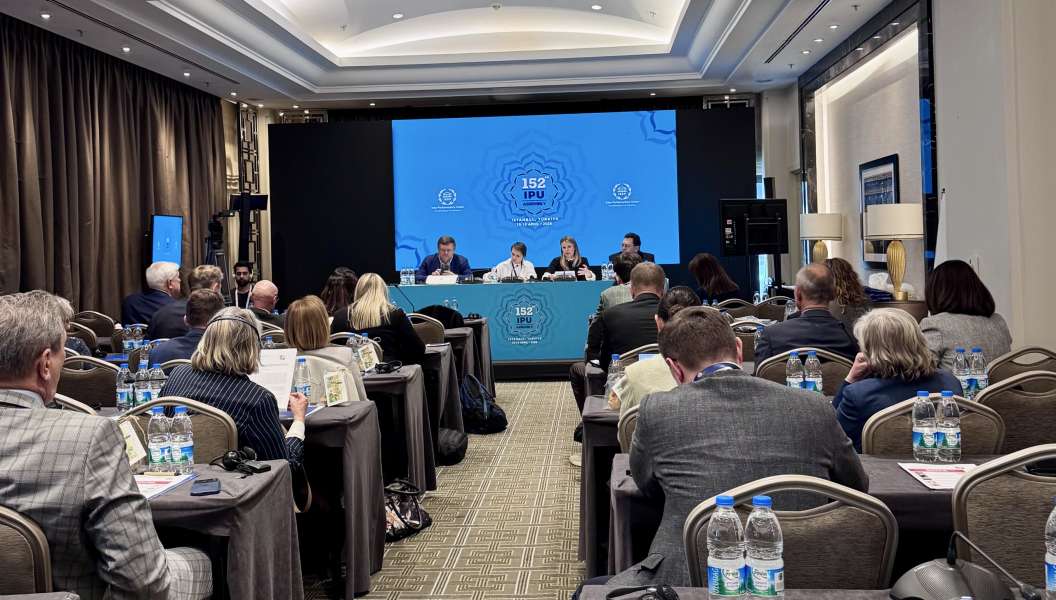
Within the framework of the 152nd Assembly of the Inter-Parliamentary Union, the Ukrainian delegation also held a side event on “Protecting Civilian Populations in Armed Conflicts: Strengthening Compliance with International Humanitarian Law.”
The event was attended by around 40 parliamentarians from Europe, Asia, Africa, and Latin America, including IPU President Tulia Ackson of Tanzania and Senator José Rojo Edwards, Chair of the South American geopolitical group.
As part of the event, the documentary film “Fight and Dance” was screened, followed by a discussion on the impact of armed conflicts on civilian populations.
“The film highlights the impact of war on children in conflict zones. Through personal testimonies and lived experiences of residents of the city of Sumy, it illustrates the profound human consequences of armed confrontation and the particular vulnerability of children. These are the stories of a family rebuilding its life after a missile strike, and a young athlete who rescued passengers from a burning bus while continuing to pursue his sporting dream,” First Deputy Speaker Oleksandr Korniienko said.
According to him, for Ukraine it is important to strengthen political and parliamentary commitment to strict compliance with International Humanitarian Law and the protection of civilians in armed conflicts, as well as to enhance political support within the Inter-Parliamentary Union for placing the issue of the protection of civilians in armed conflicts as an emergency item on the agenda.
Foreign parliamentarians, including members of the Canadian delegation, actively participated in the discussion, emphasizing, among other things, the importance of international efforts aimed at the return of Ukrainian children.
During its stay in the Republic of Türkiye, the Ukrainian parliamentary delegation held 22 official bilateral meetings with representatives of a number of countries, including Bahrain, Qatar, the United Arab Emirates, Canada, Germany, Greece, Australia, the United Kingdom, the Nordic and Baltic countries, Belgium, as well as the Secretary-General of the ASEAN Inter-Parliamentary Assembly, and representatives of South Africa, North Macedonia, Malta, Montenegro, Mozambique, Ghana, Algeria, Uruguay, Rwanda, Syria, and Türkiye.
The meetings focused on support for Ukraine in countering russian aggression, the supply of air defence systems, strengthening economic pressure on the russian federation, participation in Ukraine’s reconstruction and the appointment of special envoys on recovery, joint development and financing of security and defence projects, ensuring exports and global food security, as well as the development of the parliamentary dimension of the Crimea Platform.
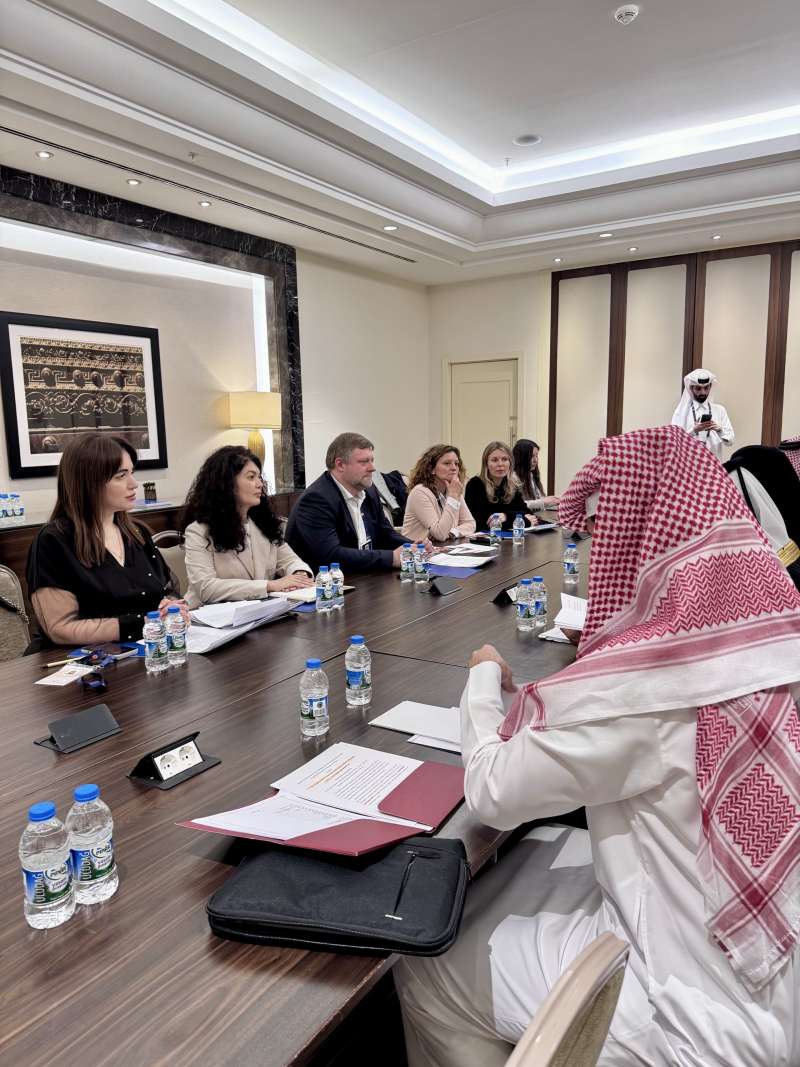
During a meeting with Hamda bint Hassan Al Sulaiti, Vice Speaker of the Shura Council of Qatar, the Ukrainian side focused in particular on defence-related issues.
“Ukraine has experience and expertise in countering unmanned aerial vehicles and can assist in addressing Iranian attacks. At the same time, we agreed on the need to protect civilians in all countries that are subjected to hostile attacks. It is important to keep this issue on the international agenda,” First Deputy Speaker of the Verkhovna Rada of Ukraine Oleksandr Korniienko said.
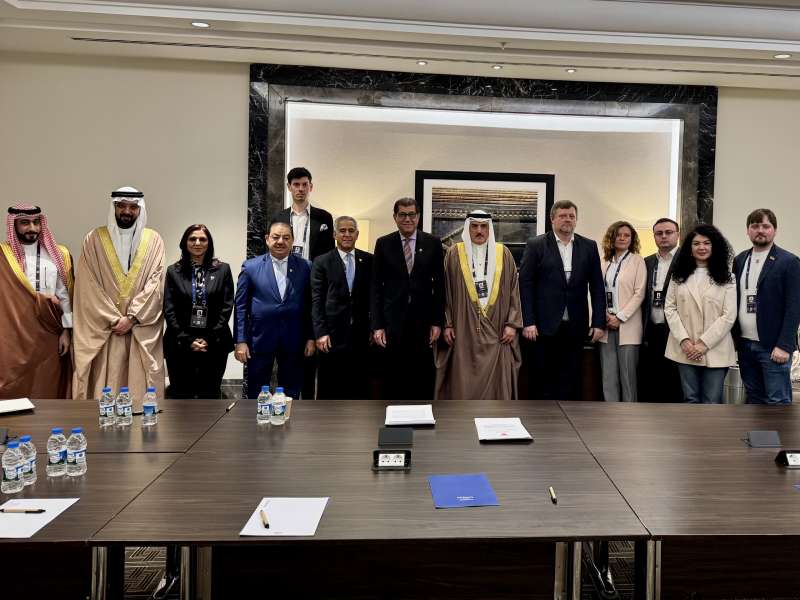
During a meeting with members of the Bahraini delegation, including the Chairman of the Shura Council, Ali bin Saleh Al-Saleh, the Ukrainian parliamentary delegation discussed cooperation within international organisations as well as bilateral relations between the two countries. Oleksandr Korniienko emphasized that Ukraine is ready to provide Bahrain with any possible support within its capabilities, given its significant experience in countering UAVs. “We can help protect civilian populations and infrastructure from Iranian missile and drone attacks. We sincerely wish peace and stability to Bahrain and the entire Gulf region,” he noted.
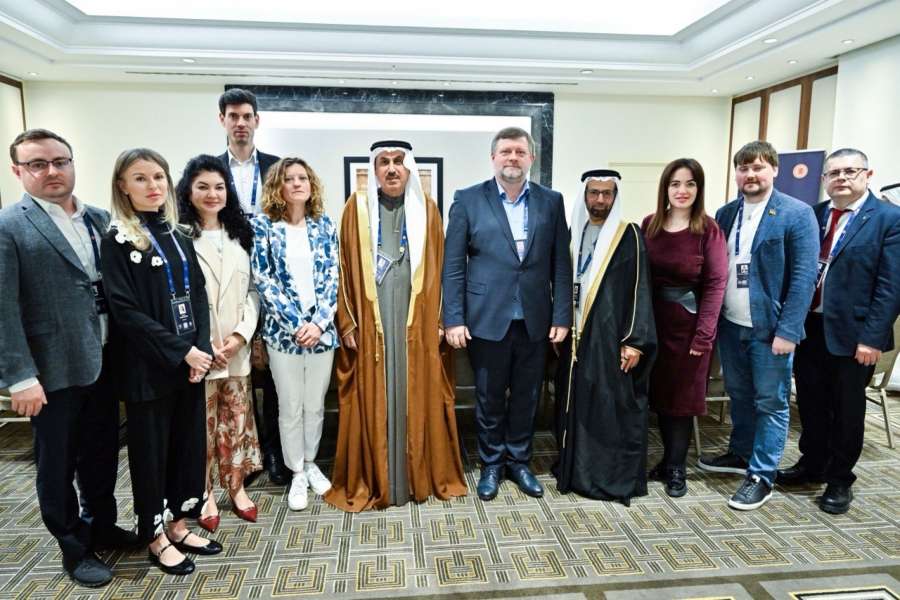
On the margins of the 152nd Assembly of the Inter-Parliamentary Union, a bilateral meeting was also held with the delegation of the United Arab Emirates, including Saqr Ghobash, Speaker of the Federal National Council, and Dr. Ali Rashid Al Nuaimi, Chair of the Defence, Interior and Foreign Affairs Committee of the UAE Parliament. According to Oleksandr Korniienko, recent developments in the Middle East, including attacks affecting the UAE, highlight the fragility of regional security and broader challenges to global stability.
He briefed on the situation in Ukraine and the consequences of russian attacks on Ukrainian cities, emphasizing that the aggressor continues to pursue its objectives against Ukraine and demonstrates complete disregard for human life and international law.
The First Deputy Speaker expressed Ukraine’s solidarity with the United Arab Emirates in connection with the recent blatant attacks by Iran. “Building on Ukraine’s experience in countering Iranian drones, we are sharing our knowledge and technologies and remain ready to further expand this cooperation in line with the agreements reached,” Oleksandr Korniienko noted, thanking the UAE for the humanitarian assistance provided to Ukraine, and in particular for its support and facilitation of prisoner exchanges and the return of Ukrainians home, expressing hope for continued UAE support.
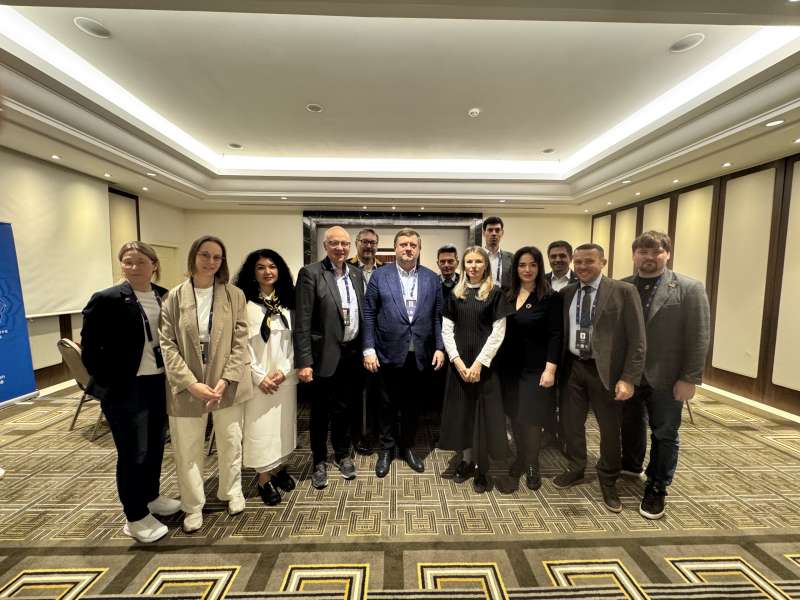
Together with the German delegation, led by Alexander Radwan, the Ukrainian side discussed the development of inter-parliamentary relations between the two countries. Oleksandr Korniienko expressed gratitude for all the assistance that Germany and its people have provided to Ukraine and Ukrainians. Special appreciation was also expressed for support in the fields of defence and reconstruction.
The parties also raised issues related to Ukraine’s European integration process. “Together with colleagues, we outlined the completed tasks and the next steps on this path,” the First Deputy Speaker said.
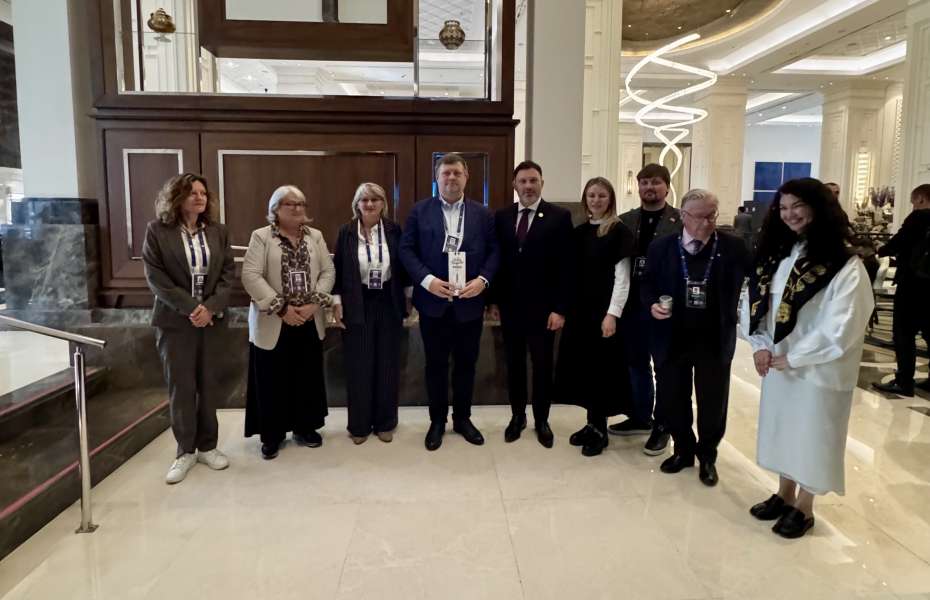
The Ukrainian parliamentary delegation also met with the French parliamentary delegation, headed by Xavier Iacovelli. The discussions focused on strengthening cooperation, the necessary steps to achieve a just peace, and the overall global security situation. Ukraine is grateful for all actions taken by France in support of the Ukrainian people at all levels.
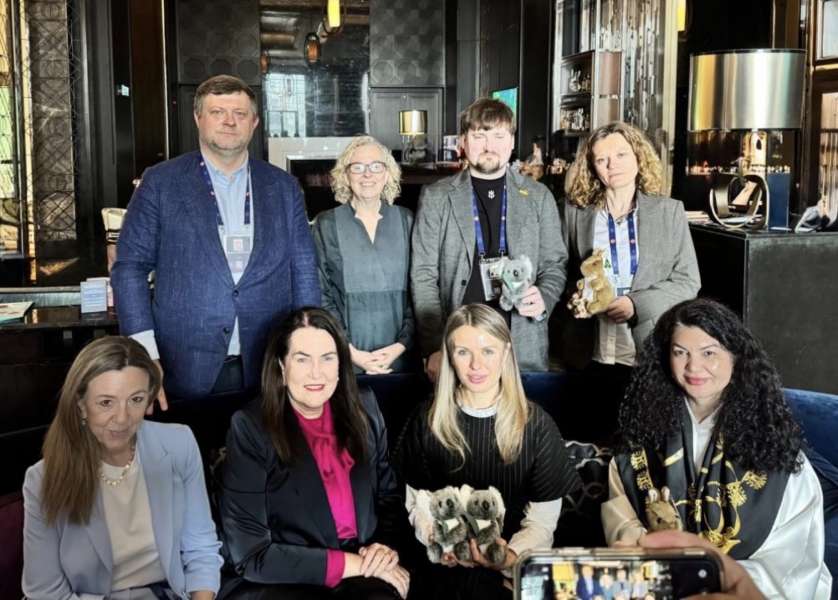
During a meeting with representatives of Australia, Oleksandr Korniienko provided a detailed briefing on the current situation in Ukraine, emphasizing that russia continues to strike Ukrainian civilians and infrastructure using missiles, drones, and cluster munitions, resulting in significant human casualties, destruction, and the spread of terror. “Ukraine calls on international partners to continue supporting emergency assistance, recovery, reconstruction, and modernization efforts,” he stressed.
During the 152nd Assembly of the Inter-Parliamentary Union, the Ukrainian delegation also held a number of other bilateral meetings with parliamentary delegations from countries around the world.
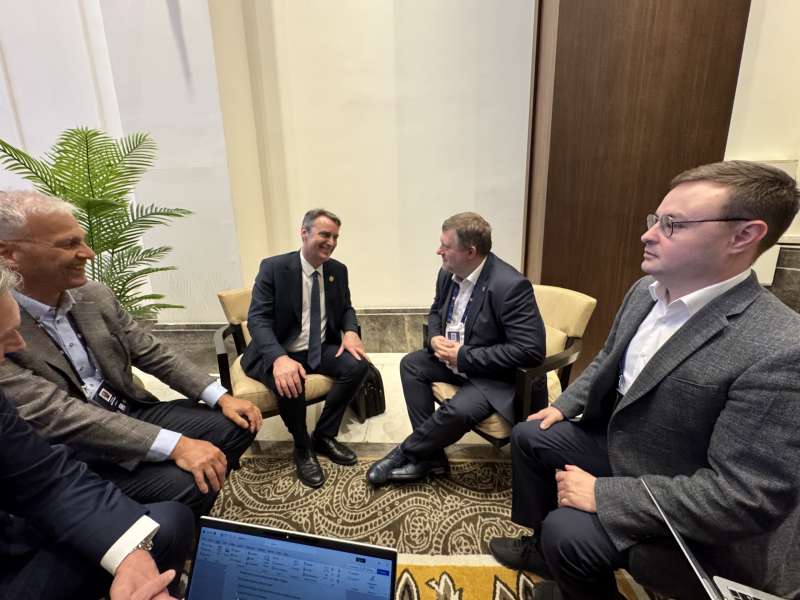
With Vincent Blondel, President of the Senate of Belgium, the parties discussed the strengthening of inter-parliamentary cooperation, as well as Ukraine’s European integration process. Ukraine continues to work at all levels on implementing its commitments and aligning national legislation with European standards.
With Les Govender, Deputy Speaker of the National Council of Provinces of South Africa, the Ukrainian side discussed the consequences of russia’s full-scale invasion of Ukraine, in particular the terror against the civilian population. Oleksandr Korniienko particularly emphasized the children killed and injured during russian attacks, as well as the importance of working to ensure justice and bring an end to russia’s brutal and unprovoked aggression.
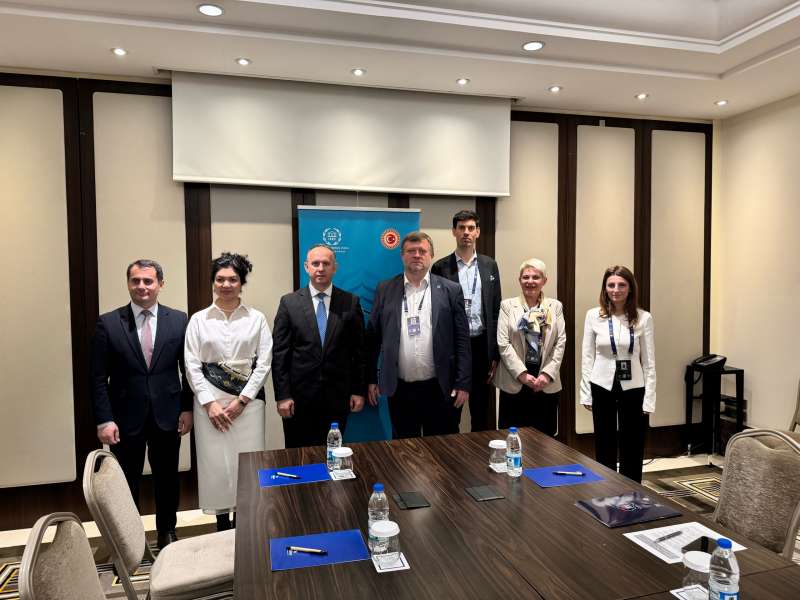
With Afrim Gashi, Speaker of the Assembly of the Republic of North Macedonia, Ukrainian parliamentarians discussed European integration issues. The parties exchanged experience on achieving the shared goal of becoming members of the European Union.
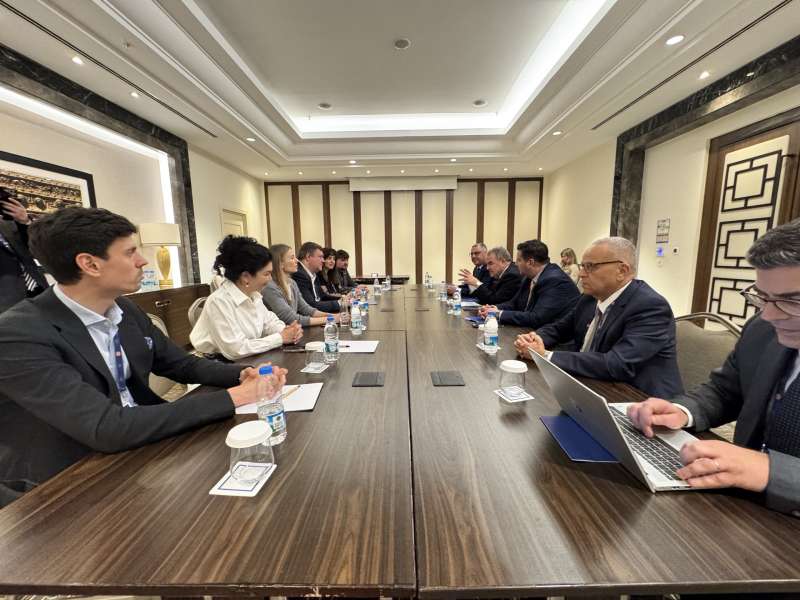
With representatives of the Maltese parliamentary delegation, the Ukrainian side also focused on the issue of EU membership. “We value advice and the exchange of experience gained during the European integration process. I emphasized that it is important for us to implement the necessary steps efficiently and effectively to advance our accession to the EU,” the First Deputy Speaker noted.
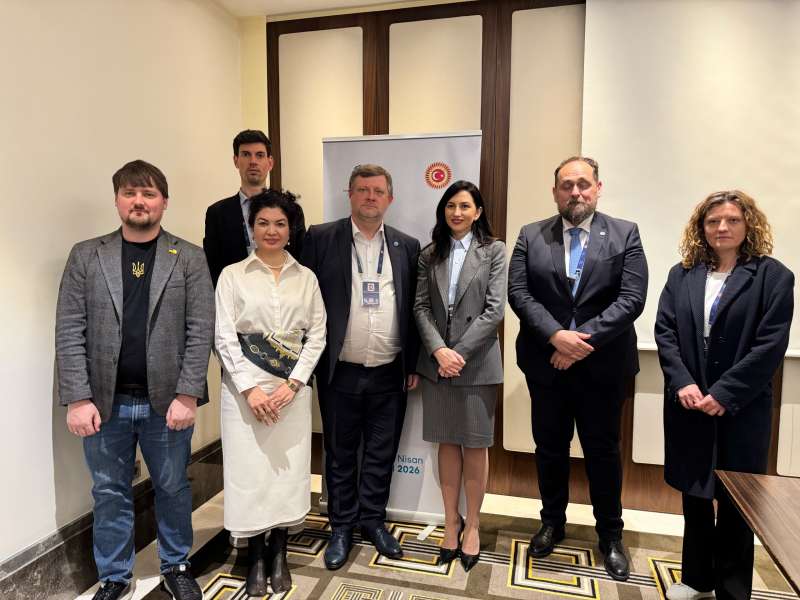
In addition, a meeting was held with members of the Montenegrin parlamentary delegation — a country holding candidate status for EU membership. The discussions focused on Montenegro’s experience on its European integration path, as well as on reforms being implemented by both countries.
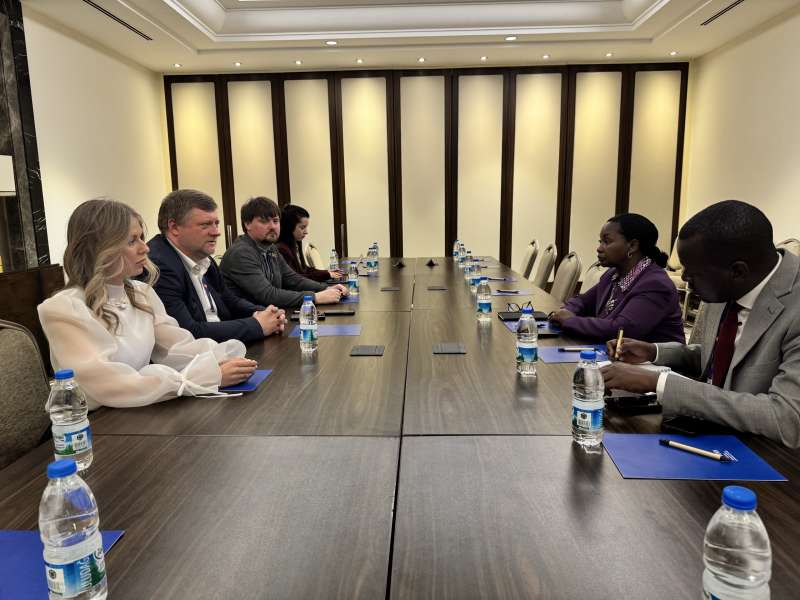
During a meeting with representatives of Rwanda, Oleksandr Korniienko expressed gratitude for Rwanda’s support for Ukraine in the geopolitical dimension, including its co-sponsorship of resolutions in support of Ukraine. He provided a detailed briefing on the difficult heating season experienced by the Ukrainian people, emphasizing that despite all challenges, Ukraine continues to work to ensure global food security.
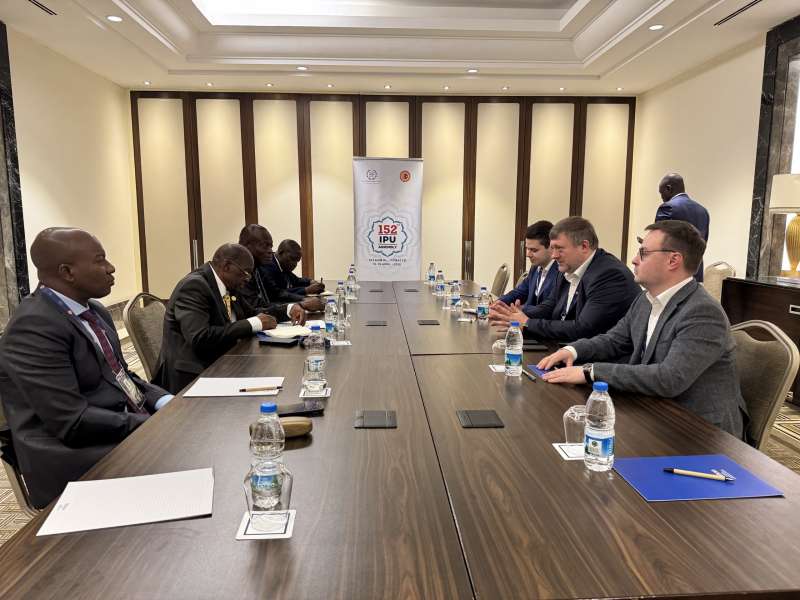
With the delegation of Uruguay, the Ukrainian side discussed inter-parliamentary cooperation, as well as engagement with countries of Latin America and the Caribbean. Ukrainian parliamentarians invited Uruguay to join the next Crimea Platform Summit.
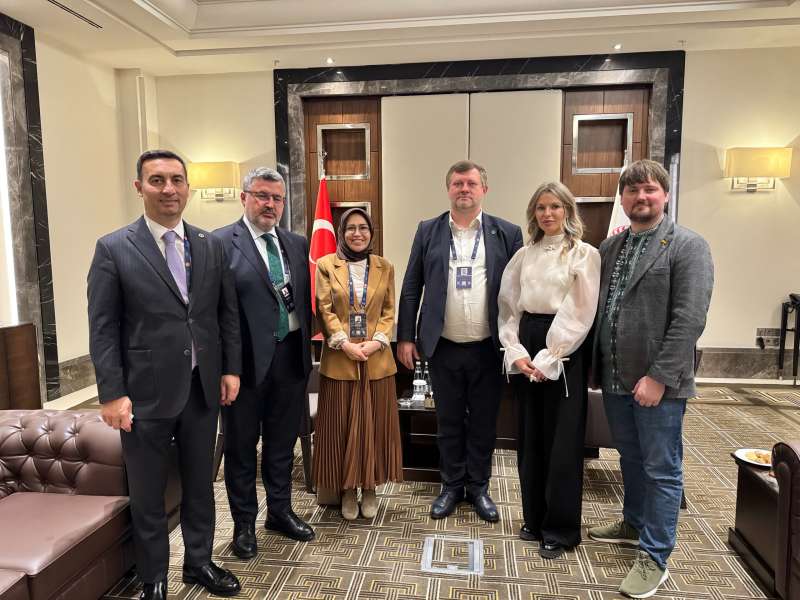
During a meeting with the Turkish delegation, the Ukrainian side raised the issue of food security. The parties also discussed a joint side event on this topic. “Ukrainian farmers continue to work despite challenges and difficulties under russian attacks. I thanked Türkiye for its tangible support for our country,” Oleksandr Korniienko said.
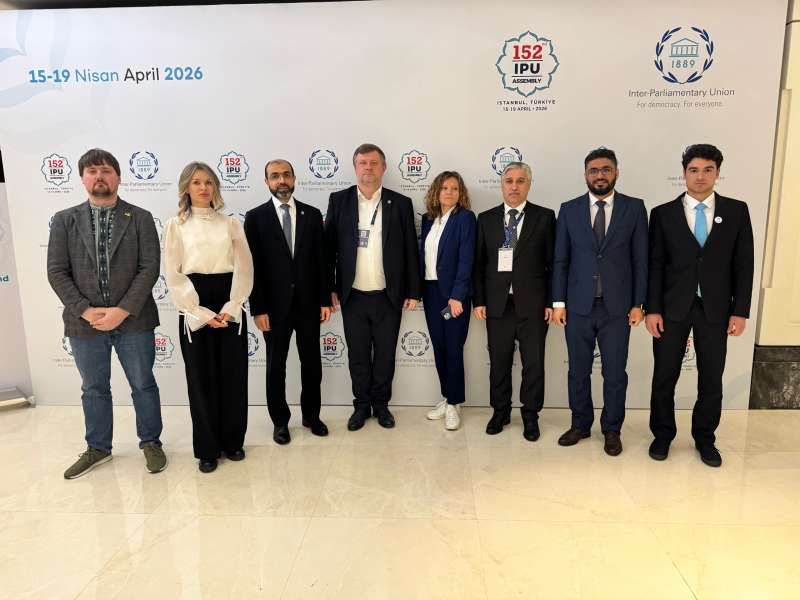
In addition, the Verkhovna Rada delegation met with representatives of the Syrian parliament. The discussions covered a wide range of issues of experience exchange, including in the defence sector and civilian protection, as well as inter-parliamentary cooperation.
Ukrainian parliamentarians also had the opportunity to hold a dialogue with the Speaker of the Parliament of Ghana, Alban Sumana Kingsford Bagbin. The discussion focused on food security, the work of farmers and agricultural producers, as well as the current challenges they face. “I emphasized that despite everything, Ukraine continues to stand for global food security and to implement the ‘Grain from Ukraine’ programme,” the First Deputy Speaker summarized.
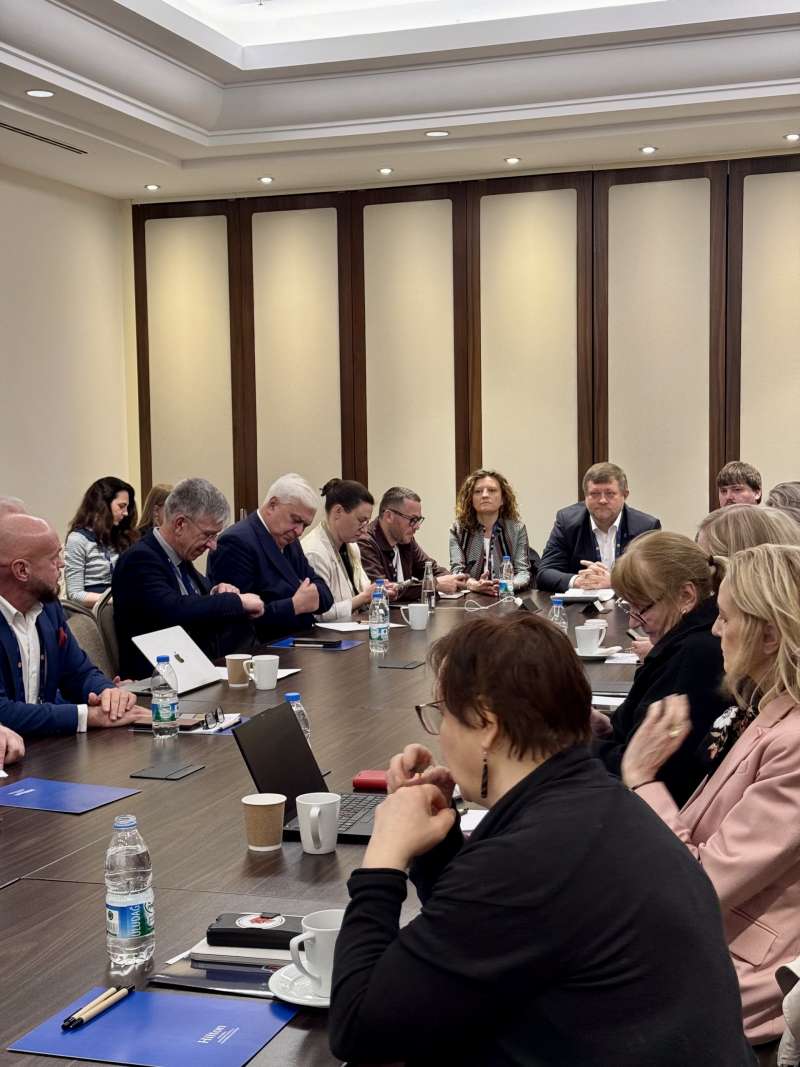
During a briefing with the NB8 countries (Denmark, Estonia, Finland, Iceland, Latvia, Lithuania, Norway, and Sweden), Oleksandr Korniienko expressed gratitude for all assistance provided to Ukraine by these states.
He informed colleagues about the current security situation in Ukraine — russia’s energy and civilian terror, efforts to counter drone attacks, as well as the civilians killed as a result of russian strikes, including children.
The First Deputy Speaker stressed the importance of further strengthening weapons production, ammunition supplies, and air defence systems. He also highlighted the challenges faced across various sectors under these conditions, particularly by Ukrainian farmers and agricultural producers.
“The war continues, and russia demonstrates that it does not intend to retreat. Its brutality is increasing. The consolidation of international efforts remains a crucial factor for the protection of Ukraine and for European security,” he said.
Summing up participation in the 152nd Assembly of the Inter-Parliamentary Union, Oleksandr Merezhko, Chair of the Committee on Foreign Policy and Inter-Parliamentary Cooperation, stated: “Overall, this IPU Assembly was successful for Ukraine. It was possible to include fundamentally important amendments in the IPU resolution. In particular, amendments establishing the principle that frozen assets of an aggressor state may be transferred to the state that has been a victim of aggression. This is important, as this principle has now been enshrined at the level of the IPU as an organization with broad representation.”
He added that thanks to the efforts of the Ukrainian delegation, the issue of Ukraine continues to remain in the focus of this international organization.
In turn, Oleksandr Sanchenko, member of the delegation and Chair of the Subcommittee on Music Industry within the Committee on Humanitarian and Information Policy, emphasized the importance of the meeting with the Nordic-Baltic Eight countries.
“We briefed parliamentarians of these countries on the current situation in Ukraine. We expressed gratitude for their support in the production and procurement of weapons. We stressed the importance of strengthening the production of various types of drones, which currently provide a crucial advantage on the battlefield and save the lives of Ukrainian soldiers. We also highlighted that, in the post-war reconstruction and recovery of the country, an important aspect will be the creation of infrastructure for affordable rental housing. Therefore, we called on these countries both to share their experience in this area and to participate in financing the development of such models in Ukraine,” the parliamentarian said.
The key topic of the speeches by Tamiila Tasheva, member of the delegation and Chair of the Subcommittee on the Reintegration of State Authorities and Local Self-Government in Temporarily Occupied Territories of Ukraine, the Autonomous Republic of Crimea and the City of Sevastopol, within the Committee on State Power Organization, Local Self-Government, Regional Development and Urban Planning, at all meetings with international delegations was the Crimea Platform.
Expressing gratitude for the support and development of this international platform, she emphasized its uniqueness and called on colleagues to actively engage in all its formats. In particular, Tamiila Tasheva invited parliamentarians to participate in the Parliamentary Summit in London, which will take place this autumn.
The second key point raised by the delegation member concerned engagement with countries of the Islamic world. She called on delegations of Islamic countries to support granting Ukraine observer status in the Organization of Islamic Cooperation. According to Tamiila Tasheva, this is an extremely important direction in which Ukraine continues systematic work, as it contributes to the development of common approaches to upholding international law and strengthening political pressure on aggressor states.
“And, of course, the third overarching theme was the unprecedented range of challenges faced daily by our people in the occupied territories. I emphasized systemic repression, forced passportization, militarization of youth, destruction of Ukrainian identity, and ongoing persecution of our citizens. All those brutal practices that the world is witnessing today in various temporarily occupied territories began back in 2014 with the occupation of Crimea,” the Head of the Subcommittee noted.
Finally, Arsenii Pushkarenko, member of the delegation and Deputy Chair of the Committee on Foreign Policy and Inter-Parliamentary Cooperation, stated: “More than 70 Speakers of national parliaments from around the world personally took part in the 152nd Assembly of the Inter-Parliamentary Union. This once again underlines the importance of this inter-parliamentary platform and the efforts of our delegation in promoting the Ukrainian agenda.”
The Ukrainian parliamentary delegation included the leadership of the Verkhovna Rada of Ukraine and members of parliament representing different factions and groups: Oleksandr Korniienko, Oleksandr Merezhko, Lesia Vasylenko, Oleksandr Sanchenko, Olha Rudenko, Oleksii Zhmerynetskyi, Ivan Krulko, Tamiila Tasheva, Arsenii Pushkarenko, and Lesia Zaburanna.