The Verkhovna Rada Delegation Took Part in the V High- Level Dialogue in Strasbourg
03 April 2026, 18:30
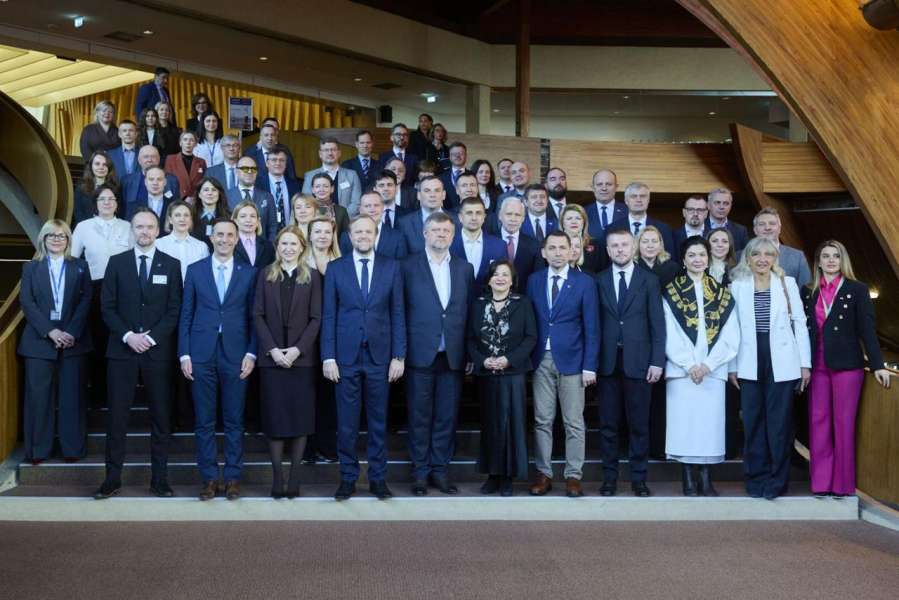
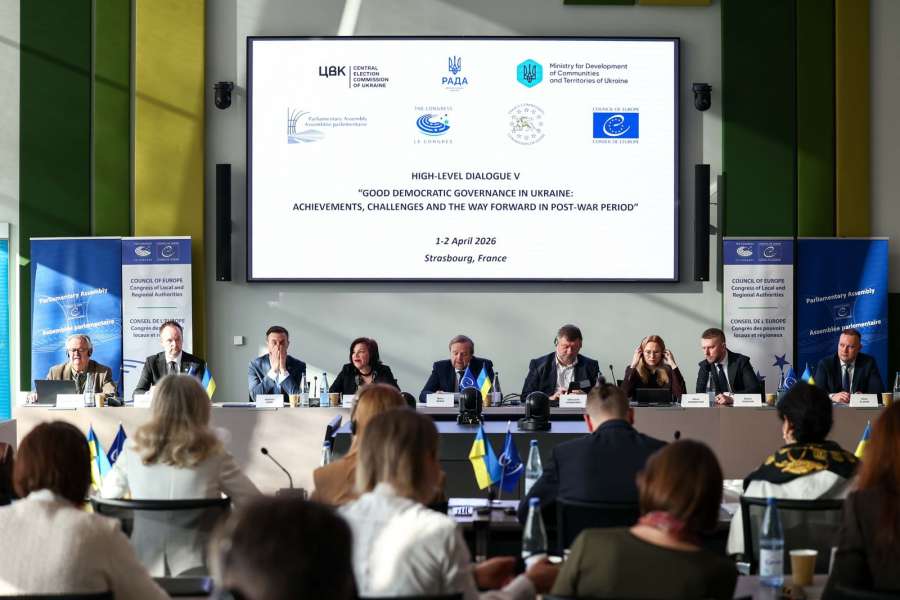
The Ukrainian Parliamentary delegation took part in the V High-Level Dialogue “Good Democratic Governance in Ukraine: Achievements, Challenges and the Way Forward in the Post-War Period.”
The two-day event took place in Strasbourg, France, with the support of the Congress of Local and Regional Authorities of the Council of Europe and the Parliamentary Assembly of the Council of Europe, within the framework of the implementation of the projects "Strengthening multi-level governance and local democracy to support Ukraine's recovery" and "Support for democratic post-war election in Ukraine - Phase II," which are being implemented under the Council of Europe Action Plan for Ukraine "Resilience, Recovery and Reconstruction" for 2023-2026.
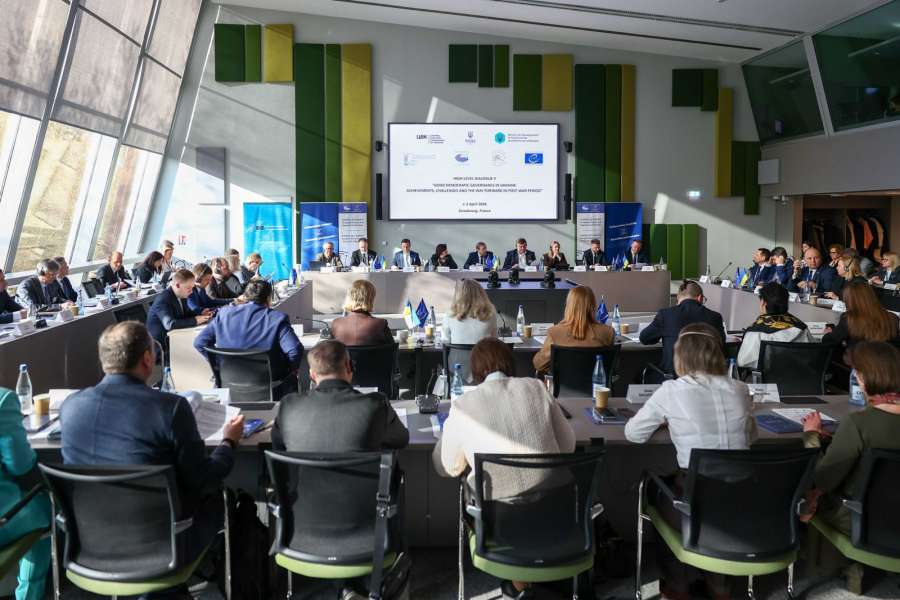
The discussions focused on the prospects for reform of good democratic governance in Ukraine, the improvement of legislation in the field of multi-level governance, the transition from military to civilian governance, and the restoration of local self-government in de-occupied and frontline territories. Fundamental conditions for holding free and secure post-war elections in line with European standards and practices were also discussed, taking into account Ukraine’s status as a candidate country for EU membership. Particular attention was paid to countering disinformation and foreign malign interference in elections, drawing on the experience of France, as well as to ensuring electoral resilience in the post-war period. An important signal for European partners was the consolidated position of representatives of all parliamentary factions and groups on the impossibility of holding elections before the end of the full-scale war and the achievement of a sustainable peace.
MPs emphasised that security threats make it impossible to guarantee compliance with fundamental electoral standards, in particular: the safety of voters, the freedom to campaign, and equal access to the media.
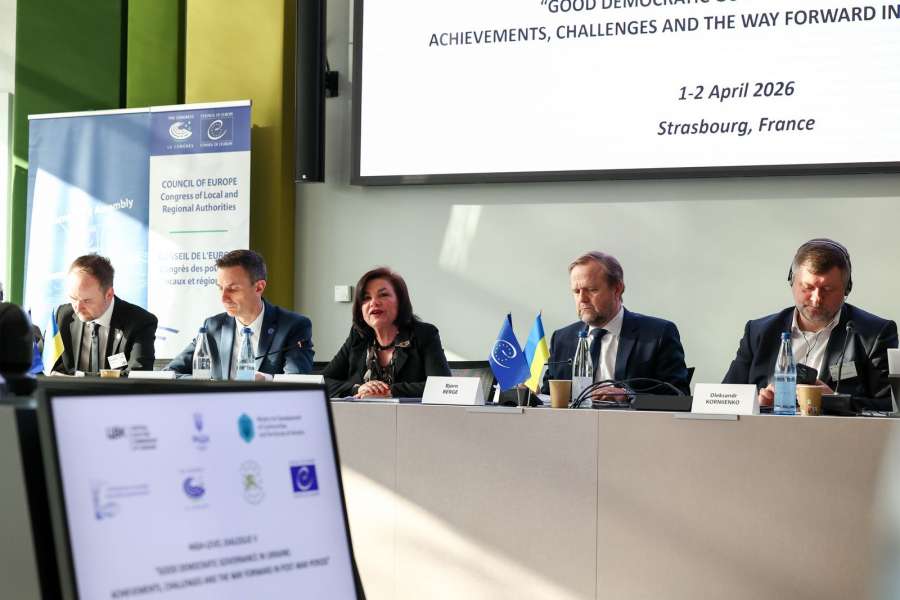
According to the First Deputy Speaker of Verkhovna Rada of Ukraine Oleksandr Korniienko, the V High-Level Dialogue became a key platform for open discussion on how to strengthen Ukrainian democracy. "Importantly, this was a genuine Dialogue between all stakeholders - representatives of parliamentary factions and groups, the Government, the local self-government bodies, key institutions, and international partners,” the First Deputy Speaker emphasised.
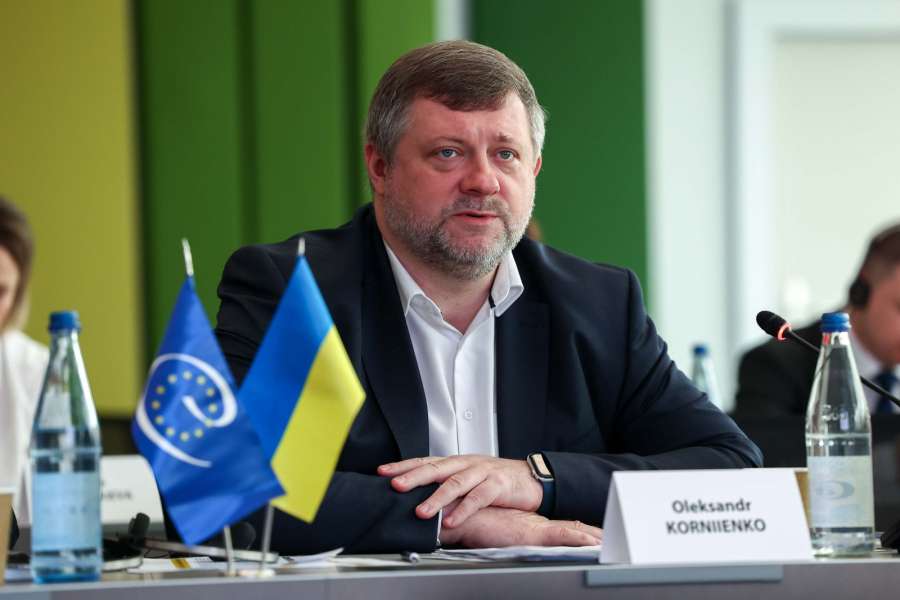
During his speech, Oleksandr Korniienko focused on the organisation and conduct of elections during a period of exceptional circumstances and/or post-war elections in Ukraine. According to him, the key task today is to foster mutual understanding among all parties responsible for organising these processes — from Parliament and the Government to the Central Election Commission and representatives of the country’s regions. This involves a shared understanding of exactly what needs to be done to ensure democratic processes during the elections. At the same time, the First Deputy Speaker emphasised that the issue of democracy in wartime is directly linked to the quality of interaction between central government and communities, the professionalism of governance, and the continuation of necessary reforms to strengthen the capacity and effectiveness of local self-government.
He also outlined that since 2022 Ukraine has come a long way towards new reality, and now, in the fifth year of russia's full-scale invasion into our country, there is a need to shape a new model of governance adapted to current conditions. As Oleksandr Korniienko said, it is important to maintain a constant dialogue between all levels of government, jointly seek solutions for community development, and preserve the democratic values of the state. Separately he noted the significant importance of support from partners, calling for further joint efforts to strengthen Ukraine's resilience and its institutions.
“Today, together with colleagues, we are focusing on the reform of multi-level governance, the resources of local authorities, and the restoration of local self-government in de-occupied and frontline territories,” said the First Deputy Speaker of the Verkhovna Rada of Ukraine, also emphasising the issue of developing social services in Ukrainian communities. He noted that the current model operating under wartime conditions requires expansion and modernization. According to him, it is also important to review approaches to local budget revenues and community development, taking into account the achievements of the decentralisation reform and the new challenges facing the state.
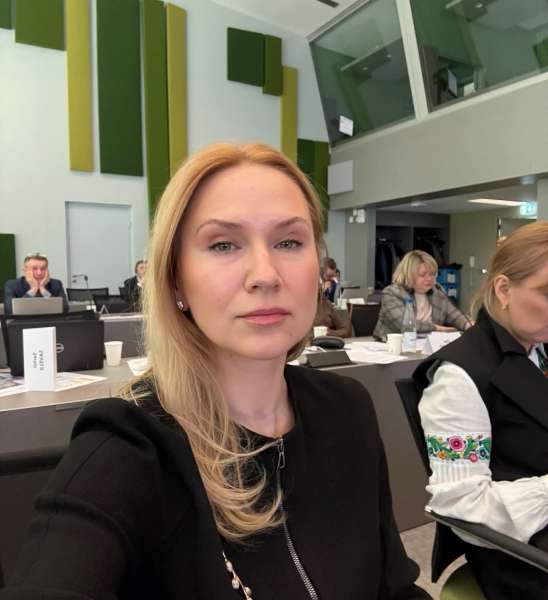
During the events and meetings, the Deputy Speaker of the Verkhovna Rada of Ukraine Olena Kondratiuk raised another issue of importance to Ukraine - the establishment of an effective mechanism for launching the Special Tribunal on russia's crimes against Ukraine. "Three more countries — Germany, Great Britain and Moldova — approved their readiness to join the Agreement on the establishment of this tribunal. At present, only 11 countries have joined the Agreement, while 16 are required for its legal launch," Olena Kondratiuk said. She called on partners to join their efforts to engage additional countries to support the launch of the tribunal.
It is worth noting that the V High-Level Dialogue warmly welcomed a broad Ukrainian delegation, including representatives of the Verkhovna Rada of Ukraine, the Government, the Central Election Commission, nationwide associations of local self-government bodies, the Centre for Countering Disinformation under the National Security and Defence Council of Ukraine, the Security Service of Ukraine, the National Council of Ukraine on Television and Radio Broadcasting, the State Audit Service of Ukraine, as well as representatives of the Parliamentary Assembly, the Congress of Local and Regional Authorities, and the Venice Commission of the Council of Europe.
Deputy Secretary General of the Council of Europe Bjørn Berge noted that “such a high-level presence of representatives from the Ukrainian side in Strasbourg is a strong signal of the country’s commitment to local and regional democracy and to a decentralised democratic future.”
During the V High-Level Dialogue, Olena Shuliak, Chair of the Committee on State Building, Local Self-Government, Regional Development, and Urban Planning, raised issues regarding the further implementation of the decentralisation reform, the balance of powers and resources between levels of government, the restoration of local self-government in de-occupied territories, and the strengthening of communities’ institutional capacity. In her speech, she emphasised that the 2014 Concept of the Local Self-Government Reform already set a key objective — the clear delineation of powers between levels of government. “However, over the past 12 years, this issue has not been fully resolved. That is why, today, in 2026, it is critically important to adopt Draft Law No. 14412 and other measures that will complete this reform logic and ensure an effective and clear system of power distribution,” the Committee Chair noted.
Vitalii Bezghin, Chair of the Subcommittee on Administrative-Territorial Structure and Local Self-Government, highlighted the importance of finding common ground on strategic and tactical decisions in the field of local self-government in Ukraine. He recalled that last year, this joint approach led to the adoption of a resolution by the Verkhovna Rada concerning the legitimacy of local self-government bodies after five years of their mandates during martial law. The resolution “On the Continuity of Functioning of Representative Bodies of Local Self-Government (village, settlement, city, district councils in cities, district and regional councils, as well as village, settlement, and city heads) in Ukraine under the Conditions of Armed Aggression by the russian federation” was adopted on 8 October 2025 (No. 4621-IX).
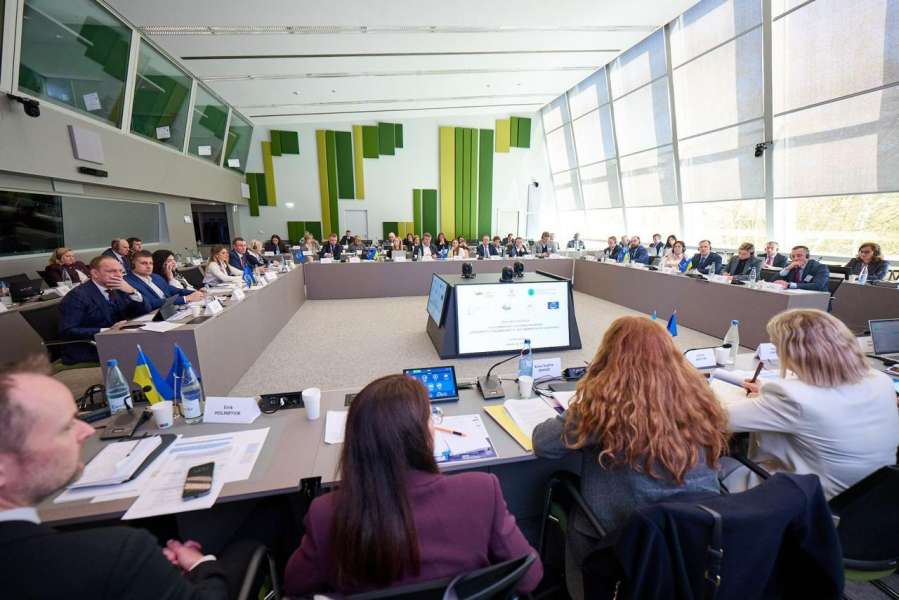
This year in Strasbourg, he noted, the discussions also covered the following topics: administration of local taxes and preparation of relevant legislative amendments; restoration of local self-government in de-occupied and frontline territories, with a future public presentation of the current situation analysis and concrete proposals for further regulation; and the restructuring of governance on temporarily occupied territories, including the optimisation and rethinking of the network of military administrations, with a call to start a professional-level national discussion.
Tamila Tasheva, Chair of the Subcommittee on Restoration of State Power and Local Self-Government in the Temporarily Occupied Territories of Ukraine, in the Autonomous Republic of Crimea and the City of Sevastopol, focused on issues of governance restructuring in temporarily occupied territories and the restoration of state authority after de-occupation. She emphasised that this process must be phased and cover security, the restoration of law and order, protection of human rights, and the rebuilding of public trust, while also highlighting the need for flexible approaches taking into account the differing experiences of territory occupation.
“Restoration of authority cannot follow a one-size-fits-all approach for all territories. Crimea and parts of Donetsk and Luhansk (occupied since 2014) and the territories occupied after 2022 have different experiences, varying levels of institutional destruction, altered demographics, and different degrees of russian influence. Therefore, state policy must be unified in its principles but as flexible as possible in its instruments,” said Tamila Tasheva. She also paid special attention to the formation of a personnel reserve for de-occupied communities and the development of a long-term state policy for reintegration of such territories.
During her speech, Deputy Chair of the Committee Alina Zahoruiko emphasised that contemporary elections take place under conditions of global crisis, democratic backsliding, increased hybrid threats, external interference, information operations, and rapid development of artificial intelligence. She stressed that the region in which Ukraine is located is becoming a space for establishing new election standards, and that Ukraine is not only defending its own sovereignty but also setting a precedent for democratic resilience.
Alina Zahoruiko presented to the international community a draft law designed to provide a legal framework for situations in which holding elections or referenda in certain territories is objectively impossible after the termination or cancellation of martial law or a state of emergency due to security, organizational, infrastructure, or other circumstances. The draft law envisages the creation of a special legal mechanism for conducting elections under such conditions through a formalized assessment procedure, a political decision by Parliament, and subsequent judicial oversight.
Member of Parliament of Ukraine and Co-Chair of the POLITICAL PARTY “EUROPEAN SOLIDARITY” faction, Iryna Herashchenko, highlighted the inadmissibility of weakening the role of local self-government during martial law. She stressed that the full implementation of the decentralization reform is impossible without adequate financial support for communities and emphasised the importance of continuing the reform. Among the key challenges, she pointed out the redistribution of financial resources and tax revenues between different levels of government. Iryna Herashchenko also underscored the need to ensure a balanced local governance model and to maintain the full role of local self-government bodies.
Member of Parliament of Ukraine and member of the “DOVIRA” parliamentary group, Larysa Bilozir, expressed her conviction that Parliament must urgently adopt a series of priority decisions to provide communities with greater resources. In particular, this concerns fair administration of local taxes, economically justified administrative fees, a review of approaches to the distribution of personal income tax, and depoliticization of local budget allocation.
Regarding elections, Larysa Bilozir noted that the participants of the discussion share a common position: elections cannot be held during martial law. This is not a political decision but a constitutionally justified measure to ensure security, stability, and legitimacy of government, in line with the approach outlined in the Parliamentary Assembly of the Council of Europe (PACE) Resolution “Elections in Times of Crisis.”
Member of Parliament of Ukraine and member of the POLITICAL PARTY “HOLOS” faction, Yaroslav Yurchyshyn, reported that during discussions on the role of media and social platforms in electoral processes in Ukraine and worldwide, the issue of FIMI — countering negative external information interference — was raised. “I urged colleagues from the Council of Europe to consider a mechanism for EU member states to cooperate in this work, since russia’s cognitive war is aimed not only against Ukraine but also against democratic countries worldwide. We must act together,” he emphasised.
Meanwhile, Member of Parliament of Ukraine and member of the “Revival of Ukraine” parliamentary group, Oleksandr Yurchenko, thanked all partners for supporting the decentralization reform in Ukraine, which is substantive and serves as a driver for the development of a democratic society. At the same time, he noted that, for example, district councils have still not been established in Kyiv, which does not fully correspond to the principles of the reform.
“In general, the Dialogue provided an opportunity for all parties to share their perspectives and discuss the challenges Ukraine may face during post-war elections. In particular, I raised an issue that concerns many Ukrainians: whether men who illegally left Ukraine during the war will have the right to run for office,” Oleksandr Yurchenko noted. He thanked all participants of the Dialogue for their substantive work in bringing Ukraine closer to the EU and, on behalf of the military receiving international assistance, presented the Ukrainian flag and the flag of the GRIM unit as a sign of respect for those who are always present and supportive. The Ukrainian flag was signed by all members of the Ukrainian delegation and handed over to the Council of Europe.
According to Member of Parliament of Ukraine and member of the SERVANT OF THE PEOPLE faction, Serhii Kozyr, participants focused on the recovery of communities and post-war support for the population, particularly regarding human capital policy. Additionally, discussions addressed the launch of practical mechanisms for compensation for damages caused by russia and called on European colleagues for even closer partnerships between communities. “Direct contacts between European and Ukrainian cities are the fastest way to bring in expertise and financing for recovery,” Serhii Kozyr emphasized.
Following the mission, Member of Parliament of Ukraine from the SERVANT OF THE PEOPLE faction, Vyacheslav Rublyov, stated: “These are extremely important events for Ukrainian diplomacy because, together with representatives of PACE and the Venice Commission, we are shaping the rules by which our country will operate after victory.” According to him, the main and most significant decisions worked on by the Ukrainian parliamentary delegation in cooperation with European partners concerned safe post-war elections, the financial independence of local self-government, the creation of the prefecture institution, and the continuation and improvement of the decentralization reform at local and regional levels. “For now, the main priority for our country is a victorious peace,” Vyacheslav Rublyov concluded.
The Ukrainian parliamentary delegation consisted of 14 members in total:
· Leadership of the Verkhovna Rada of Ukraine: First Deputy Speaker Oleksandr Korniienko, Deputy Speaker Olena Kondratiuk;
· Members of the Committee on State Governance, Local Self-Government, Regional Development, and Urban Planning: Committee Chair Olena Shuliak, Deputy Chair Alina Zahoruiko, Chair of the Subcommittee on Administrative-Territorial Structure and Local Self-Government Vitalii Bezghin, Chair of the Subcommittee on Restoration of State Authority and Local Self-Government in Temporarily Occupied Territories of Ukraine, in the Autonomous Republic of Crimea and the city of Sevastopol, Tamila Tasheva;
· Members of Parliament representing various factions and groups of the Verkhovna Rada of Ukraine: Larysa Bilozir (member of the “DOVIRA” parliamentary group), Serhii Vlasenko (member of the All-Ukrainian Union “Fatherland” faction), Iryna Herashchenko (co-chair of the “EUROPEAN SOLIDARITY” parliamentary faction), Serhii Kozyr (member of the “SERVANT OF THE PEOPLE” parliamentary faction), Yaroslav Yurchyshyn (member of the “HOLOS” parliamentary faction), Mykhailo Papiiev (member of the “Platform for Life and Peace” parliamentary group), Vyacheslav Rublyov (member of the “SERVANT OF THE PEOPLE” faction), Oleksandr Yurchenko (member of the “Restoration of Ukraine” parliamentary group).