The Committee on Ukraine's Integration into UE held a special meeting on the negotiation progress about the integration to the European Union
03 March 2026, 10:57
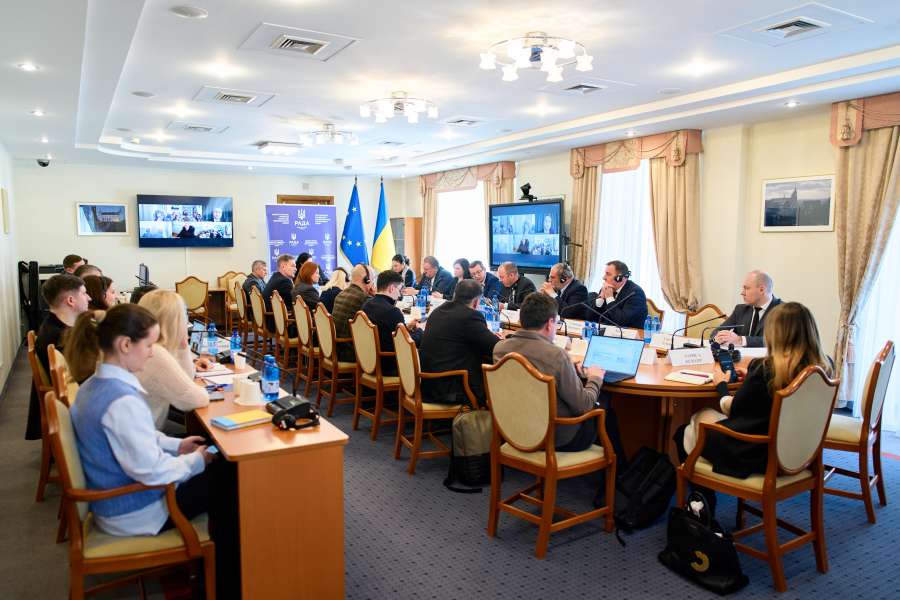
On February 27, the Committee on Ukraine’s Integration into the European Union held an extraordinary meeting dedicated to assessing Ukraine’s progress at the current stage of accession negotiations with the EU.
The meeting was attended by Deputy Prime Minister for European and Euro-Atlantic Integration Taras Kachka; EU Ambassador to Ukraine Katarína Mathernová; First Deputy Chairperson of the Verkhovna Rada of Ukraine Oleksandr Korniienko; representatives of the Government; representatives of the judiciary; members of the Committee on Ukraine’s Integration into the EU; chairs of the Verkhovna Rada subcommittees on European integration; the Ambassador of the Republic of Cyprus and the Chargé d’Affaires of Ireland — Cyprus currently holds the Presidency of the Council of the European Union, with Ireland set to assume it in the second half of the year; as well as representatives of civil society and the media.
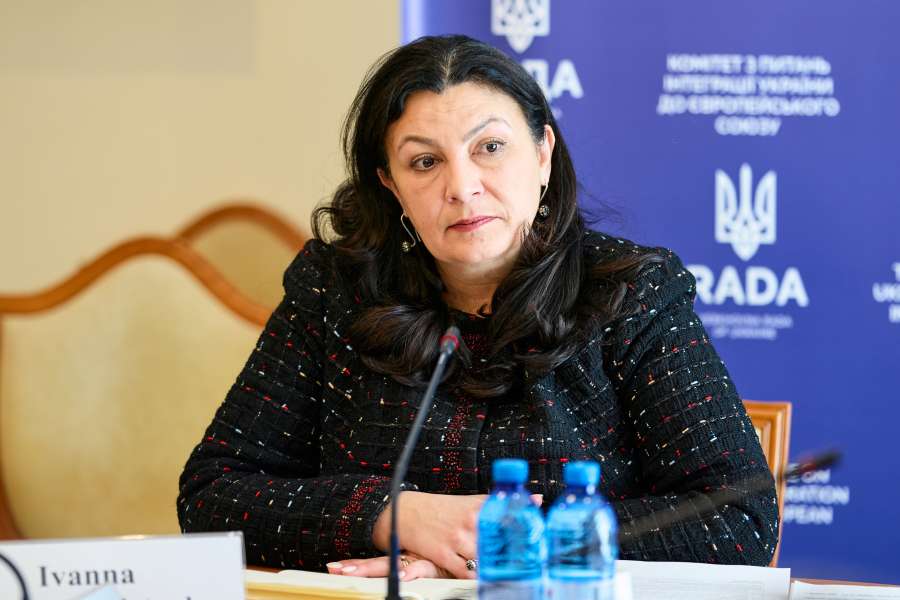
While opening the meeting, the Chair of the Committee on Ukraine's Integration into the EU, Ivanna Klympush-Tsyntsadze, noted that Ukraine is currently in a unique period of European integrational opportunities.
Therefore, it is important to understand the legal and procedural implications of the decisions and measures taken after the informal meeting of EU ministers for European affairs, which took place on December 11, 2025, in Lviv, as well as the provisions of the joint statement adopted following the meeting. «It is important for us to find out how the government sees the prioritization of the ten tasks that were agreed between Deputy Prime Minister Kachka and European Commissioner Kos in Lviv, how they relate to other tasks — with the preparation of the National Program for the Adaptation of European Union Law, how they relate to the tasks we received as part of the enlargement package, as part of the enlargement report,» emphasized Ivanna Klympush-Tsyntsadze.
Deputy Prime Minister for European and Euro-Atlantic Integration Taras Kachka stated that Ukraine has now entered the practical phase of the accession negotiations. «We have received benchmarks from the European Union for three clusters — the first, second and sixth. This took place in December. We are now also expecting the benchmarks for the remaining three clusters — the third, fourth and fifth — which are almost finalised. We may receive them in the coming days,» the Deputy Prime Minister said. According to him, this means that despite the blocking of a formal vote on the opening of the clusters, Ukraine has already received a specific list of criteria against which it will be assessed by the European Commission. In other words, the negotiation process has moved into the practical phase of fulfilling the requirements and reporting on their implementation.
EU Ambassador to Ukraine Katarína Mathernová noted that, unlike previous waves of enlargement — when a candidate country fulfilled the conditions and the EU granted membership — in Ukraine’s case there is a deep understanding that the process is about mutual benefit and about finding ways to optimise the accession procedure.
According to her, there is now a need to review the enlargement methodology itself in order to make it more suited to current realities — a faster pace of life, war, and the new challenges facing the EU. Katarína Mathernová also addressed issues related to the rule of law and the fight against corruption in Ukraine. She stressed that long-term institutional changes have already taken place. «There are several areas where further work is needed, but they are not dramatically complex and require political will — to propose these reforms and implement them. I very much hope this will be done,» the Ambassador said.
First Deputy Chairperson of the Verkhovna Rada of Ukraine Oleksandr Korniienko emphasised that Parliament and the Government are carrying out systematic work within the framework of the European integration agenda — both at the legislative level and through consultations with sectoral stakeholders, civil society and local self-government authorities. He underscored the importance of maintaining continuous feedback with Brussels and ensuring a clear understanding of the benchmarks and prerequisites for further progress in the negotiation process.
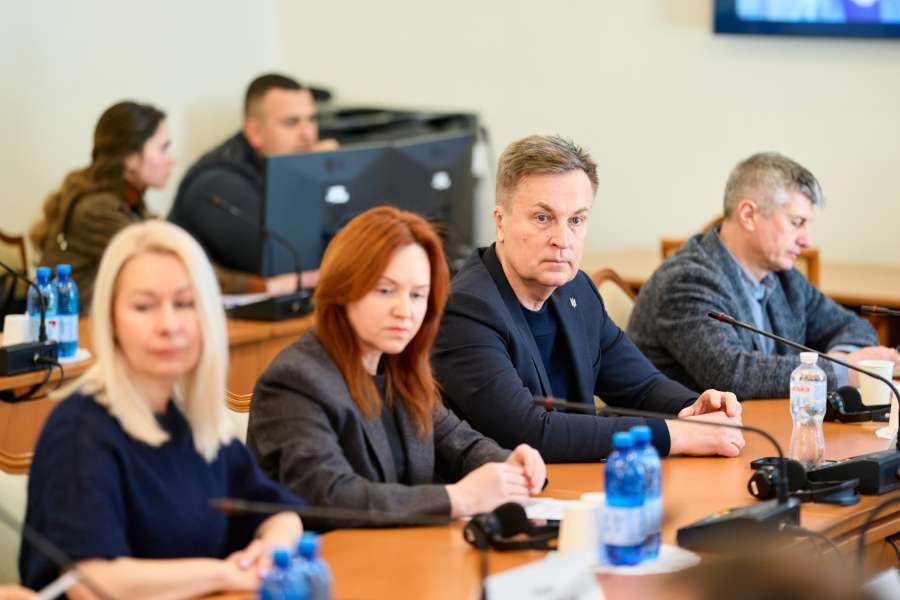
Considerable attention during the meeting was devoted to discussing reforms in the context of the EU accession negotiations. Taras Kachka stressed that following the completion of the screening process and the receipt of specific benchmarks, Ukraine now has a defined list of EU requirements that must be fully implemented. According to him, this is not about identifying separate “priority” reforms, but about the comprehensive fulfilment of all obligations предусмотрed by the Negotiating Framework and the respective roadmaps.
Chair of the Committee on Ukraine’s Integration into the EU Ivanna Klympush-Tsyntsadze stressed that Ukraine must assess its progress towards the European Union honestly and objectively.
“The declared goal of full EU membership in 2027 requires a very clear answer as to whether it is realistic. The pace of our progress, at least over the past six months, leaves much to be desired and does not correspond to the level of ambition that has been announced,” she noted. The Chair of the Committee insisted that European integration should be discussed with society in a frank and transparent manner. “Provided that there is a genuine decision on the part of the EU Member States, what is at stake is a limited anchoring of Ukraine in the irreversibility of the accession process, accompanied by the prioritisation of requirements for Ukraine. We need to speak openly about this and work to ensure that we succeed.”
Ivanna Klympush-Tsyntsadze thanked the participants of the meeting for the constructive discussion and explanations, which provided a clearer understanding of the next steps. Following the discussion, it was proposed to initiate a special meeting of the Committee in April with the Government presenting the National Program for the Adaptation of Legislation to EU Law, as well as to return to more structured and regular reporting by the Government. In addition, the Committee plans to send summarized information to relevant parliamentary committees for broader information and coordination of work.