Cultural heritage and challenges of the digital age discussed at a joint meeting of the Verkhovna Rada and European Parliament Committees
04 November 2025, 10:08
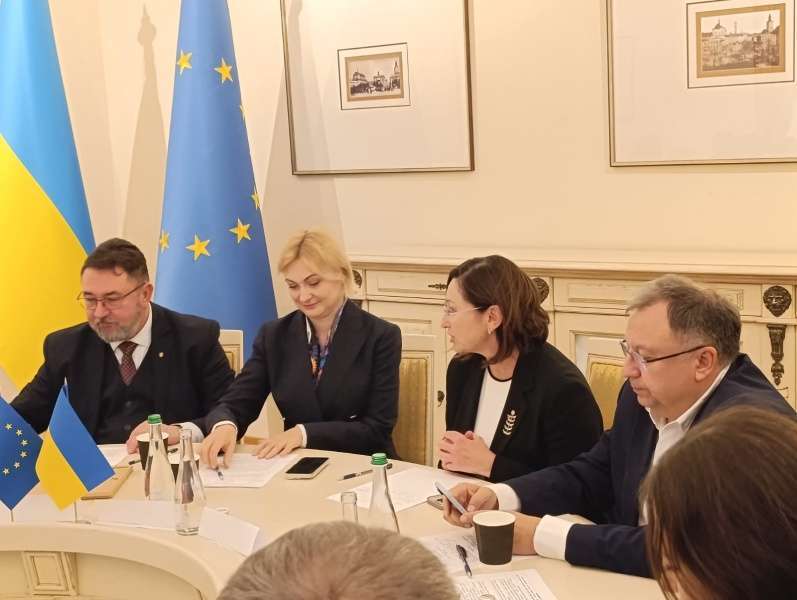
On 30 October 2025, a joint meeting of the Verkhovna Rada Committee on Humanitarian and Information Policy and the European Parliament Committee on Culture and Education was held with the participation of the Vice-President of the European Parliament, Member of the Committee on Culture and Education, Esteban González Pons. Committee members Sunčana Glavak, Nikos Papandreou, Sandro Ruotolo (online) and members of the Committee on Humanitarian and Information Policy also joined the discussion. The meeting was joined by Deputy Minister of Culture and Strategic Communications of Ukraine Ivan Verbytskyi and UNESCO Representative in Ukraine Chiara Dezzi Bardeschi, and representatives of the Lviv City Council also took part in the discussion.
Ivan Verbytskyi, Deputy Minister of Culture and Strategic Communications of Ukraine, presented the initiative to establish the Ukrainian Cultural Heritage Fund, which is intended to start its activities as soon as possible. The Foundation will become fully operational when its organisational formation is completed.
The Ukrainian Cultural Heritage Fund will become a multi-donor platform aimed at protecting and restoring cultural heritage, as well as developing Ukrainian culture in the face of war and related destruction. One of the main tasks of the Fund will be to accelerate the restoration of cultural monuments in Ukraine with the involvement of international resources and experts. This will be a fundamentally new mechanism that will differ from existing platforms, such as UNITED24. Ivan Verbytskyi expressed hope that such an instrument would maintain trust among international partners.
As of now, 1,599 cultural heritage sites have been affected by the russian federation's full-scale invasion. In his speech, Mr Poturaiev drew the attention of his international colleagues, including the Head of the UNESCO Office in Ukraine, Chiara Dezzi Bardeschi, to international support for the conservation and restoration of monuments. He stressed that the initiative presented by the Ministry is an effective step to ensure the preservation of cultural property, and European partners have shown the effectiveness of this mechanism.
Mykola Kniazhytskyi and Volodymyr Viatrovych drew the participants' attention to the problem of subordination of cultural institutions. In his speech, Mykola Kniazhytskyi expressed his position on the creation of a clear policy for the preservation of cultural sites. He called for the development of an all-Ukrainian policy for the preservation of cultural sites, including those that are administratively under the jurisdiction of other ministries. He also focused the meeting's attention on museums located in the occupied territories.
The joint meeting continued its work by discussing the topical issue of the impact of social media on teenage audiences, focusing on the need to develop and implement effective mechanisms for regulating this virtual environment.
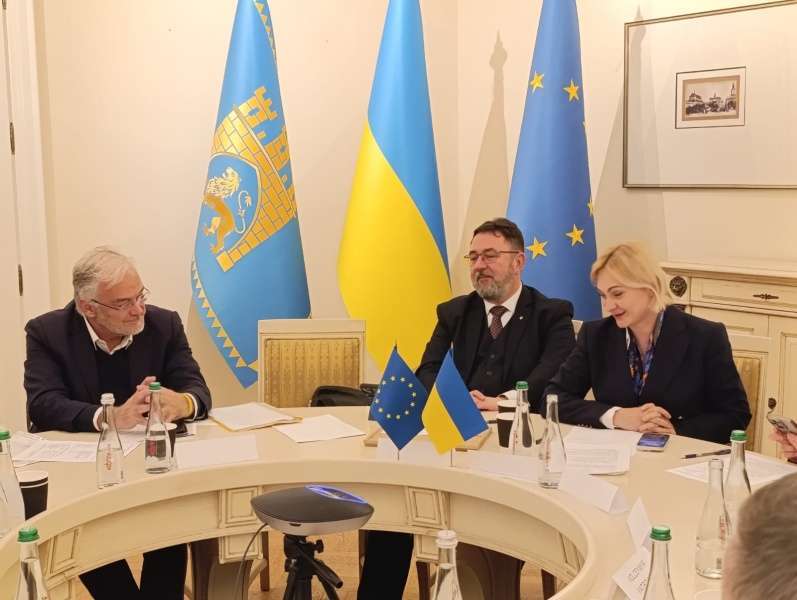
The participants of the event stressed that despite the enormous potential of social media in education, communication and self-organisation, they also carry significant risks. Such platforms often become the main source of disinformation, actively promote hate speech and have an unpredictable negative impact on the psychological state of the younger generation. Particular attention was paid to the uncontrolled information flow characteristic of social media, which can not only distort adolescents' perceptions of reality, but also increase anxiety, provoke aggressive behaviour, reduce self-esteem and even create a dependence on receiving approval and validation in the virtual space. The panelists also focused on the need to actively develop media literacy among young people as an effective tool to counter these challenges. They discussed the need to create a safer and more secure online environment for children and adolescents that would minimise their exposure to potentially harmful content.
The importance of joint work between government agencies, educational institutions and civil society organisations was also raised, which can join forces to prevent the penetration of unwanted information into the youth environment and to create a healthy digital culture.
The MPs stressed that the issue of social media regulation now goes far beyond the national context - it is a challenge faced by all democratic countries. According to him, European states have already had examples of interference in electoral processes through social platforms, including TikTok, which demonstrates the vulnerability of the digital space even in developed democracies.
The European Parliament's Committee on Culture and Education and the Committee on Humanitarian and Information Policy unanimously support the need to consolidate efforts to combat information manipulation and develop common security standards in the field of digital communications.
At the same time, active discussions continue in Europe to develop a coherent approach to countering information manipulation and to develop common principles for ensuring cybersecurity in the communications space.
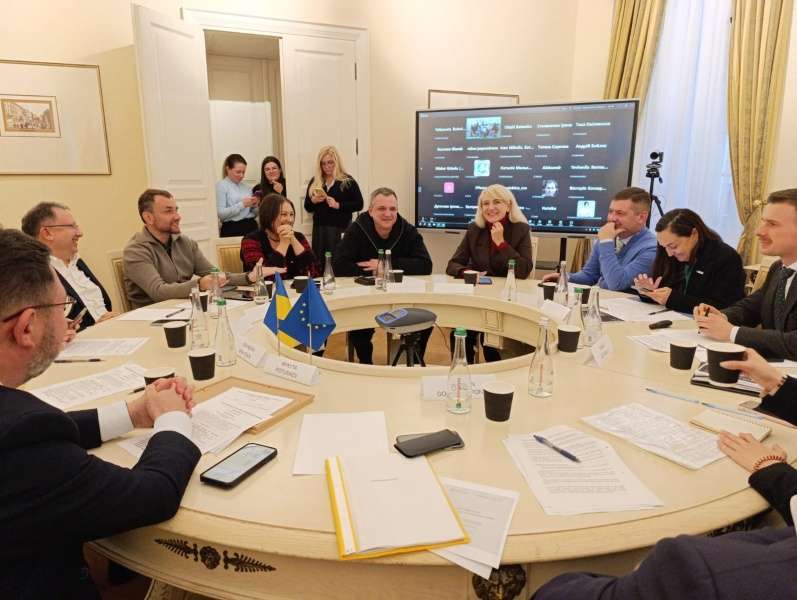
The participants of the meeting stressed the need to discuss and develop a clear action plan to counter the destructive use of social media, in particular during elections. It is also worth continuing an ongoing dialogue between governments, parliaments, cybersecurity experts, media, and representatives of social platforms.
YouTube video https://www.youtube.com/watch?v=r3OUX3xGGQM