Six years since the first session of the Verkhovna Rada of Ukraine of the IX convocation
29 August 2025, 09:20
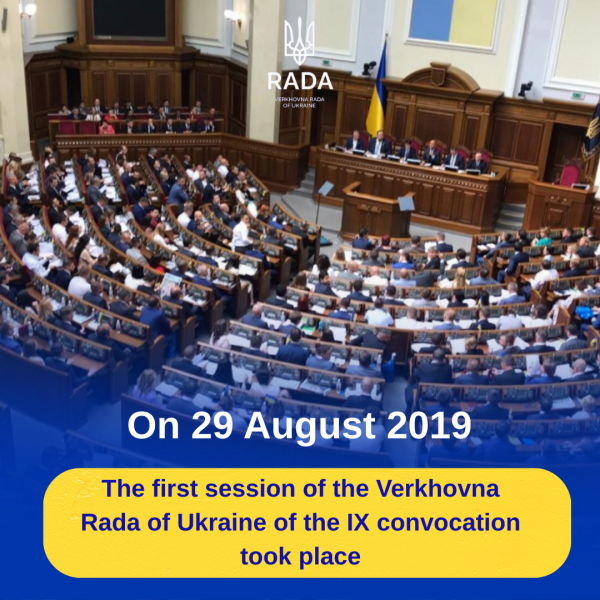
On 29 August 2019, the first session of the Verkhovna Rada of Ukraine of the IX convocation took place. Six years have passed since then, during which the Parliament has made fateful decisions, faced the most difficult challenges and remained the centre of democracy and legislative work in the country.
During this time, 414 plenary days were held in the session hall, and more than 4,500 agenda items were considered. A total of 1,708 laws were voted on, 221 of which were new versions. Since the start of the russian federation's full-scale invasion, the Verkhovna Rada has adopted over 450 legislative acts aimed at protecting the state, strengthening its defence capabilities and supporting its citizens. At the same time, Parliament has adopted 107 statements and appeals to the international community, a significant part of which concerned the russian federation's aggression and the mobilisation of global support for Ukraine.
Over the past six years, the Verkhovna Rada has adopted a number of key decisions that have had a significant impact on state policy. One of the most significant was the adoption of the Law on Lawmaking, the so-called ‘law on laws.’ It streamlined the hierarchy of regulatory and legal acts, introduced clear definitions of key terms, and standardised the entire process of lawmaking.
In its first months of work, Parliament took a step that society had been waiting for for many years — it abolished parliamentary immunity. Amendments to the Constitution finally eliminated privileges that prevented equality before the law and established clear rules for the accountability of MPs within the general legal system of the state. This decision strengthened trust in the institution and set a new standard for political accountability.
At the same time, the Verkhovna Rada ensured the institutional independence of the anti-corruption system. Laws clarified the powers and status of key bodies — NABU, SAPO, NACP — as well as procedural guarantees of their autonomy, competitive mechanisms for selecting leadership with the participation of international experts, and appropriate tools for the High Anti-Corruption Court. This line of decisions restored the stability of the anti-corruption architecture after constitutional challenges and cemented its independence in practice.
Another important achievement of the IX convocation was the elimination of button-pushing. In 2021, touch-sensitive buttons were installed in the session hall, and since then, the practice of impersonal voting has virtually disappeared.
One of the most high-profile decisions was the opening of the agricultural land market. The law, passed in 2021, ended a 20-year moratorium and allowed citizens to fully dispose of their land. In the first three years of the reform, hundreds of thousands of deals were made and over half a million hectares were sold, creating new opportunities for community and farming development.
The full-scale war was a particular challenge for the Verkhovna Rada of the IX convocation. Despite shelling and threats, Parliament remained operational. During the seventh session alone, which took place during the first six months of the war, 266 laws were passed to ensure our country's defence capability and social protection for citizens, and to create conditions for business activity and development in wartime.
European integration remained an equally important area of work. After Ukraine was granted EU candidate status on 23 June 2022, the Verkhovna Rada passed 104 laws in the field of European integration, 43 of which were directly aimed at implementing the European Commission's recommendations on Ukraine's application for membership of the Union.
The six years of work of the Verkhovna Rada of the IX convocation were a period of great change, difficult trials and new opportunities. Parliament not only passed laws that defined state policy, but also confirmed the stability of Ukrainian institutions even in the most difficult times.