Mykyta Poturaiev on international society's perception of narratives about World War II: «The problem is not about russian fakes. It is about old European books, which still assimilate ussr to russia»
06 May 2025, 10:29
On April 24–25, Kyiv hosted the fourth annual "Kyiv StratCom Forum 2025: Ukraine’s Information Resilience Amid Global Transformations."
One of the forum's panels was dedicated to: «History as a Weapon: The russian Cult of Victory and Manipulation of WWII Memory».
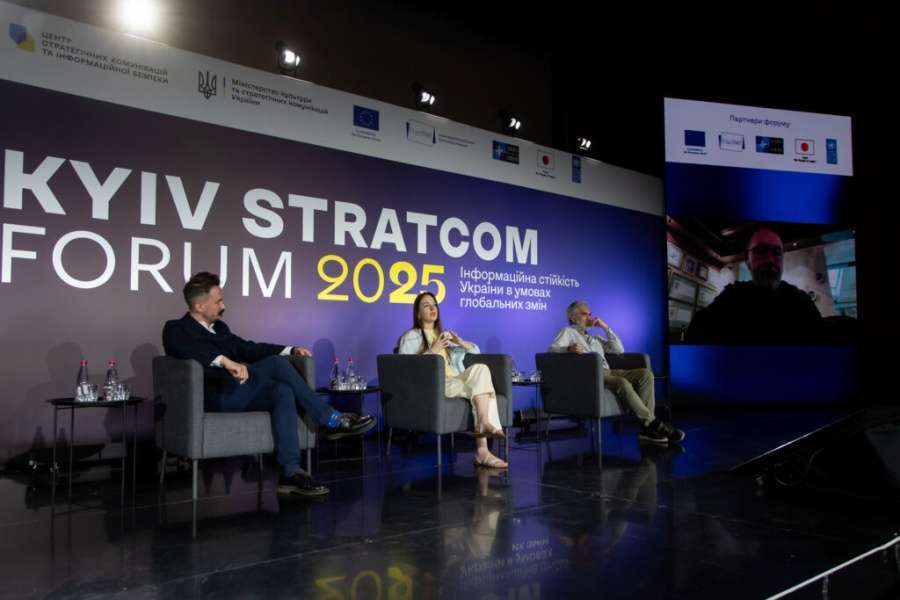
Among the speakers:
Mykola Balaban, Deputy Head of the Centre for Strategic Communication and Information Security:
«Ukraine has found itself in a situation where every narrative matters — and is vital — to help the world understand why we must be supported. The narrative promoted by russia about its exclusive role in the victory in World War II functions not only within the russian federation but also resonates across Europe.»
Oleksandra Matviichuk, human rights advocate and Chairwoman of the Center for Civil Liberties:
«When we speak about World War II and how history and memory are preserved in different countries, we immediately see a clash of two ethics — “never again” versus “we can repeat it.” For me, these ethics have historical foundations: after the fall of the nazi regime, war criminals were brought before the Nuremberg Tribunal, but soviet elites were never held accountable, nor was the soviet gulag ever condemned.»
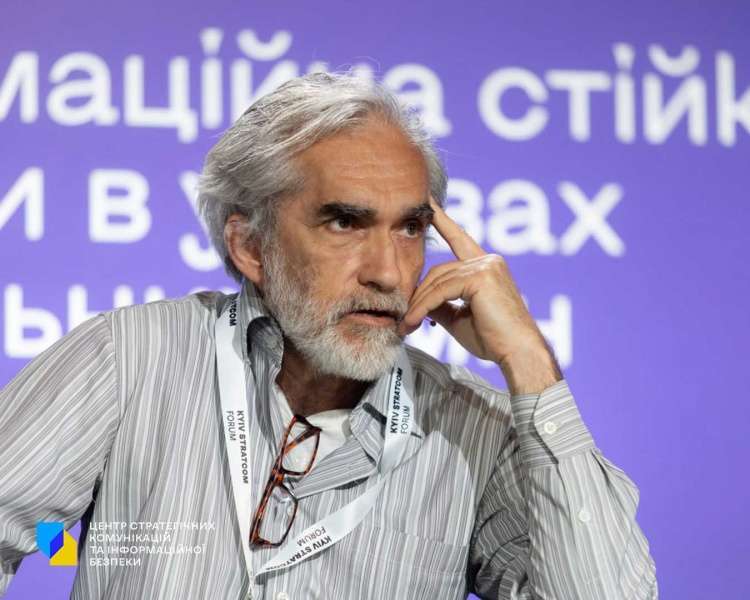
Historian Yaroslav Hrytsak:
«russia has monopolized the memory of World War II. To some extent, we have ceded this myth to the russian federation, and it is now crucial for us to reclaim it. It is very important for us to have something meaningful on May 8th — as a counterbalance to May 9th.»
Chairman of the Committee on Humanitarian and Information Policy, Mykyta Poturaiev:
«It would be worth reading European history textbooks. I have a strong impression that the real issue begins there. And this problem is not solely the result of russian manipulations — it dates back to soviet times. One key element of the issue is how the ussr was referred to by the participants of those events.»
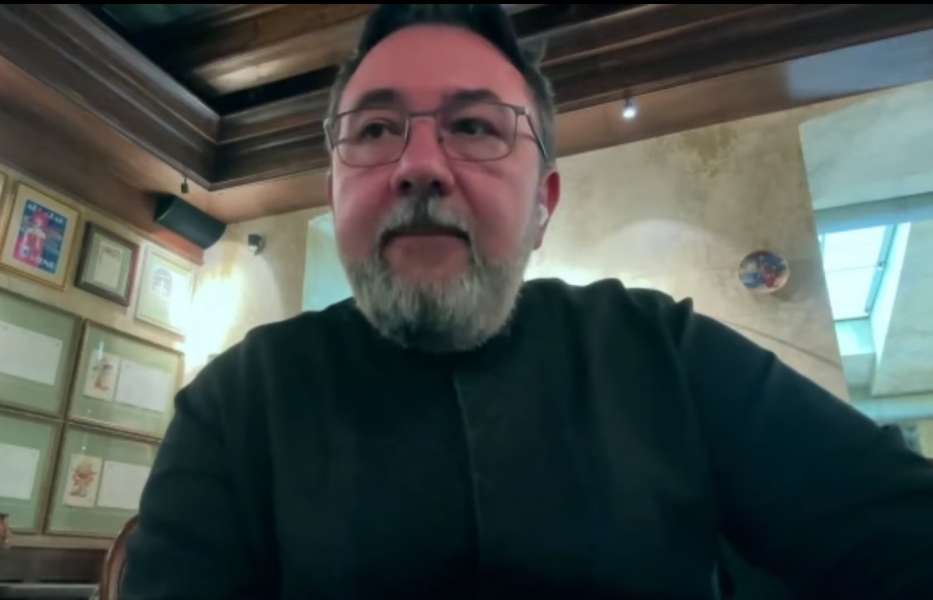
The Chairman of the Committee noted:
«One of the fundamental books is Churchill's memoirs on World War II. Throughout the book, there is an equation between the ussr and the russian federation. This became a conceptual framework at the time. It applies to many memoirs and historical works, and I have a persistent sense that it has carried over into contemporary sources.»
According to the Member of Parliament, the slogan “Never Again” is no longer effective, as “again” has already arrived.
«I am convinced that we will not win this narrative battle by simply opposing moscow’s narratives. We will succeed only if, together with our European partners, we can develop and promote a different narrative — not an anti-russian one, but a truthful one. That will be our victory.»
As a reminder, to mark the anniversary of the end of the war in Europe, the Committee of the Verkhovna Rada of Ukraine on Humanitarian and Information Policy, in cooperation with the National Museum of the History of Ukraine in World War II, launched the information campaign «Our Victory: Ukraine in Wor
ld War II.» Its aim is to highlight key events, facts, and consequences of the war for Ukraine, emphasize the significant contribution of the Ukrainian people to the victory over nazism, and draw attention to the high cost Ukraine paid in that struggle.