On October 7, 2026, in Andorra la Vella, as part of the 24th Autumn Meeting of the OSCE Parliamentary Assembly, the Parliamentary Support Group for Ukraine in the OSCE PA held a dedicated meeting on russia's crimes against Ukrainian children.
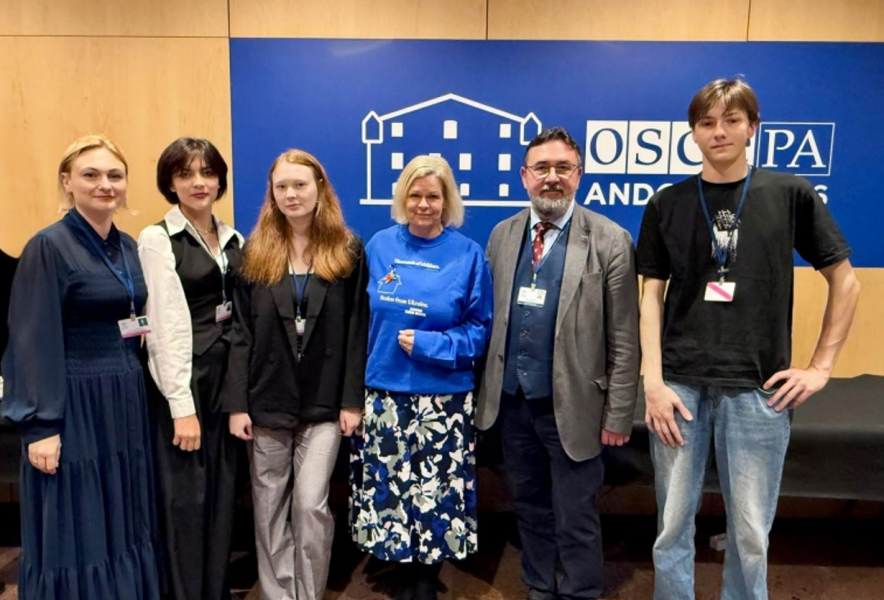
The meeting was opened by Nancy Faeser, Chair of the Parliamentary Support Group for Ukraine.
Mykyta Poturaiev, Chairman of the Verkhovna Rada Committee on Humanitarian and Information Policy, Vice-President of the OSCE PA, and Co-Chair of the Parliamentary Support Group, emphasized in his address that Ukraine is open to dialogue and strives for peace, but solely based on the principles of the Helsinki Final Act, sovereignty, territorial integrity, international law, and accountability for war crimes. According to him, peace and dialogue cannot mean hushing up russian crimes or making concessions to the aggressor, and protecting these principles is precisely the shared responsibility of OSCE participating States today.
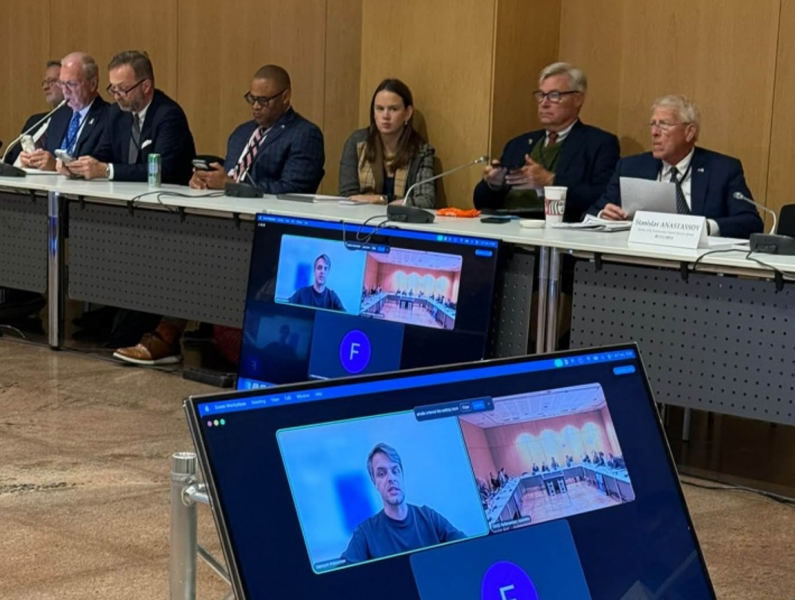
The discussion focused primarily on russia’s crimes against Ukrainian children — their deportation, forced displacement, indoctrination, and militarization. The meeting heard personal testimonies from young Ukrainians Dmytro, Viktoriia, and Polina, who grew up under occupation and were able to leave for Ukraine-controlled territory independently upon reaching adulthood.
Dmytro grew up in occupied Khrestivka, Donetsk region. He recounted how the Ukrainian language and literature vanished from the school curriculum and how boundaries on what was permitted to be said gradually shifted. "Representatives of the russian special services conducted searches at my place and threatened me. Two FSB officers ordered me to strip naked while questioning me about my tattoos. Representatives of the occupation authorities beat me. Ultimately, I realized that staying in my hometown was no longer safe for me," Dmytro said.
Viktoriia spoke about life in occupied Bakhchysarai. Following the occupation of Crimea, the Ukrainian language vanished from her school, teachers left, and in their place came militarized events and the "Yunarmia" (Youth Army). Children were taught to assemble and disassemble assault rifles and march like soldiers. Access to social networks and independent media was progressively restricted. While studying journalism, students were obliged to produce content glorifying the occupation of Crimea and, later, the war against Ukraine.
"We were forced to write letters of support to russian soldiers," Polina recounted. "Sometimes these soldiers came directly into our classrooms. But the most terrifying part was watching children begin to believe it."
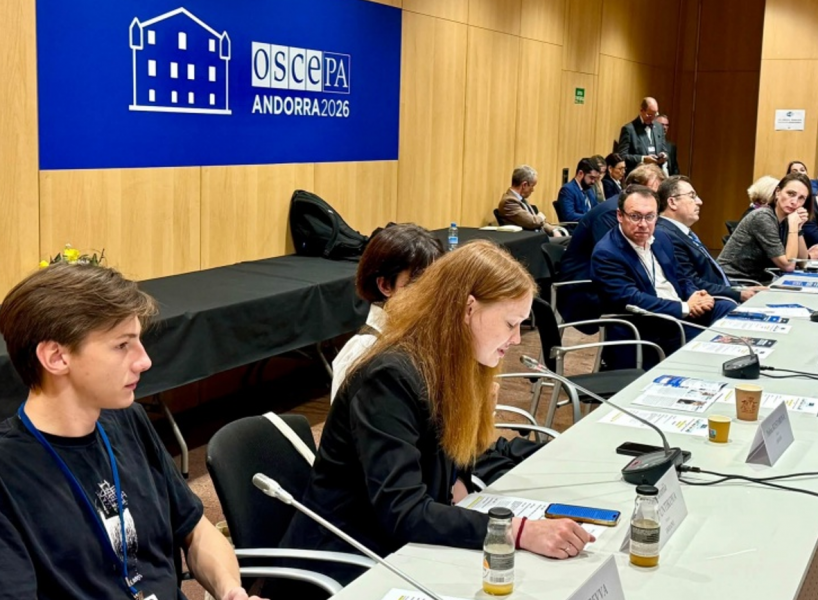
"We talk extensively, and entirely justly, about the deportation and abduction of Ukrainian children by russia. But the issue is far broader. russia does not even need to physically abduct a child to attempt to strip Ukraine away from them. In the occupied territories, it has already established an entire state-funded system for the indoctrination and militarization of our children: 'Yunarmia,' 'Movement of the First,' 'Zarnitsa 2.0,' cadet and 'Cossack' classes, military training, and UAV operation instruction. These are not isolated initiatives. They are components of a single system designed to alter a Ukrainian child's identity, impose a russian vision of history and war, and make militarization a part of their daily life," stated Deputy Chairwoman of the Committee Yevheniia Kravchuk, noting that "russia not only takes children out of Ukraine; it takes Ukraine out of the children."
She also reminded international parliamentarians of russia's daily crimes against Ukrainian citizens. On the day of the OSCE PA meeting, a russian missile strike on a residential building in Pryluky killed 22 adults and five children.
Parliamentarians and representatives of international delegations gave a standing ovation to Dmytro, Viktoriia, and Polina, honoring their courage.
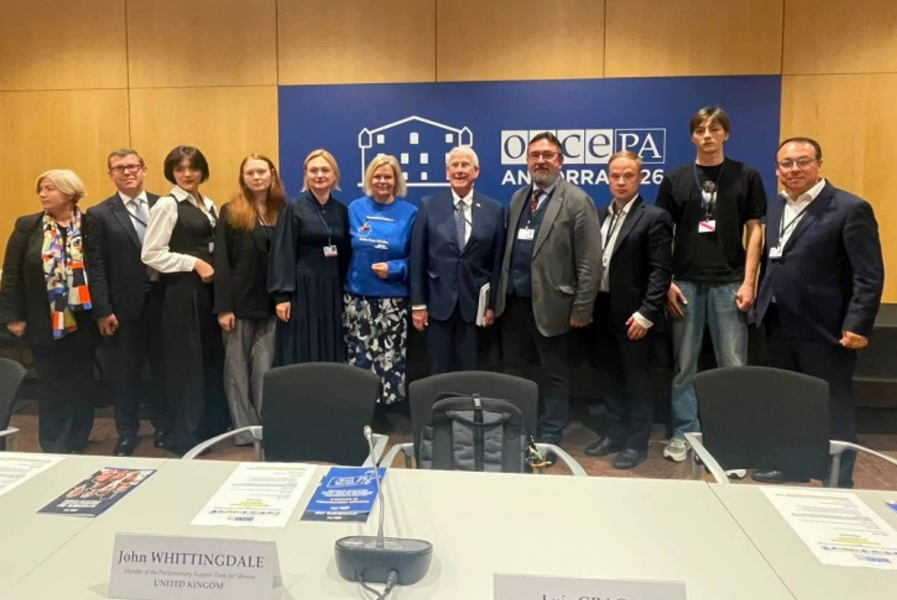
"We must continue to amplify the voices of Ukrainian children and young people living under occupation on the international stage, ensuring that amid discussions about territories, the world never forgets the people who live there," noted Yevheniia Kravchuk.
The event was organized by the Parliamentary Support Group for Ukraine in the OSCE PA (led by Nancy Faeser), the Bring Kids Back UA initiative with the participation of Maksym Maksymov and Tamila Tasheva, as well as the Ukrainian delegation to the OSCE PA.